



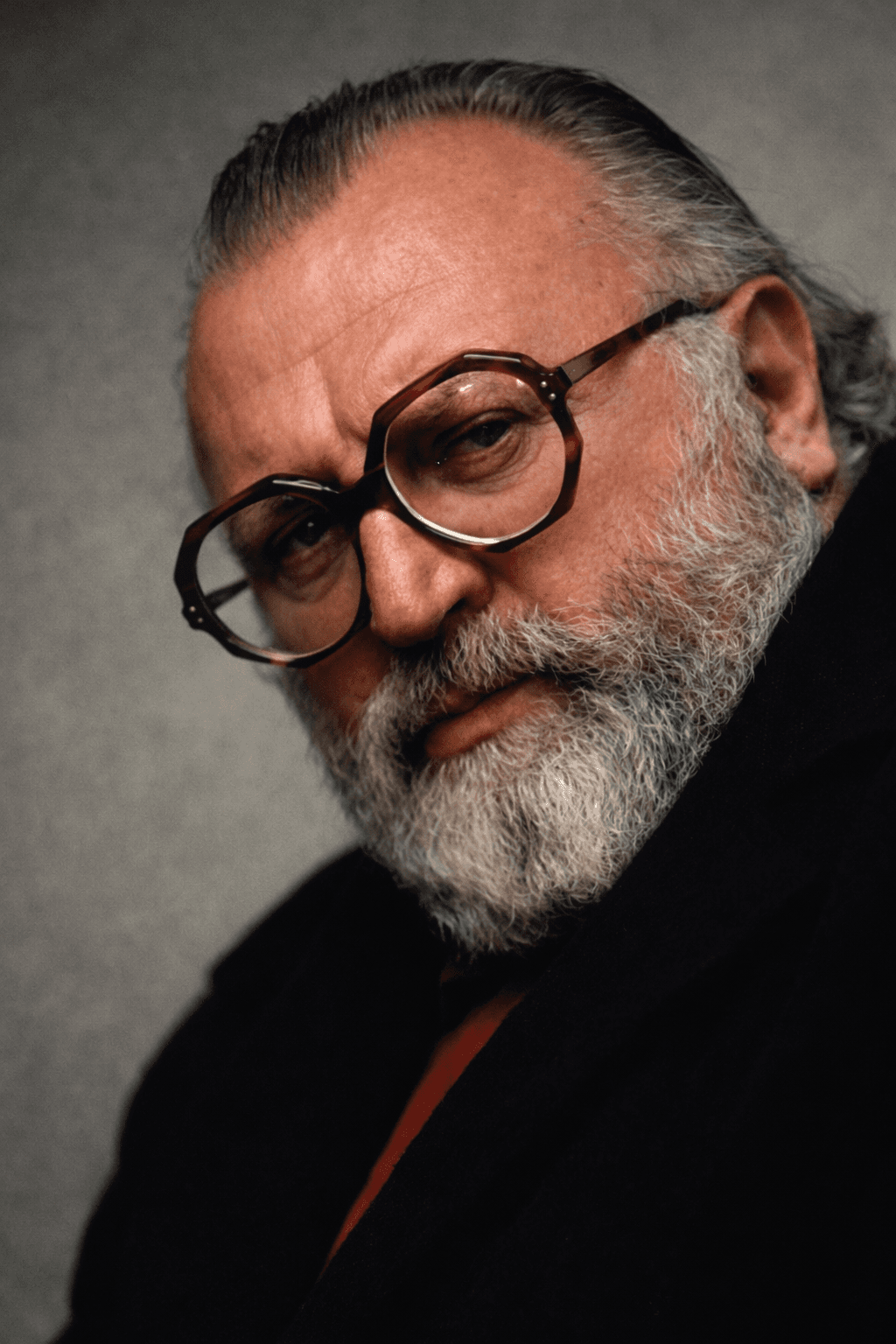
Generated with YZ
Sergio Leone
Death | April 30, 1989, Rome, Italy | ||||||||
|---|---|---|---|---|---|---|---|---|---|
Nationality | Italian | ||||||||
Birth | January 3, 1929, Rome, Italy | ||||||||
Award(s) | Lifetime Achievement Award (2012 posthumous) OFTA Film Hall of Fame (2008) Kinema Junpo – Best Foreign Film (1985) René Clair Award (1984) Silver Ribbon – Best Director (1985) David di Donatello – Best Director (1972) | ||||||||
Occupation(s) | Director producer screenwriter | ||||||||
Notable Genres | Spaghetti Western, Epic Western, Crime / Gangster Film | ||||||||
Notable Films | Once Upon a Time in America (1984) Once Upon a Time in the West (1968) The Good the Bad and the Ugly (1966) For a Few Dollars More (1965) A Fistful of Dollars (1964) | ||||||||
Alias | Bob Robertson (for early US distribution) | ||||||||
Active Years | 1950s – 1989 | ||||||||
Cause of Death | Heart attack | ||||||||
Sergio Leone was the Italian director who introduced the Spaghetti Western genre to the world with his original visual language. He was born in Rome in 1929 into a family connected to early Italian cinema. His father, Vincenzo Leone, worked as a director and actor in the film industry; his mother, Edvige Valcarenghi, acted during the silent film era. Leone’s childhood and early youth unfolded in an environment that allowed him to become intimately familiar with film sets.
Leone’s education took shape when he began studying law at university but abandoned it midway. Throughout the late 1940s and 1950s he took on various roles on film sets, gaining practical experience in cinema. This period exposed him to different trends in Italian cinema and the international productions emerging around Cinecittà in Rome.
The films Leone participated in and the crews he worked with significantly influenced the development of cinematic language. Roles such as assistant director and second unit director provided him with experience in actor direction and the mechanics of large-scale productions. This phase is regarded as a preparatory stage during which he later systematically developed his own directorial approach.
Sergio Leone married Carla Leone. They had three children: Raffaela, Francesca and Andrea.
Leone’s working method was defined by a planning- and preparation-oriented approach to direction. His detailed pre-production design of set layouts and his direct control over staging and rhythm during filming were defining features of his films’ formal coherence. This approach was also recognized as distinctive in terms of production management and the consistent stylistic quality of his finished works.
It was noted that Leone conducted communication on international sets largely through interpreters. At the same time, he developed a deep interest in American culture and particularly in the cinematic image of the “American West,” a fascination that became evident in his choices of subject matter, setting and genre.
Leone’s emergence as a director is associated with the rise of western production in Italy during the 1960s. His films entered international circulation by diverging from classic American westerns, adopting a harsher, more ironic and anti-hero-centered narrative style. The films known as the “Dollar Trilogy” are central to this period.
Leone’s first feature film as director, “The Colossus of Rhodes” (1961), is linked to the historical/mythological “sword and sandal” trend that gained strength in Italy during the 1950s and early 1960s. With his shift to the western genre, production scale, set practices and international distribution goals changed. At this turning point, he adopted a narrative style that emphasized staging, editing rhythm and musical usage.
In the 1980s, Leone focused on a long-form and expansive crime narrative with “Once Upon a Time in America.” The film’s release in different countries with varying cuts and durations made it one of the most debated titles in its distribution history. During this period, it was also noted that he was preparing a high-budget project on the Siege of Leningrad, which became part of the narrative of his final years.
Leone’s cinematic career began within the studio system of Italy and gradually expanded through international co-productions. His western productions were associated with filming locations in Spain, Italy and other regions. Leone’s name is remembered as central to the transformation of the genre and its encounter with a global audience.
Recurring narrative elements in Leone’s westerns include towns caught in conflicts of interest, opposing gangs, the “outsider” figure driven by personal gain, and duels staged across vast landscapes. These elements were described in visual terms through tight close-ups that built tension, suspense and rhythmic control. Music was positioned as a component integrated into the scene structure, guiding the dramatic flow.
In the later stages of his career, Leone moved beyond the western genre and completed “Once Upon a Time in America” after an extended preparation period. The film’s release in different countries with varying lengths and edits became one of the controversial aspects of its distribution history. It was also noted in accounts of his career that he held discussions for new projects during this time.
In Leone’s filmography, “The Colossus of Rhodes” (1961) stands out as an early work. With “A Fistful of Dollars” (1964), he transitioned to the western genre, and the film is regarded as one of the turning points in the wave of Italian-produced westerns. It is also noted in filmographic records that he used the pseudonym “Bob Robertson” for this film.
With “For a Few Dollars More” (1965) and “The Good, the Bad and the Ugly” (1966), both part of the “Dollar Trilogy,” Leone’s narrative and stylistic repertoire became more visible. These films are remembered for their character archetypes, conflict structures, use of close-ups and the integration of music into scene construction. The trilogy remained relevant in later years through programmed screenings and re-releases.
Leone’s late western phase was defined by “Once Upon a Time in the West” (1968) and “My Name Is Nobody” (1971). His crime film “Once Upon a Time in America” (1984), however, stood out for its lengthy production process, complex temporal structure and multiple release versions.
One of the defining features of Leone’s cinematic language is the construction of scene tension through visual proximity. Tight close-ups, particularly focused on facial details, combine with pauses and silence to generate suspense. This preference is evident as one of the primary tools for establishing rhythm in duel sequences.【1】
The relationship between editing and music is treated as a structural element in Leone’s cinema. His collaboration with Ennio Morricone contributed to the organization of emphasis, suspense and climactic moments in scenes. Music is not merely an accompaniment but functions as a dramatic component integrated into the scene design.【2】
In terms of genre approach, Leone’s westerns move the clear moral binaries of classic American westerns onto a more ambiguous terrain. Character motivations are marked by calculations of self-interest, binary games and an anti-heroic trajectory. The narrative structure often creates a pattern that amplifies conflict, extends scene durations and transforms space into a dramatic element.【3】
Sergio Leone died of a heart attack in Rome on 30 April 1989. His death was remembered alongside the projects he was actively developing and planning. It was noted that he had been engaged in discussions and preparatory work for a high-budget project on the Siege of Leningrad, which formed part of the narrative of his final years.【4】
Following his death, Leone’s filmography gained continuity, particularly through his 1960s westerns and his 1980s crime narrative.
Barner, Mike. Hollywood Reporter. “Ennio Morricone Dead: Prolific Italian Composer Was 91.” Accessed February 13, 2026. https://www.hollywoodreporter.com/news/general-news/ennio-morricone-dead-prolific-italian-composer-was-91-858358/
Beware the Blog. "Sergio Leone, Hollywood in Italy and Two Trilogies." Accessed February 13, 2026. https://www.bewaretheblog.com/2022/05/sergio-leone-hollywood-in-italy-and-two.html
Box Office Mojo. "A Fistful of Dollars (1964)." Accessed February 13, 2026. https://www.boxofficemojo.com/title/tt0058461/
Classic Movie Hub. “Sergio Leone - Facts and Trivia.” Accessed February 13, 2026. https://www.classicmoviehub.com/facts-and-trivia/star/sergio-leone/
Classic Movie Hub. “Sergio Leone.” Accessed February 13, 2026. https://www.classicmoviehub.com/bio/sergio-leone/
Edwards, Dan. Senses of Cinema. "Great Directors: Sergio Leone." Accessed February 13, 2026. https://www.sensesofcinema.com/2002/great-directors/leone/
Famous Birthdays. "Sergio Leone." Accessed February 13, 2026. https://www.famousbirthdays.com/people/sergio-leone.html
Festival de Cannes. "CLOSING – For a Fistful of Dollars, from Sergio Leone to Quentin Tarantino." May 24, 2014. Accessed February 13, 2026. https://www.festival-cannes.com/en/2014/closing-for-a-fistful-of-dollars-from-sergio-leone-to-quentin-tarantino/
Fistful-of-Leone.com. “A Fistful of Leone.” Accessed February 13, 2026. https://www.fistful-of-leone.com/
Fristoe, Roger. TCM (Turner Classic Movies). “Sergio Leone Profile.” Accessed February 13, 2026. https://www.tcm.com/articles/191910/sergio-leone-profile
Glicksman, Marlaine. Americansuburbx. "Interview: Interview With Sergio Leone (1987)." Accessed February 13, 2026. https://americansuburbx.com/2012/12/interview-interview-with-sergio-leone-1987.html
Gross, Terry. NPR. “Celebrating Movie Icons: The Films of Sergio Leone.” August 30, 2024. Accessed February 13, 2026. https://www.npr.org/2024/08/30/g-s1-20038/celebrating-movie-icons-the-films-of-sergio-leone
Harvard Film Archive. “Once Upon a Time: Sergio Leone.” Accessed February 13, 2026. https://harvardfilmarchive.org/programs/once-upon-a-time-sergio-leone
IMDb. "Sergio Leone - Awards." Accessed February 13, 2026. https://www.imdb.com/name/nm0001466/awards/?ref_=nm_ov_at_pop_4
IMDb. "Sergio Leone - Biography." Accessed February 13, 2026. https://www.imdb.com/name/nm0001466/bio/?ref_=nm_ov_at_pop_2
IMDb. "Sergio Leone." Accessed February 13, 2026. https://www.imdb.com/name/nm0001466/?ref_=mv_close
IMDb. “Sergio Leone - List (ls052963277).” Accessed February 13, 2026. https://www.imdb.com/list/ls052963277/
Knudsen, Tyler. IndieWire. “Watch: Sergio Leone’s Western Journey.” Accessed February 13, 2026. https://www.indiewire.com/news/general-news/watch-sergio-leones-western-journey-131992/
MyHeritage. “Biographical Summaries of Notable People (Sergio Leone).” Accessed February 13, 2026. https://www.myheritage.com.tr/research/collection-10182/biographical-summaries-of-notable-people?itemId=1972829&action=showRecord
Negri Scaglione, Piero. Worldcrunch. Scaglione, Piero Negri. “Sergio Leone: Italy’s Cinematic Maestro Didn’t Idolize America, He Challenged It.” June 11, 2025. Accessed February 13, 2026. https://worldcrunch.com/culture-society/sergio-leone-and-america/
New York Times. “Sergio Leone, 67, Italian Director Who Revitalized Westerns, Dies.” May 1, 1989. Accessed February 13, 2026. https://www.nytimes.com/1989/05/01/obituaries/sergio-leone-67-italian-director-who-revitalized-westerns-dies.html
Rotten Tomatoes. “Sergio Leone.” Accessed February 13, 2026. https://www.rottentomatoes.com/celebrity/sergio_leone
TV Insider. "Sergio Leone." Accessed February 13, 2026. https://www.tvinsider.com/people/sergio-leone/
Thompson, Ginger. Los Angeles Times. “Sergio Leone of ‘Spaghetti Western’ Fame Dies.” May 1, 1989. Accessed February 13, 2026. https://www.latimes.com/archives/la-xpm-1989-05-01-mn-2218-story.html
İKSV Istanbul Film Festival (EN). "A Master of Tension: Sergio Leone." Accessed February 13, 2026. https://film.iksv.org/en/news/a-master-of-tension-sergio-leone
İKSV İstanbul Film Festivali. "Bir tansiyon ustası: Sergio Leone." Accessed February 13, 2026. https://film.iksv.org/tr/haberler/bir-tansiyon-ustasi-sergio-leone
[1]
İKSV İstanbul Film Festivali. “Bir tansiyon ustası: Sergio Leone.” 14 Nisan 2022. Erişim 13 Şubat 2026. https://film.iksv.org/tr/haberler/bir-tansiyon-ustasi-sergio-leone
[2]
Thompson, Ginger. Los Angeles Times. “Sergio Leone of ‘Spaghetti Western’ Fame Dies.” 1 Mayıs 1989. Erişim 13 Şubat 2026. https://www.latimes.com/archives/la-xpm-1989-05-01-mn-2218-story.html
[3]
Negri Scaglione, Piero. Worldcrunch. Scaglione, Piero Negri. “Sergio Leone: Italy’s Cinematic Maestro Didn’t Idolize America, He Challenged It.” 11 Haziran 2025. Erişim 13 Şubat 2026. https://worldcrunch.com/culture-society/sergio-leone-and-america/
[4]
Thompson, Ginger. Los Angeles Times. “Sergio Leone of ‘Spaghetti Western’ Fame Dies.” 1 Mayıs 1989. Erişim 13 Şubat 2026. https://www.latimes.com/archives/la-xpm-1989-05-01-mn-2218-story.html

Generated with YZ
Sergio Leone
Death | April 30, 1989, Rome, Italy | ||||||||
|---|---|---|---|---|---|---|---|---|---|
Nationality | Italian | ||||||||
Birth | January 3, 1929, Rome, Italy | ||||||||
Award(s) | Lifetime Achievement Award (2012 posthumous) OFTA Film Hall of Fame (2008) Kinema Junpo – Best Foreign Film (1985) René Clair Award (1984) Silver Ribbon – Best Director (1985) David di Donatello – Best Director (1972) | ||||||||
Occupation(s) | Director producer screenwriter | ||||||||
Notable Genres | Spaghetti Western, Epic Western, Crime / Gangster Film | ||||||||
Notable Films | Once Upon a Time in America (1984) Once Upon a Time in the West (1968) The Good the Bad and the Ugly (1966) For a Few Dollars More (1965) A Fistful of Dollars (1964) | ||||||||
Alias | Bob Robertson (for early US distribution) | ||||||||
Active Years | 1950s – 1989 | ||||||||
Cause of Death | Heart attack | ||||||||
Personal Life
Directing Career
Cinematic Career
Key Films
Awards and Nominations
Films Directed
Films Produced
Films Written or Co-Written
Artistic Style
Death