


This article was automatically translated from the original Turkish version.
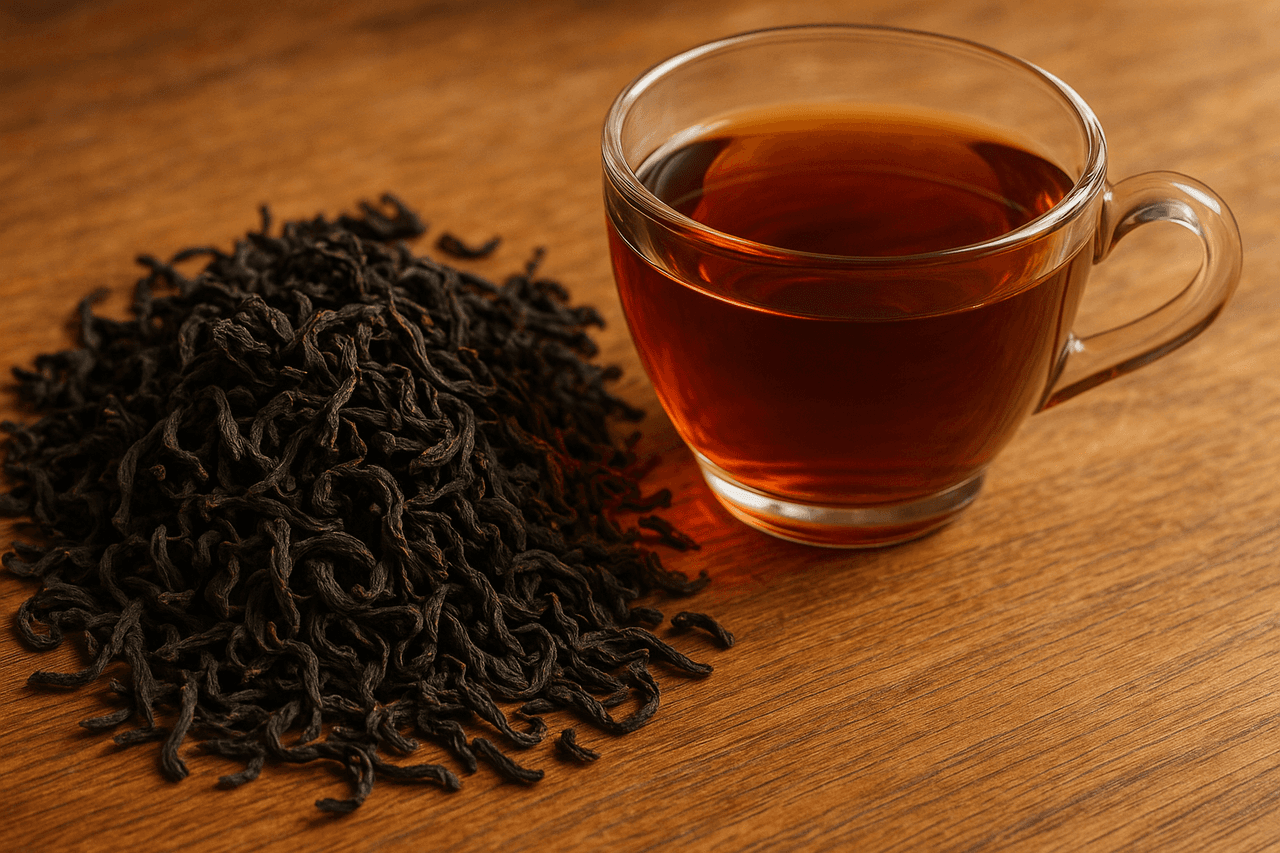
Seylan Creek (generated with artificial intelligence)
Origin(s) | Sri Lanka (formerly Ceylon) | ||||||||
|---|---|---|---|---|---|---|---|---|---|
Regions Where Cultivated | Nuwara Eliya, Dimbula, Uva, Kandy, Ruhuna, Sabaragamuwa | ||||||||
Growing Conditions | Temperature 13–28°C, annual rainfall 2000–5000 mm | ||||||||
Varieties | Black, Green, White (Silver Tips), Oolong | ||||||||
Distinguishing Feature | Bright reddish color, lively aroma, distinct astringent taste | ||||||||
Ceylon tea is a black tea variety renowned worldwide for its aromatic profile, chemical richness, and historical origins, traditionally cultivated in the mountainous regions of Sri Lanka. Grown in Sri Lanka’s highlands, Ceylon tea has become one of the world’s leading black tea varieties due to its production conditions and historical legacy. Known in Turkish as “Seylan çayı,” this tea is internationally recognized as “Ceylon Tea.” The term “Ceylon” derives from the country’s former name, used until 1972, and was initially employed as a commercial brand to designate teas exclusively from Sri Lanka. Over time, the name evolved into a general category representing a specific quality, aroma, and production method, irrespective of origin. Tea cultivation was introduced during the British colonial period and quickly became the foundation of the national economy. Today, Ceylon tea is not merely an agricultural product but also recognized as a symbol of Sri Lanka’s national identity.
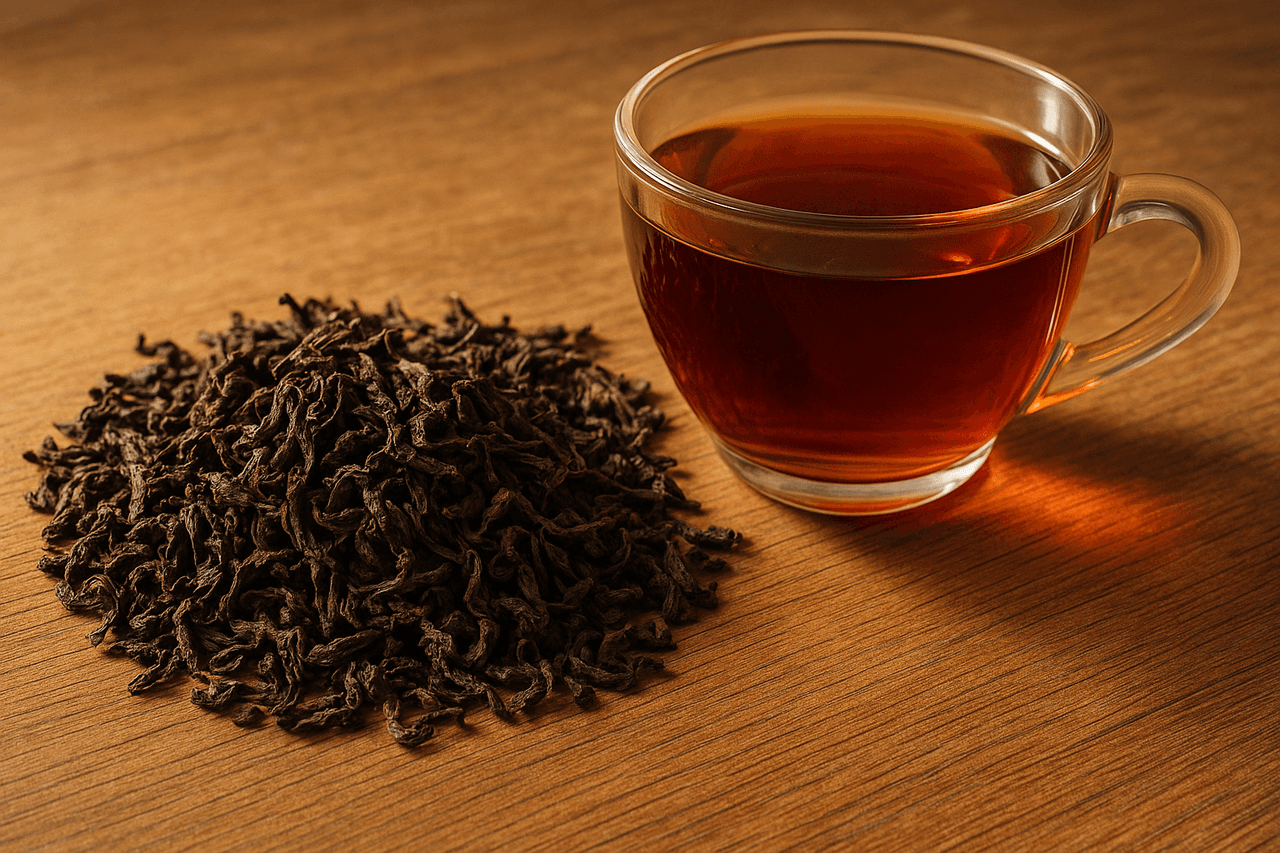
Representative image of Ceylon Tea (generated by artificial intelligence)
The story of Ceylon tea began in the mid-19th century. Under British administration, coffee was the primary crop on the island until the 1860s, when the fungal disease Hemileia vastatrix devastated coffee plantations, triggering a major agricultural crisis. This led to the search for alternative crops, and tea cultivation was trialed. The first serious effort was undertaken by James Taylor, of Scottish descent, who established a 7.5-hectare tea plantation in 1867 at Loolecondera near Kandy. Commercial production began the same year, and the first shipment to England was sent in 1872. Five years later, in 1877, tea exports had grown significantly and entered the London market under the name “Ceylon Tea.”
Taylor’s method of harvesting “two leaves and a bud”—collecting only the freshest upper parts of the plant—remains in use today. From the 1870s onward, tea became the country’s primary export commodity, completely replacing coffee cultivation. After Sri Lanka gained independence in 1948, the production system was nationalized. Although the country’s name changed to “Sri Lanka” upon the declaration of a republic in 1972, the “Ceylon Tea” brand was preserved in international trade.
Sri Lanka, due to its proximity to the equator, enjoys a consistently warm and humid climate throughout the year. The island’s topography consists of mountainous areas rising up to 2,500 meters above sea level. This variation has given rise to seven primary tea-growing regions, each with distinct microclimates and soil characteristics:
Temperature averages in these regions range from 13–28°C, with annual rainfall between 2,000 and 5,000 mm. According to research published in the journal Agronomy (2020), tea cultivation is closely linked to environmental variables such as solar radiation, slope, altitude, and annual precipitation. Particularly, north-facing slopes are the most favorable for tea farming. Each of these conditions shapes the chemical composition of the tea, thereby determining its aromatic profile.
Traditional methods are still employed in the production of Ceylon tea. Leaves are hand-picked, with only the two youngest leaves and one bud harvested. Picking occurs early in the morning, after which the leaves are transported to factories and processed through the following stages:
At the end of production, various tea types are obtained: black, green, white, and oolong. Black tea is the most common; it is fully fermented, resulting in a reddish-brown color, pronounced taste, and rich body. Green tea, produced without fermentation, is light in color and has a vegetal aroma. White tea (“Silver Tips”) is made exclusively from young buds and contains low caffeine. Oolong tea is partially fermented, giving it a character intermediate between black and green tea.
Classification of teas employs terms such as “Orange Pekoe (OP),” “Flowery Orange Pekoe (FOP),” and “Silver Tips.” These designations indicate the integrity and quality level of the leaves.
The distinctive flavor of Ceylon tea arises from the diversity of its chemical components. Scientific studies from 1965 identified phenolic compounds such as theaflavin, thearubigin, leucoanthocyanin, epicatechin gallate, and myricetin in tea. These substances determine the tea’s color, bitterness, and aromatic intensity. During fermentation, the ratios of these compounds change as polyphenols undergo oxidation, imparting reddish tones to the liquor.
Ceylon tea is also rich in amino acids. Theanine, asparagine, and gamma-aminobutyric acid contribute to the tea’s smooth mouthfeel and balanced taste. Additionally, volatile compounds such as acetaldehyde, dimethyl sulfide, methanol, and 3-methylbutanal have been identified; these components collectively form the tea’s characteristic aroma.
Ceylon tea has been subject not only to agricultural but also to aesthetic evaluation throughout its production process. In Sri Lanka, professional tea tasters assess hundreds of samples each week prior to auctions in Colombo. This process plays a decisive role in determining the commercial value of the tea.
Tasting follows a strict protocol. First, the color and uniformity of dry leaves are examined. Then, the color, brightness, and “briskness”—a term describing liveliness—of the brewed liquor are measured. The taster slurps the tea loudly into the mouth, allowing air to mix with the infusion and carry aromatic compounds to the nose. This technique facilitates the identification of fruity, malty, earthy, or citrus-like notes. Tasters are often able to determine the origin of a tea solely by its aromatic profile.
This system has created a mechanism through which aesthetic judgment is converted into economic value. Evaluation is based not on personal preference but on market standards, enhancing the international reliability of Ceylon tea.
Sri Lanka ranks fourth in global tea production, after India, China, and Kenya. Approximately 220,000 hectares of land are dedicated to tea cultivation, and the sector directly or indirectly employs 2.2 million people. Ceylon tea accounts for about 15% of the country’s export earnings and contributes 1.2% to its gross domestic product.
Production is typically carried out through small family farms and cooperatives. Tea cultivation has also become the primary source of income shaping living standards in rural areas. However, rising temperatures and irregular rainfall patterns due to climate change are threatening production zones. In response, Sri Lankan scientific institutions are conducting research to identify new suitable regions and develop sustainable agricultural strategies based on topographical and climatic data.
Ceylon tea possesses a rich production tradition shaped by natural conditions. Its history, beginning in the 19th-century colonial economy, has evolved into a national symbol. The unique elevation, temperature, and rainfall characteristics of each region directly influence the flavor profile of the tea. Its chemical composition is rich in polyphenols, amino acids, and volatile aromatics. The production process—hand-picking, traditional oxidation techniques, and professional sensory evaluation—has elevated this tea to an internationally recognized standard of quality. Beyond its economic contribution, Ceylon tea has become an inseparable part of Sri Lanka’s cultural heritage.
Backhaus, Victoria. “Ceylon Tea: Sri Lanka’s Iconic Black Tea.” *Paper & Tea*. Accessed October 14, 2025. https://www.paperandtea.de/blogs/glossary/ceylon-tea
Goodwin, Lindsey. “What Is Ceylon Tea?” The Spruce Eats. Accessed October 14, 2025. https://www.thespruceeats.com/ceylon-tea-sri-lankan-tea-765685
Jayasinghe, Sadeeka Layomi, Lalit Kumar, and Md Kamrul Hasan. “Relationship between Environmental Covariates and Ceylon Tea Cultivation in Sri Lanka.” Agronomy 10, no. 4 (March 30, 2020): 476. https://doi.org/10.3390/agronomy10040476
Matos, Ricardo R. “Ceylon Tea: Why Sri Lanka’s Teas Are Among the World’s Finest.” TeaTheWorld. Accessed October 14, 2025. https://teatheworld.com/blog/ceylon-tea-why-sri-lankas-teas-are-among-the-worlds-finest/
Pathare, Reshma. “Ceylon Tea: Nutrition, Benefits, Uses and Potential Downsides.” *Mega We Care*. Accessed October 14, 2025. https://www.megawecare.com/good-health-by-yourself/nutrition/ceylon-tea-benefits
Weblakruteas. “About Ceylon Tea.” *Lakru Teas (Pvt) Ltd*. Accessed October 14, 2025. https://www.lakruteas.com/history-of-ceylon-tea/
Wickremasinghe, R. L., and T. Swain. “Studies of the Quality and Flavour of Ceylon Tea.” Journal of the Science of Food and Agriculture 16 (January 1965). https://scijournals.onlinelibrary.wiley.com/doi/epdf/10.1002/jsfa.2740160109

Seylan Creek (generated with artificial intelligence)
Origin(s) | Sri Lanka (formerly Ceylon) | ||||||||
|---|---|---|---|---|---|---|---|---|---|
Regions Where Cultivated | Nuwara Eliya, Dimbula, Uva, Kandy, Ruhuna, Sabaragamuwa | ||||||||
Growing Conditions | Temperature 13–28°C, annual rainfall 2000–5000 mm | ||||||||
Varieties | Black, Green, White (Silver Tips), Oolong | ||||||||
Distinguishing Feature | Bright reddish color, lively aroma, distinct astringent taste | ||||||||
Historical Background
Growing Regions and Natural Conditions
Production Stages
Chemical and Sensory Properties
Sensory Evaluation and Tasting Culture
Economic and Social Significance