


This article was automatically translated from the original Turkish version.
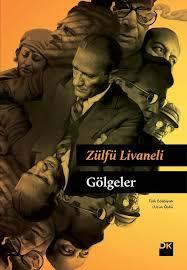
Shadows
Author(s) | Zülfü Livaneli | ||||||||
|---|---|---|---|---|---|---|---|---|---|
Type(s) | Short story | ||||||||
Publication Date | 2018 | ||||||||
Publisher(s) | Doğan Kitap Yayınevi | ||||||||
Number of Pages | 88 | ||||||||
"Shadows" is a work by Zülfü Livaneli that explores the pseudonyms (mahlas and müstear) used by writers and public figures. The book focuses on how authors adopted pseudonyms to protect themselves from social pressures, political threats, and economic hardship. Livaneli questions how pseudonyms and shadows shaped writers’ literary identities, examining the paradoxical condition of being both present and absent. The book discusses the pseudonyms used by figures such as Fatih Sultan Mehmet, Mustafa Kemal Atatürk, Nazım Hikmet, Cemal Süreya, Halide Edib Adıvar, Orhan Kemal, and Yaşar Kemal, reflecting on their literary legacies through these aliases.
The characters in the book are historical and literary figures who assume new identities. Each character became anonymous in their respective societies for various reasons and found refuge under a pseudonym. Below are their typological characteristics:
Each character’s name is not merely a single word but a shadow carrying traces of the past.
In "Shadows," the narrative revolves around pseudonyms. Livaneli describes ghostly figures wandering the streets of darkness Istanbul. These shadows are erased traces of the past, offering poets and writers both an identity and a form of protection. Author, while recounting these stories, uses each figure’s pseudonym to illuminate their literary and social roles. Zülfü Livaneli does not merely describe the linguistic or literary power of these pseudonyms; he also reveals how a person’s identity becomes entwined with literature, and how names can radically transform identity.
The book’s structure is not linear but enriched by flashbacks and literary allusions. Each character’s pseudonym leaves a trace of their past, while each shadow invites deeper exploration of previous thoughts or literary perspectives.
Identity, freedom, social pressures, political threats, and artist identity are central themes. Their sub-themes can be outlined as follows:
Zülfü Livaneli’s prose is emotionally intense and aesthetically profound. This work, infused with poems, quotations, and illustrations, invites the reader into a time tunnel. Emotions such as Melancholy and nostalgia permeate the overall atmosphere of the book.
Zülfü Livaneli succeeds in engaging readers through a fluid and simple language. Yet the depth and complexity of the book render it inaccessible to superficial readings. The work possesses a reflective and questioning style.
Livaneli, Zülfü. "Gölgeler". İnkılap Kitabevi, 2023.

Shadows
Author(s) | Zülfü Livaneli | ||||||||
|---|---|---|---|---|---|---|---|---|---|
Type(s) | Short story | ||||||||
Publication Date | 2018 | ||||||||
Publisher(s) | Doğan Kitap Yayınevi | ||||||||
Number of Pages | 88 | ||||||||
Typologies of the Novel’s Characters
Main Narrative Structure
Themes of the Book
Emotional and Aesthetic Reflection
Author’s Style and Literary Language