


This article was automatically translated from the original Turkish version.
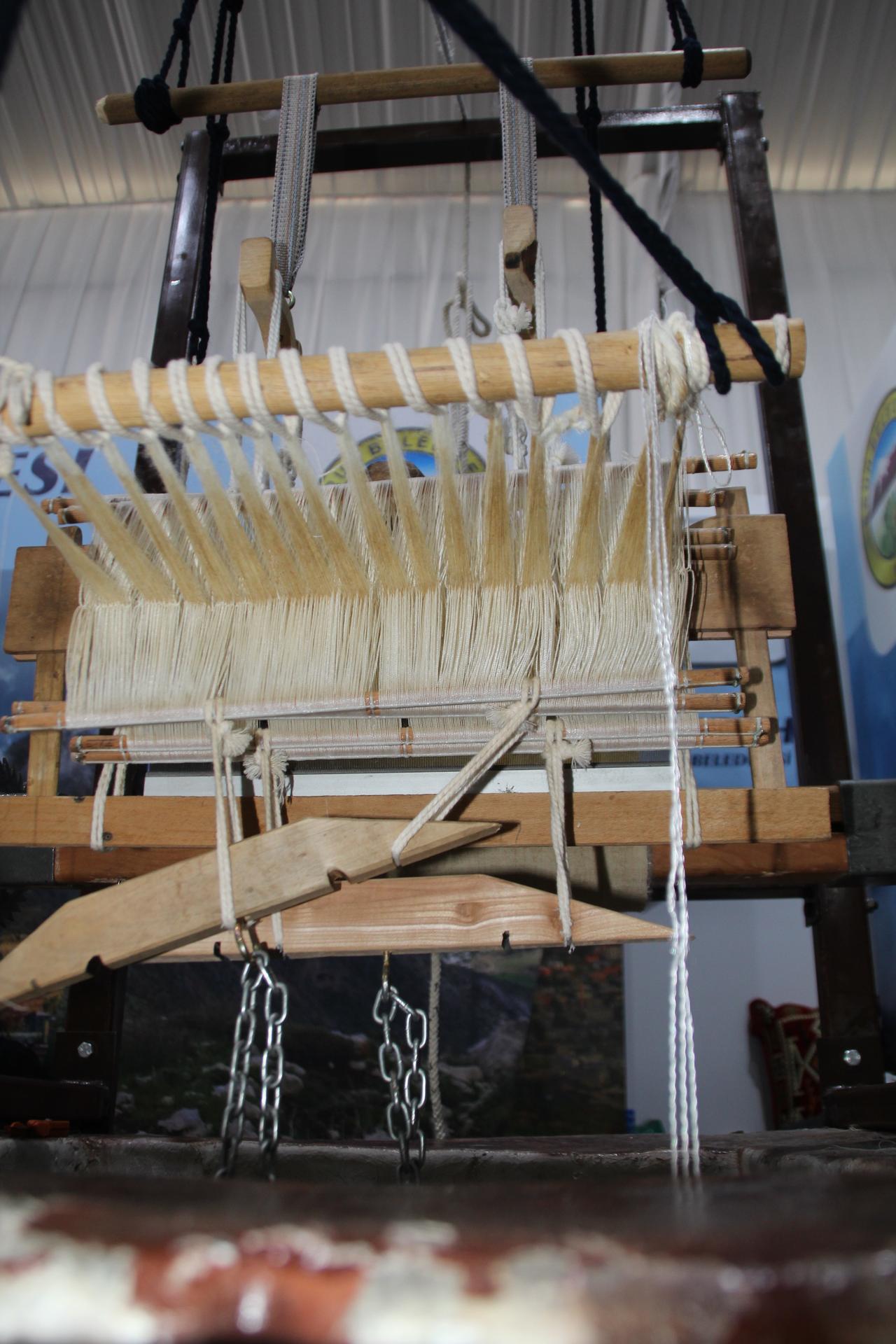
shawl shapik fabric
Product Type | Traditional hand-woven fabric | ||||||||
|---|---|---|---|---|---|---|---|---|---|
Usage | In the production of 'şal' (pants) and 'şepik' (upper garment) | ||||||||
Raw Material | Goat hair fleece | ||||||||
Origin(s) | Siirt-Eruh | ||||||||
Registration Type | Mahreç mark | ||||||||
Registration Number | 1240 | ||||||||
Registration Date | 14.10.2022 | ||||||||
Corporate Venture | Siirt Maturation Institute Weaving Workshop | ||||||||
Şal Şepik is the name of a traditional garment worn in the Southeastern Anatolia Region. “Şal” refers to the lower garment, which is pantaloon-style, while “şepik” denotes the upper garment, resembling a jacket. The Şal Şepik Fabric used in producing these garments is a traditional woven textile made entirely by hand from goat down, using natural methods. The fabric combines functionality with its aesthetic texture and suitability to climatic conditions.

Usage of Şal Şepik. (Source:Anadolu Agency)
With a history of approximately 600 years, Şal Şepik Fabric has been traditionally woven especially in the Eruh district of Siirt. Production declined from the mid-20th century and the craft began to be forgotten. However, thanks to efforts by local institutions, notably the Eruh Community Education Center, the tradition has been revitalized and production has resumed. Moreover, for the past 60 years, this fabric has remained actively used in traditional garments among the local population.

Production of Şal Şepik. (Source: Ministry of Culture and Tourism of the Republic of Türkiye )

Production of Şal Şepik (Source:Ministry of Culture and Tourism of the Republic of Türkiye)
As a result of an application by the Eruh Municipality, Şal Şepik Fabric was officially registered as a geographical indication on 14 October 2022. The product is protected by the Türkiye Patent and Trademark Office. Registration ensures that production occurs only within specific geographical boundaries and exclusively through traditional methods. The product must bear the inscription “Şal Şepik Fabric” and the official geographical indication emblem. If these cannot be directly placed on the product or packaging, they must be visibly displayed within the production facility.
Şal Şepik Fabric has been registered as a geographical indication by the Türkiye Patent and Trademark Office. The application was submitted on 24 August 2021, and registration was granted on 14 October 2022 under registration number 1240. The applicant is the Eruh Municipality in Siirt, located at 15 Temmuz Democracy Square, Eruh/SİİRT. The protected geographical area includes the provinces of Ağrı, Batman, Bitlis, Diyarbakır, Hakkâri, Mardin, Muş, Siirt, Şırnak, Tunceli, and Van. The product or its packaging must bear the inscription “Şal Şepik Fabric” and the geographical indication emblem; if this is not feasible, the information must be clearly visible within the production facility.
Various institutional efforts are underway to ensure the sustainability of Şal Şepik Fabric production and promotion. One of the most notable examples is the weaving workshop established in 2024 under the Siirt Maturation Institute. This workshop aims to preserve the fabric as a cultural heritage and transmit it to new generations. At the workshop’s opening, Siirt Governor Kemal Kızılkaya emphasized that Şal Şepik is an ancient local craft, produced using natural methods and possessing high aesthetic value.
The raw materials used in Şal Şepik Fabric production—goat down, çiriş herb, dyeing techniques, and weaving methods—can only be applied using the specific knowledge and expertise found within the designated geographical area. Consequently, a strong terroir link exists between the fabric and its production region.
Regular monitoring mechanisms are implemented to ensure the quality and authenticity of the registered product. These inspections are carried out by a committee coordinated by the Eruh Municipality, comprising members from the Eruh District Community Education Center Directorate, the Eruh Subgovernorship, and expert personnel from the municipality. Inspections occur at least once annually and may be repeated if necessary or upon complaint. During inspections, the following criteria are verified:
Anadolu Ajansı. “Giysilerinde 60 Yıldır Tescilli Şal Şepik Kumaşı Tercih Ediyor.” Accessed May 31, 2025. https://www.aa.com.tr/tr/yasam/giysilerinde-60-yildir-tescilli-sal-sepik-kumasi-tercih-ediyor/3272111.
Anadolu Ajansı. “Siirt Olgunlaşma Enstitüsünde Şal Şepik Dokuma Atölyesi Açıldı.” Date Published: December 10, 2024. Accessed May 31, 2025. https://www.aa.com.tr/tr/kultur/siirt-olgunlasma-enstitusunde-sal-sepik-dokuma-atolyesi-acildi/3420669.
Siirt İl Kültür ve Turizm Müdürlüğü. "Siirt Şal Şepik Kumaşı Coğrafi İşaret Aldı." Accessed May 31, 2025. https://siirt.ktb.gov.tr/TR-330842/siirt-sal-sepik-kumasi-cografi-isaret-aldi.html.
Turk Patent and Trademark Office. "Şal Şepik Kumaşı Coğrafi İşaret Detayı." Accessed May 31, 2025. https://ci.turkpatent.gov.tr/cografi-isaretler/detay/4885.

shawl shapik fabric
Product Type | Traditional hand-woven fabric | ||||||||
|---|---|---|---|---|---|---|---|---|---|
Usage | In the production of 'şal' (pants) and 'şepik' (upper garment) | ||||||||
Raw Material | Goat hair fleece | ||||||||
Origin(s) | Siirt-Eruh | ||||||||
Registration Type | Mahreç mark | ||||||||
Registration Number | 1240 | ||||||||
Registration Date | 14.10.2022 | ||||||||
Corporate Venture | Siirt Maturation Institute Weaving Workshop | ||||||||
No Discussion Added Yet
Start discussion for "Shawl Shepik Fabric" article
History
Distinguishing Features
Production Process
Geographical Indication and Protection
Registration Details
Institutional Initiatives
Geographical Linkage
Monitoring