


This article was automatically translated from the original Turkish version.
+1 More
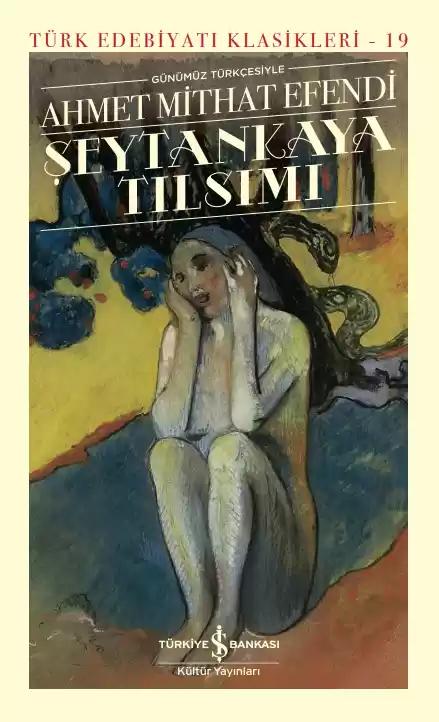
Shaytankaya Talisman
Subject(s) | Adventure and mystery revolving around the legend of the talisman | ||||||||
|---|---|---|---|---|---|---|---|---|---|
Author(s) | Ahmet Mithat Efendi | ||||||||
Genre | Novel | ||||||||
Theme(s) | Science versus superstition adventure rationalism discovery | ||||||||
“Şeytankaya Tılsımı” is one of the Turkish author’s novels adorned with supernatural elements. The work draws attention through its supernatural themes, addressing evil, supernatural forces, and society’s stance against these powers.
While the novel reflects the social and cultural conditions of its time, it particularly highlights supernatural and mythological elements. Information regarding its publication process and subsequent editions is limited in the provided sources. However, academic theses and discourse analyses on the novel emphasize its significant place within its cultural context.
“Şeytankaya Tılsımı” primarily narrates events centered around a village legend. The central theme of the novel is the impact of evil and supernatural forces on human life. The work also explores societal beliefs, fears, and the methods used to confront these fears. Amulet motifs are employed as symbols of evil.
The language used in the novel resembles the folk narrative tradition of its era. Local expressions and mythological elements are frequently employed. Characters represent various segments of society and are endowed with psychological depth. The boundary between supernatural events and everyday reality is deliberately blurred in the novel.
The novel reflects the Anatolian village life and popular beliefs of its time. Traditional societal values and the community’s perception of the supernatural form the foundational pillars of the work. It examines the meanings assigned to the amulet by villagers and the impact of these meanings on social order.
In academic research, “Şeytankaya Tılsımı” has been approached primarily from the perspectives of cultural anthropology and literature. Discourse analyses of the novel have been conducted in articles on DergiPark and in a YÖK thesis, where the cultural and psychological functions of the amulet motif have been discussed. These studies indicate that the novel’s supernatural elements are not merely fictional constructs but also reflections of collective social unconsciousness.
The novel is regarded as one of the important works in Turkish literature that engages with supernatural themes. Literary circles evaluate it as an exemplary case of transferring folk narratives into the modern novel. It is also frequently cited as a reference for understanding how regional beliefs are reflected in literary texts.
The supernatural elements and amulet motifs in the novel are viewed by some critics as a successful synthesis of folkloric components, while others argue that the narrative is occasionally overly dramatized. In academic sources, these differing interpretations are generally associated with the richness and multilayered structure of the work.
Aksoy, M. (2022). *Şeytankaya Tılsımı Romanının Kültürel Çözümlemesi* [Master's thesis, University Name].YÖK Tez Database. Accessed June 11, 2025. https://acikbilim.yok.gov.tr/bitstream/handle/20.500.12812/342006/yokAcikBilim_10236264.pdf
Mithat Efendi, Ahmet. (Ed. İsmail Kayapınar). (2022). *Şeytankaya Tılsımı*. İstanbul: Türkiye İş Bankası Kültür Yayınları.
Yılmaz, E. (2021). “Şeytankaya Tılsımı Üzerine Söylem Analizi”. *Edebiyat ve Kültür Dergisi*, 12(3), 45–60. Accessed June 11, 2025. https://dergipark.org.tr/tr/download/article-file/3759590

Shaytankaya Talisman
Subject(s) | Adventure and mystery revolving around the legend of the talisman | ||||||||
|---|---|---|---|---|---|---|---|---|---|
Author(s) | Ahmet Mithat Efendi | ||||||||
Genre | Novel | ||||||||
Theme(s) | Science versus superstition adventure rationalism discovery | ||||||||
No Discussion Added Yet
Start discussion for "Shaytankaya Talisman" article
History of the Work
Subject and Themes
Literary and Formal Characteristics
Cultural and Social Context
Academic Studies and Discourse Analyses
Place and Influence in Turkish Literature
Critiques and Evaluations