


This article was automatically translated from the original Turkish version.
+1 More
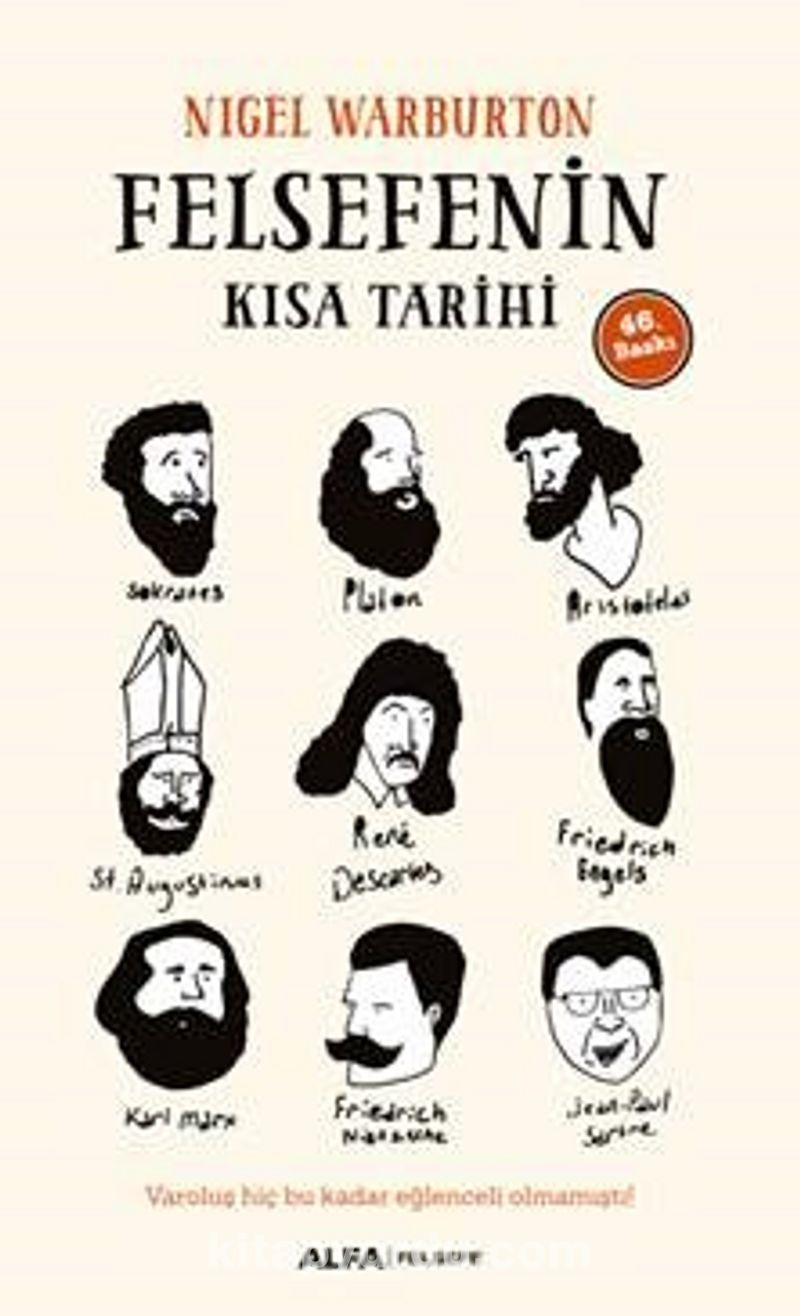
A Short History of Philosophy
Author(s) | Nigel Warburton | ||||||||
|---|---|---|---|---|---|---|---|---|---|
Publisher(s) | Alfa Yayınları | ||||||||
Translator(s) | Güçlü Ateşoğlu | ||||||||
Number of Pages | 360 | ||||||||
Genre | Felsefe | ||||||||
Nigel Warburton’s A Short History of Philosophy is a history of philosophy that presents the approximately 2400-year development of Western philosophy in a clear, systematic, and accessible style. First published in 2001, the book introduces readers to a broad intellectual tradition stretching from Socrates to Peter Singer, presenting the evolution of philosophical thought in chronological order. It is structured to appeal both to academic audiences and to readers new to philosophy.
Warburton’s work consists of 40 chapters, each focusing on a specific philosopher or philosophical movement. The chapters explain the key arguments of influential thinkers and situate these arguments within their historical contexts. Each chapter treats its subject independently, allowing readers to engage with the book either as a cohesive history of philosophy or through selective reading. The author’s primary aim is to present philosophy as a field that is relatable to everyday life, accessible, and thought-provoking.
The book opens with Socrates’s method of intellectual inquiry and his conception of philosophy as a way of life. Plato’s theory of forms and his vision of the “Republic” are introduced within this context. Foundational philosophical questions such as “What is truth?” and “How should we live?” are established in this early period.
Aristotle’s concept of “eudaimonia”—true happiness grounded in virtue—is examined. The teachings of Epicurus, the Stoics (Epictetus and Seneca), and Cicero are presented through ideas such as personal tranquility, living in accordance with nature, and the acceptance of fate.
Thinkers such as Augustine, Boethius, Anselm, and Aquinas are discussed in relation to issues like the existence of God, the problem of evil, and free will. This section highlights the synthesis of Christianity and philosophy and the development of scholastic thought.
The rationalist tradition, initiated by René Descartes’s proposition “cogito ergo sum” (I think, therefore I am), is elaborated through figures such as Spinoza and Leibniz. Their views on God, freedom, and knowledge are presented with analytical clarity.
Thinkers such as John Locke, George Berkeley, and David Hume are examined in relation to knowledge, experience, and the structure of the mind. The social contract theory, freedom, and education as conceived by Enlightenment philosophers like Voltaire and Rousseau are treated in depth.
Immanuel Kant’s epistemology, particularly his distinctions regarding the moral law and deontological ethics, receives extensive coverage. Georg Wilhelm Friedrich Hegel’s dialectical conception of history, his notion of “Spirit,” and his idealist system deepen the book’s philosophical foundation.
Nietzsche’s metaphor of the “death of God,” Freud’s theory of the unconscious, and the existential approaches of Kierkegaard and Sartre mark the book’s transition into the 20th century. Simone de Beauvoir’s work on women’s freedom and ethics is significant as a bridge to feminist philosophy.
The arguments of modern thinkers such as Bertrand Russell, Ludwig Wittgenstein, Karl Popper, Hannah Arendt, and John Rawls on knowledge, language, politics, ethics, and justice are addressed. Finally, contemporary philosophers like Peter Singer introduce topics such as environmental ethics, animal rights, and global justice.
Warburton’s simple and explanatory style presents technical philosophical concepts in language accessible to all readers. Unlike traditional histories of philosophy, the book progresses not through didactic instruction but through narrative. Examples and historical contexts provided at the end of each chapter help connect philosophical ideas to concrete aspects of everyday life.
A Short History of Philosophy is widely used as a supplementary text in university introductory philosophy courses and is regarded in academic circles as a successful model for the pedagogical presentation of philosophy. Due to its clear exposition of philosophical concepts, it serves as an accessible text for both students and general readers.
Warburton, Nigel. Felsefenin Kısa Tarihi. Çev. Güçlü Ateşoğlu. İstanbul: Alfa Yayınları, 2017.

A Short History of Philosophy
Author(s) | Nigel Warburton | ||||||||
|---|---|---|---|---|---|---|---|---|---|
Publisher(s) | Alfa Yayınları | ||||||||
Translator(s) | Güçlü Ateşoğlu | ||||||||
Number of Pages | 360 | ||||||||
Genre | Felsefe | ||||||||
No Discussion Added Yet
Start discussion for "Short History of Philosophy (Book)" article
Structure and Purpose of the Book
Thematic Structure and Philosophers
The Beginning of Questioning: Socrates and Plato
Happiness and Ethics: Aristotle and Hellenistic Thought
The Middle Ages and Religious Philosophy
The Birth of Modern Philosophy: Descartes and Rationalism
Empiricism and the Enlightenment
Critical Philosophy and Modern Paradigms: From Kant to Hegel
Critiques of Modernity and Existentialism
20th and 21st Century Philosophy
Style and Pedagogical Value
Academic Value of the Work