This article was automatically translated from the original Turkish version.
+2 More
Scientific Name(s) | Liquidambar orientalis Miller | ||||||||
|---|---|---|---|---|---|---|---|---|---|
Distribution Area | Muğla, Aydın, Denizli, Antalya and surrounding areas | ||||||||
Resin | Aromatic balsam | ||||||||
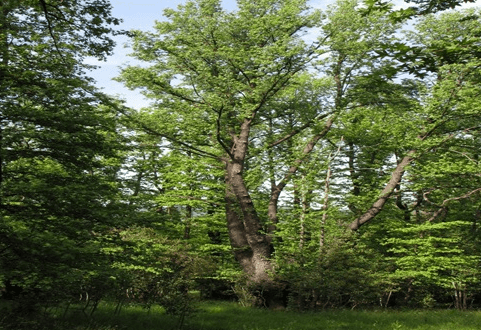
The Sweetgum Tree (Liquidambar orientalis Mill.) is a deciduous tree species belonging to the Hamamelidaceae (Sweetgum) family and produces aromatic resin. It is commonly known in local usage as daily tree, Anatolian sweetgum, or oil tree. This species is an endemic plant found naturally only in southwestern Anatolia. Its most important distribution areas are the provinces of Muğla, Aydın, Denizli, and Antalya. The sweetgum tree is highly valuable both for its ecological importance and for its resin, known as sweetgum oil or balsam.
In natural conditions, the sweetgum tree can grow up to 15–25 meters tall with a straight trunk and broad crown.
Liquidambar orientalis is found naturally only in southwestern Türkiye and, to a limited extent, on the island of Rhodes. The main distribution areas in Türkiye are:
This species thrives in lowland areas between 0–500 meters elevation, in humid and warm microclimates with high groundwater levels. It typically forms natural communities along riverbanks, stream beds, and swamp edges.
The sweetgum tree has held an important place throughout history due to its medicinal, religious, and cultural uses. Ancient writers such as Theophrastus, Dioscorides, and Pliny referred to its balsam as “styrax.” In ancient Egypt it was used in mummification, in Rome for perfume production, and in Byzantine and Ottoman times for medicinal and incense purposes. During the Ottoman period, sweetgum oil known as “Anatolian Daily” was widely used in medicine for wound healing, treatment of cough and bronchitis, and relief of rheumatic pain. Its use as incense in places of worship also established a special place for sweetgum in cultural life.
The most valuable product of the sweetgum tree is the resinous balsam or sweetgum oil obtained from its trunk. This oil is produced by collecting the resin that exudes from small incisions made in the trunk, followed by boiling and filtration.
Production Stages:
Sweetgum oil contains aromatic compounds such as cinnamic acid, cinnamyl alcohol, benzyl benzoate, styrax, and vanillin. These compounds confer strong antiseptic, antimicrobial, anti-inflammatory, and antifungal properties.
The aromatic balsam or sweetgum oil derived from Liquidambar orientalis has been utilized across numerous fields throughout history and continues to hold significance in both traditional medicine and modern industry. Its components—including derivatives of cinnamic acid, styrax, benzyl benzoate, and vanillin—form the basis for its therapeutic, cosmetic, and industrial uses.
Sweetgum oil has been used for centuries as a herbal balsam in natural medicine.
In modern phytotherapy and aromatherapy, sweetgum oil is being re-evaluated as a natural alternative to synthetic antibacterial agents.
Sweetgum oil is one of the world’s oldest natural essences, prized for its pleasant, resinous, and slightly sweet aroma.
Products containing sweetgum oil are increasingly favored by natural cosmetic brands and are gaining value in global markets as “Anatolian-origin natural resin essence.”
The aromatic scent of sweetgum oil has long been recognized for its balancing and calming effects on mood.
In Anatolia, particularly in villages around Muğla, sweetgum oil is commonly known as “oil tree balsam.”
These traditional uses represent a body of local medical knowledge passed down through generations over centuries.
Sweetgum oil is not only used in medical and cosmetic fields but is also valued as an industrial raw material in various sectors:
Due to these properties, sweetgum oil is attracting interest in modern biochemistry and natural product technology research.
Sweetgum forests are valuable not only for their biological diversity but also for ecotourism and cultural heritage.
Sweetgum forests are part of endemic ecosystems with high biological diversity, providing habitats for birds, insects, amphibians, and plant species. However:
have led to a reduction in the area covered by sweetgum forests. As a result, Liquidambar orientalis is listed on the IUCN Red List as “Endangered.” In Türkiye, these forests are protected under the status of natural conservation areas. The best-known protected area is the Köyceğiz-Dalyan Sweetgum Forest Natural Conservation Area.
Sarac, N., B. Şen. “Antioxidant, Mutagenic, Antimutagenic Activities, and Phenolic Compounds of *Liquidambar orientalis* Mill. var. *orientalis*.” *Industrial Crops and Products* 53 (2014): 60–64. Accessed November 7, 2025. https://doi.org/10.1016/j.indcrop.2013.12.015
Sağdıç, O., Özkan, G., Özcan, M., Özçelik, S. “A Study on Inhibitory Effects of Sığla Tree (Liquidambar orientalis Mill. var. orientalis) Storax against Several Bacteria.” Phytotherapy Research 19, no. 6 (2005): 549–551. Accessed November 7, 2025. https://doi.org/10.1002/ptr.1654

Scientific Name(s) | Liquidambar orientalis Miller | ||||||||
|---|---|---|---|---|---|---|---|---|---|
Distribution Area | Muğla, Aydın, Denizli, Antalya and surrounding areas | ||||||||
Resin | Aromatic balsam | ||||||||
No Discussion Added Yet
Start discussion for "Sığla Tree (Liquidambar orientalis Mill.)" article
Morphological Characteristics
Distribution and Ecology
History and Cultural Significance
Sweetgum Oil (Balsam)
Applications of Sweetgum Oil
Applications in Medicine and Pharmacy
Applications in Cosmetics and Perfumery
Aromatherapy, Incense, and Spiritual Practices
Traditional and Folk Medicine Uses
Industrial and Technical Applications
Ecotourism and Cultural Uses
Ecological Status and Conservation