


This article was automatically translated from the original Turkish version.
+2 More
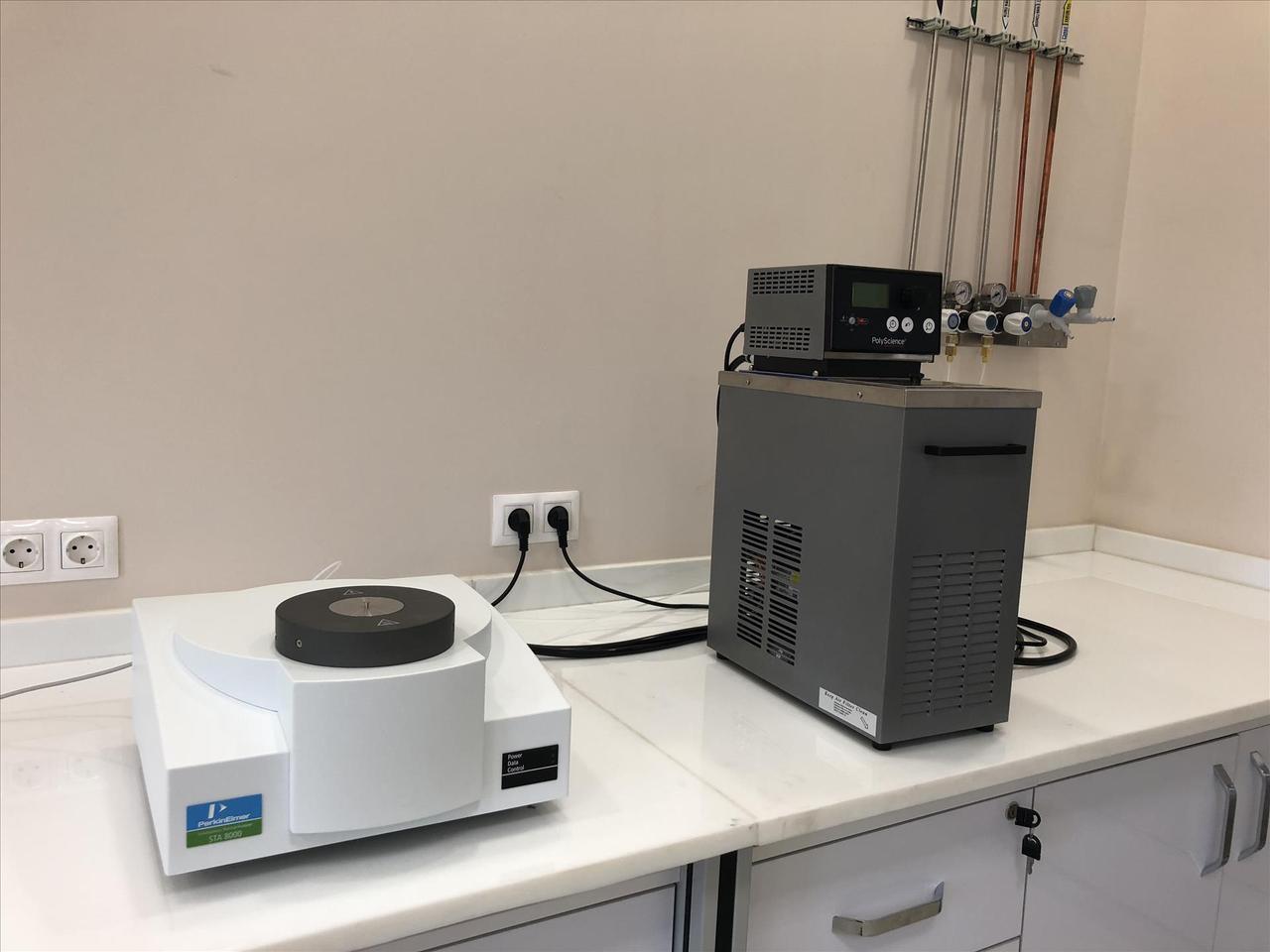
https://arum.ogu.edu.tr/Sayfa/Index/64/simultane-termal-analizor-sta
Simultaneous Thermal Analyzer (STA) is a critical analytical technology in materials science and industrial applications. STA accounts for approximately 40% of all thermal techniques used in global materials analysis and is widely preferred especially in polymer production and quality control. In Türkiye, STA is used for composite material analysis at institutions such as ARUM (Osmangazi University Research and Application Center) and Sakarya University SARGEM, enhancing its importance in local industry and research. STA is an advanced instrument capable of performing Termogravimetric Analysis (TGA) and Differential Thermal Analysis (DTA) or Differential Scanning Calorimetry (DSC) measurements simultaneously in a single experiment, enabling high-precision monitoring of both mass changes and heat flow variations.
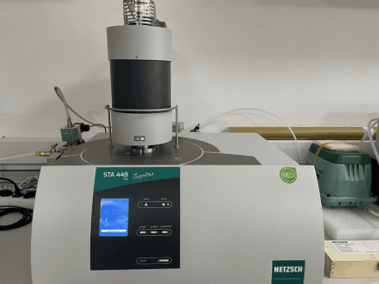
General View of the STA Instrument (1)
In an STA instrument, the sample and reference material are placed in a furnace system equipped with a microbalance. The sample is heated under a controlled atmosphere (e.g. nitrogen, air or argon) at a programmed heating rate ranging from 0.1 to 100 °C/min. Two fundamental parameters are measured simultaneously:
In analyses conducted under nitrogen atmosphere, oxidation reactions are reduced by approximately 10%, facilitating clearer separation of reaction mechanisms. The data acquisition software provides real-time graphs and correlated analyses.
STA is used for a wide range of materials characterization tasks:
Furnace: Controlled heating from room temperature to 1500 °C; heating rate of 0.1–100 °C/min.
Balance System: Microbalance with ±0.1 µg sensitivity.
DTA/DSC Sensor: Heat flow resolution of ±0.1 µW.
Gas Control Unit: Provides inert, oxidizing, and reducing atmospheres.
Software: Multi-parameter recording, automated analysis, and data correlation.
Simultaneous TGA and DTA/DSC measurements reduce experiment time by up to 50%.
Sample requirement is reduced, and direct correlation between different analyses is possible.
Atmosphere control simplifies the separation of reaction mechanisms.
In Türkiye, multi-sample analysis is increasingly common using automated sample changers.
Single-sample analysis can make statistical repetition difficult; therefore, automated sample changer instruments are preferred.
Decomposing complex thermal events can be challenging; artificial intelligence-assisted data analysis methods and statistical models are being developed and applied.
Osmangazi Üniversitesi Research and Application Center (ARUM). "Simultane Termal Analizör (STA)." ARUM. Accessed July 15, 2025. https://arum.ogu.edu.tr/Sayfa/Index/64/simultane-termal-analizor-sta.
Sakarya Üniversitesi SARGEM. "Termal Analiz." SARGEM. Accessed July 15, 2025. https://sargem.sakarya.edu.tr/tr/icerik/26268/141380/termal-analiz.
Topçu, Yusuf. *Isısal Analiz Yöntemleri.* Ondokuz Mayıs Üniversitesi Akademik Veri Yönetim Sistemi. Accessed July 15, 2025. https://avys.omu.edu.tr/storage/app/public/ytopcu/135592/isisal_analiz_yontemleri_web.pdf.
Yıldız Teknik University Central Research Laboratory. "Termal Analiz Laboratuvarı." Yıldız Technical University. Accessed July 15, 2025. https://merkezlab.yildiz.edu.tr/termal-analiz-laboratuvari.

https://arum.ogu.edu.tr/Sayfa/Index/64/simultane-termal-analizor-sta
No Discussion Added Yet
Start discussion for "Simultaneous Thermal Analyzer (STA)" article
Principle of Operation
Applications
Instrument Components and Technical Specifications
Advantages and Limitations
Advantages:
Limitations: