

This article was automatically translated from the original Turkish version.
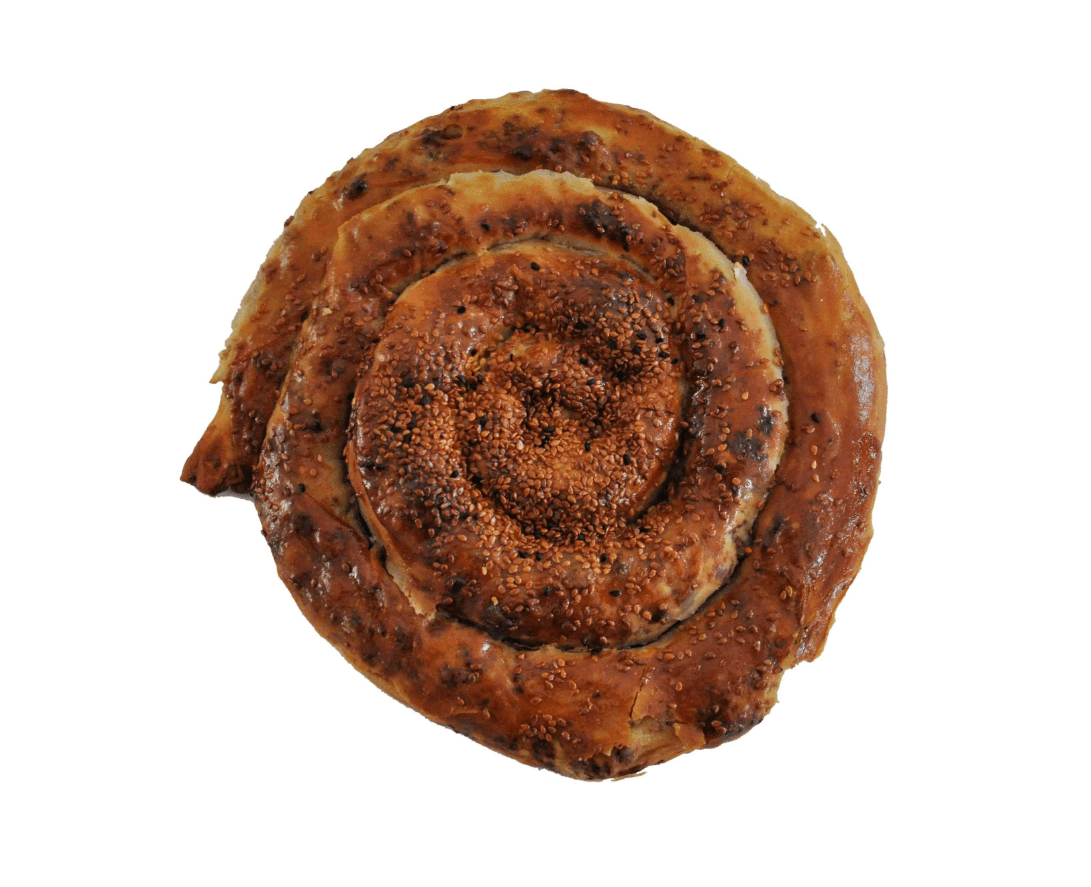
Sinop Nokulu is a traditional pastry specialty of Sinop province, located north of Black Sea Region in the place region, traditionally prepared with a filling of walnuts and raisins. This food item has a history of approximately 200 years and is made by placing a mixture of sugar-coated dried grape and coarsely crushed walnut inside thin rolled dough sheets.
In the past, Sinop Nokulu was prepared in homes especially on the eve of Eid al-Fitr and sent to ovens to be baked, then served to holiday guests. Today, it is produced daily in bakeries and pastry shops across the region and is enthusiastically consumed by domestic and foreign tourists. Due to its structure that resists staleness for extended periods, it was also favored by sailors and ship workers as a provision. The use of dairy products derived from livestock fed on the region’s rich plant vegetation and eggs from free-range chicken hens imparts a distinctive regional character to this geographically registered delicacy.
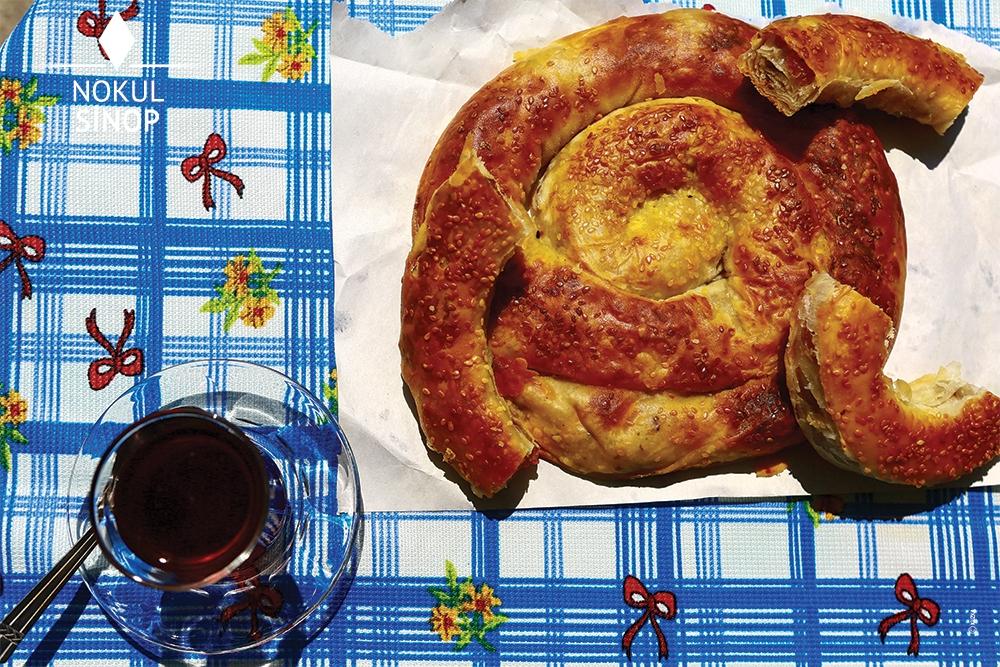
The origin of Sinop Nokulu traces back to a local kitchen tradition approximately two centuries ago. In Sinop, a historic port city on the Black Sea coast, nokulu has long been an indispensable part of festive tables and a staple provision for sailors embarking on long voyages. Written and oral sources indicate that sailors stationed at the Sinop shipyard carried nokulu with them due to its ease of preparation and long shelf life. It is known that in the past, especially during Ramadan and Sacrifice holidays, nokulu was prepared in homes on the eve of the festival, baked in ovens, and served to visitors throughout the celebration period.
At the root of this cultural tradition lies a social value in which nokulu was not merely a practical food item but also a symbolic offering representing hospitality and communal celebration. Nokulu has also become a symbol of solidarity and sharing in the region’s culinary culture, as its ingredients—walnuts, raisins, sugar, and hand-rolled yufka such as—were traditionally prepared collectively by families using the imece method. Today, it is preserved both in its traditional production form and reaches wider audiences through commercial bakery production.
Before beginning the preparation of nokulu, a yeast mixture is prepared to help the dough rise. Warm milk is poured into a bowl, and a small amount of dust sugar and dry yeast are added; after thorough mixing, the mixture is left for 5–10 minute until the yeast becomes active. During this process, the yeast ferments and helps the dough rise better. In a large mixing bowl, the melted half packet of margarine, yogurt, vegetable oil, two complete eggs and two egg whites, vinegar, salt, and the activated yeast mixture are combined. Flour is then gradually added until a soft dough is formed that does not stick to the hands. The resulting dough is covered and left to rise for approximately 45–60 minutes. By the end of this period, the dough’s volume should have nearly doubled.
While the dough is rising, the filling is prepared. In a bowl, coarsely chopped walnuts, dried raisins, powdered sugar, and optionally cinnamon are mixed together to form the filling. Equal-sized pieces are taken from the risen dough and rolled out thinly on a floured surface. The raisin-walnut filling is sprinkled over each rolled sheet, which is then rolled into a log. The log is cut into 3–4 cm thick slices and arranged on a baking tray with the cut surfaces facing sideways. The previously separated egg yolks are brushed over the tops of the pieces; sesame or sesame or Nigella sativa may be sprinkled as desired. The tray is then left to rest for 15–20 minutes to complete the second rising process.
The prepared nokulus are placed in a preheated oven at 180°C and baked for approximately 25–30 minutes until their tops turn golden brown. After removal from the oven, they are allowed to rest briefly and are served either warm or cold. Sinop Nokulu prepared with this recipe stands out as a regional and traditional sweet pastry suitable for serving during festive occasions and tea hours.
Sinop Nokulu is a regional product registered as a “mahreç mark” under Law No. 6769 on Industrial Property. The application was submitted by the Sinop Chamber of Commerce and Industry; the application filed on 25 April 2011 was officially registered and entered into force on 15 December 2017 by the Patent and Trademark Office. The product is defined as a traditional pastry made using local ingredients and traditional production methods within the boundaries of Sinop province.
Karakaçar, Ercan, Doğancili, Sezen Olca, and Ak, Serkan. “Gastronomik Değerler Kapsamında Sinop Mutfağına Özgü Bir Değer: Nokul.” VII. DOĞU AKDENİZ TURİZM SEMPOZYUMU. Accessed April 12, 2025. Accessed adresi.
Turk Patent and Trademark Office. "SİNOP NOKULU." Turk Patent and Trademark Office. Accessed April 12, 2025. https://ci.turkpatent.gov.tr/files/geographicalsigns/284.pdf
Türkiye Kültür Portalı. "Nokul." Türkiye Kültür Portalı. Accessed April 12, 2025. https://www.kulturportali.gov.tr/medya/fotograf/fotodokuman/8361/nokul

Origin
Sinop Nokulu Recipe (Raisin-Walnut)
Ingredients
For the dough:
For the raisin-walnut filling:
For the topping:
Preparation
Geographical Indication Registration