


This article was automatically translated from the original Turkish version.
+2 More
(Yapay zeka ile oluşturulmuştur)
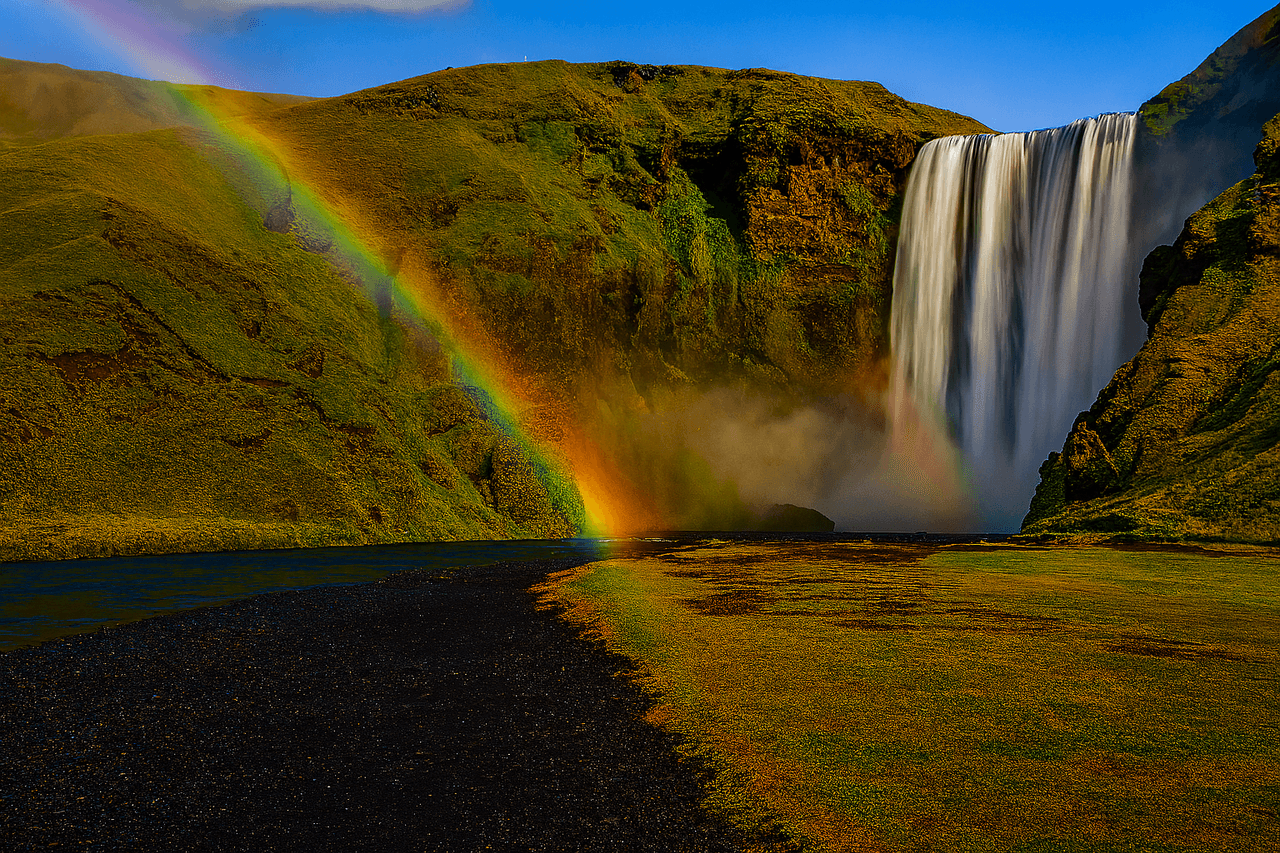
Skógafoss Waterfall is located immediately near the village of Skógar, within the municipal boundaries of Rangárþing eystra, south of Iceland's. The waterfall is fed by the waters of the Skógá River. With a vertical drop of 62 metres and a width of approximately 25 metres, Skógafoss is regarded as one of Iceland’s most iconic waterfalls.
Among Iceland’s largest waterfalls, Skógafoss is a remnant of the massive coastal cliff formed thousands of years ago as the coastline receded. Along this geomorphological transition zone, numerous waterfalls occur; however, Skógafoss is the largest and one of the most accessible.
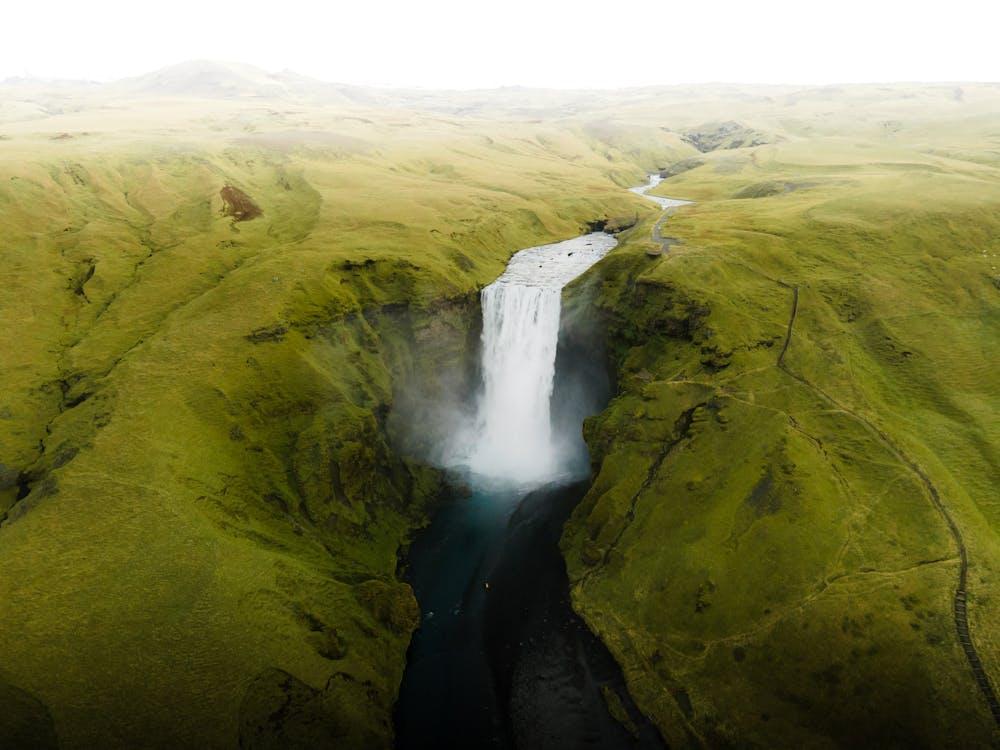
Skógafoss Waterfall (Pexels)
The region where Skógafoss is situated has been shaped by active tectonic processes along the Mid-Atlantic Ridge. Surface lava flows, basalt layers and tuff deposits form the foundational structure of the waterfall’s vertical face. The region is dominated by volcanic rock types that are resistant to erosion, enabling the long-term preservation of the waterfall.
Lower strata consist of ancient basalt flows, while upper layers contain younger volcanic lava. The rock structure through which the water cascades allows for vertical flow while maintaining the stability of the surrounding cliff walls.
The Skógá River draws its source primarily from the meltwaters of the Eyjafjallajökull and Mýrdalsjökull glacier areas. This ensures a continuous flow throughout the year. However, during summer months, increased glacial melting raises river discharge and intensifies at the waterfall water flow. In winter, although water levels decline relatively, Skógafoss maintains a flow regime resistant to freezing.
Below the waterfall, a large pool forms at its base. Over time, this pool has developed deltaic formations through sediment deposition. Additionally, the powerful water drop generates a permanent mist environment, creating microclimatic effects in the surrounding area.
The area surrounding the waterfall is covered, especially during summer, with mosses, lichens, ferns and native grass species. These plants, adapted to subarctic climatic conditions, thrive due to the high humidity generated by the waterfall. Bryophyta (non-vascular plants) are observed in high density on the rocky surfaces near the falls.
The region is also significant for birdwatchers. Small passerine species, primarily seabirds, nest and forage in the vicinity of Skógafoss. The sound and mist produced by the waterfall create a microhabitat that offers protection from predators.
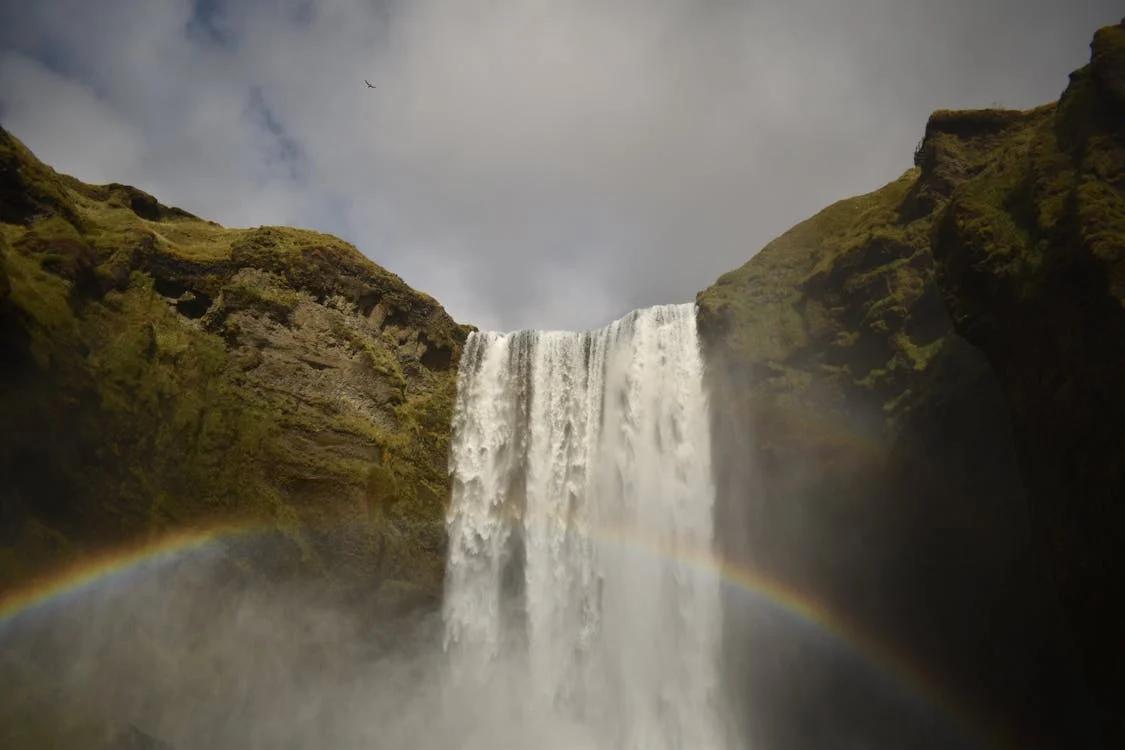
Skógafoss Waterfall (Pexels)
According to Icelandic mythology, the Viking settler Þrasi Þórólfsson is said to have hidden a chest filled with gold in a cave behind Skógafoss. Folklore recounts that a child discovered a metal ring from the chest, but the chest itself disappeared. It is rumored that the ring was later placed in the Skógar Museum.
Skógafoss holds a prominent place in Iceland’s intangible cultural heritage. It has frequently appeared as a thematic element in Icelandic folk music, poetry and contemporary visual art. It has also been widely used as a visual setting in numerous films and television series (e.g., The Secret Life of Walter Mitty, Game of Thrones).
The waterfall has become one of Iceland’s most popular tourist destinations. Located approximately 150 kilometres from Reykjavík, it is easily accessible due to its position along the country’s main circular route, the “Ring Road” (Þjóðvegur 1). Staircases provide access to both the base and the top of the waterfall.
Under conservation policies implemented by the Icelandic Environment Agency (Umhverfisstofnun), the ecological balance around Skógafoss is preserved. Limiting tourist access and directing visitors along designated paths contributes to the sustainability of the natural environment in the area.
The natural structure of Skógafoss enables the formation of double rainbows directly in front of the waterfall, particularly on sunny days. This phenomenon occurs when abundant water mist refracts and reflects sunlight. This feature makes Skógafoss not only a geological formation but also a visible meteorological phenomenon.
Skógafoss has been the subject of numerous ecological and geomorphological studies on Icelandic waterfalls. The dynamics of its meltwater-driven hydrological regime are of particular importance in the context of global climate change. Additionally, field studies on Iceland’s volcanic stratigraphy frequently use the lava layers at Skógafoss as reference points.

(Yapay zeka ile oluşturulmuştur)
No Discussion Added Yet
Start discussion for "Skógafoss Waterfall" article
Geological Formation and Stratigraphic Structure
Hydrological Regime and Dynamics
Biodiversity and Ecosystem Characteristics
Archaeological and Cultural Layers
Tourism, Access and Conservation Policies
Atmospheric Phenomena
Academic Research and Scientific Significance