


This article was automatically translated from the original Turkish version.
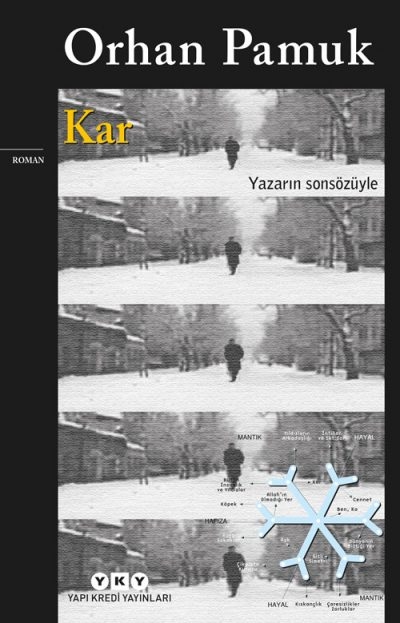
Orhan Pamuk’s novel Winter is regarded as one of the most significant works of modern Turkish literature. Published in 2002, this work offers a profound analysis of individual and societal conflicts. Novel engages the reader through its political and human dimensions and captivates with its layered narrative.
Ka returns to Kars after living for years in Germany, working as a local journalist. His goal is to investigate the stories of veiled girls who have committed suicide in Kars. Yet, upon arriving in Kars, he falls in love again with İpek, an old acquaintance, and this romantic thread becomes central to the novel. Ka’s few days in Kars are interwoven with political tensions, social change, and his own existential inquiries.
The novel’s central conflict lies in the divide between modernization and traditional values, and its impact on individual and society.
Cotton’s Snow novel shifts between first and third person narration. Orhan Pamuk embeds himself as a narrator within the novel, infusing the story with an autobiographical dimension Qatar. The narration sometimes adopts a poetic tone and at other times a documentary one.
Orhan Pamuk’s novel Winter is a portrait of both Turkey and human nature, seamlessly intertwining individual and societal concerns. The novel compels readers to reflect on the intersections of politics, love, and identity. For those seeking both a local and universal story, Winter offers a profound and unforgettable reading experience.

Plot Summary
Themes
Characters
Narrative Style
Symbols in the Novel
Strengths
Weaknesses