This article was automatically translated from the original Turkish version.
Type of Geographical İndication | Mahreç Sign | ||||||||
|---|---|---|---|---|---|---|---|---|---|
Registration Number | 1521 | ||||||||
Registration Date | 18.01.2024 | ||||||||
Product / Product Group(s) | Bakery and Confectionery Products Desserts Dough Products | ||||||||
Province(s) | Aydın | ||||||||
Applicant/Registrant(s) | Söke Chamber of Commerce | ||||||||
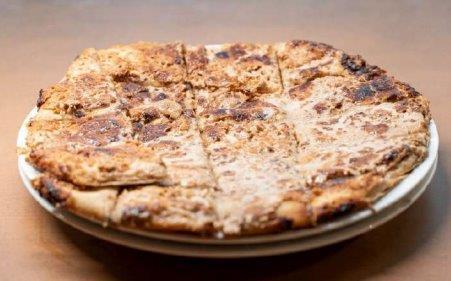
Söke Tahinli Pidesi is a traditional baked product unique to Aydın Province in Türkiye, officially registered with a geographical indication on 18 January 2024. The registration was carried out by the Söke Chamber of Commerce under Law No. 6769 on Industrial Property, and the product’s geographical boundary has been defined as Aydın Province.
Söke Tahinli Pidesi is integrated into Aydın’s culinary culture, served both as part of daily meals and on special occasions such as weddings, holidays, and festivals. The strong association between the product and the Söke district has been reinforced by both its production traditions and local consumption habits. In this context, all stages of production must take place within the boundaries of Aydın Province.
Söke Tahinli Pidesi is a dough-based product prepared with bread wheat flour or specialty wheat flour, water, salt, yeast, tahini, powdered white sugar, and butter, and baked in stone-floor ovens preferably heated with wood fire. The production process, particularly in shaping and baking, requires skilled craftsmanship. The unique flavor of the pide is shaped by the proportions of ingredients used and the techniques applied.
The prepared dough is enriched with tahini and sugar, then shaped using a specific rolling and unfolding technique. Procedures applied before and after baking ensure even cooking and the characteristic texture of the product. Served in portions averaging 200 grams, the pide delivers its ideal flavor when consumed hot.
The recommended ingredient quantities for a production batch serving 15 people are as follows:
After mixing and resting, the dough is rolled out into a circular shape, coated with tahini and sugar, rolled up, and then unfolded again. Additional tahini, sugar, and butter are applied on top before baking. The baking time is approximately 10 minutes. The product may be served in bulk or packaged under hygienic conditions; labeling must comply with relevant food regulations.
Compliance with the geographical indication criteria is monitored at least once annually by a minimum three-member oversight body coordinated by the Söke Chamber of Commerce and including participation from the Söke District Directorate of Agriculture and Forestry. Monitoring covers ingredient compliance, production and service procedures, and the correct use of the indication. Non-compliance is reported to the relevant individual or institution; in necessary cases, services may be obtained from public or private experts.
Turkish Patent and Trademark Office. "Söke Tahinli Pidesi Mahreç İşareti Tescil Belgesi." Accessed October 19, 2025. https://ci.turkpatent.gov.tr/Files/GeographicalSigns/638fe0e5-9a3f-44b4-b34f-ab3d59285b8a.pdf.
Turkish Patent and Trademark Office. "Söke Tahinli Pidesi." Geographical Indications Portal. Accessed October 19, 2025. https://ci.turkpatent.gov.tr/cografi-isaretler/detay/9062.

Type of Geographical İndication | Mahreç Sign | ||||||||
|---|---|---|---|---|---|---|---|---|---|
Registration Number | 1521 | ||||||||
Registration Date | 18.01.2024 | ||||||||
Product / Product Group(s) | Bakery and Confectionery Products Desserts Dough Products | ||||||||
Province(s) | Aydın | ||||||||
Applicant/Registrant(s) | Söke Chamber of Commerce | ||||||||
Cultural Context
Product Characteristics
Preparation Method
Monitoring