This article was automatically translated from the original Turkish version.
Type of Geographical İndication | Mahreç Sign | ||||||||
|---|---|---|---|---|---|---|---|---|---|
Application Date | 30.07.2021 | ||||||||
Registration Number | 1438 | ||||||||
Registration Date | 04.08.2023 | ||||||||
Product / Product Group(s) | sweets dough products Bakery and confectionery products | ||||||||
Province(s) | Manisa | ||||||||
Applicant/Registrant(s) | Soma Subdistrict Governorship | ||||||||
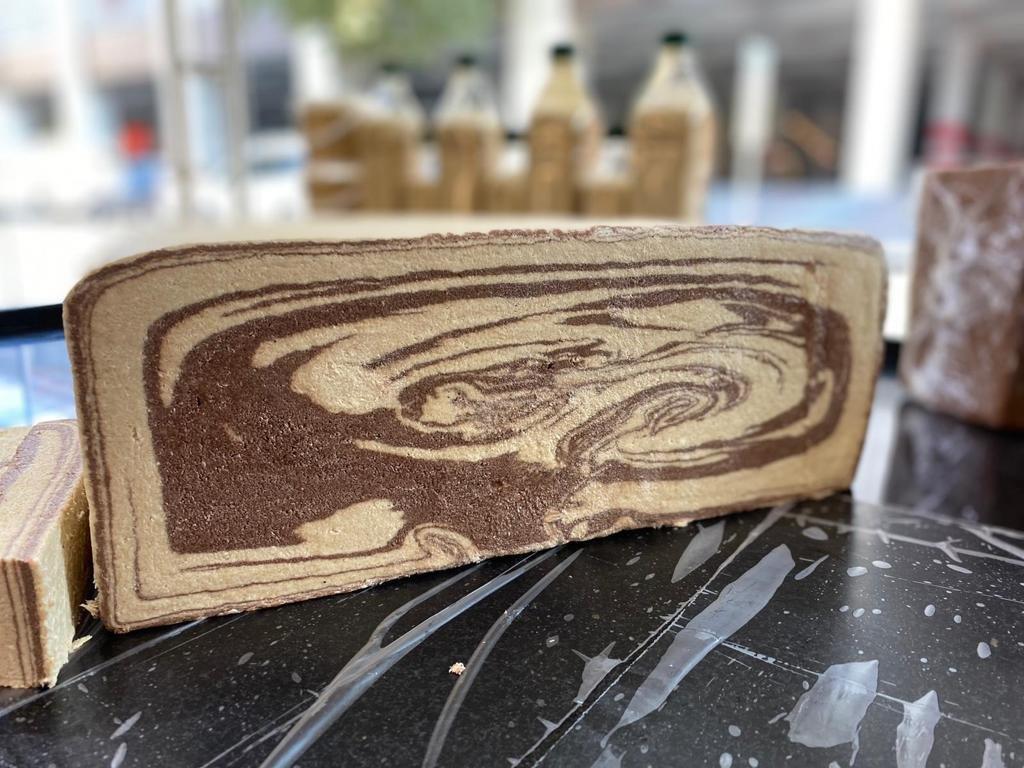
Soma Helva is a traditional Turkish halva variety, unique to the Soma district of Manisa Province, made primarily with tahini and holding a significant place in Turkish culinary culture. Its application for geographical indication status was submitted on July 30, 2021, under Law No. 6769 on Industrial Property, and it was officially registered on August 4, 2023. This geographical indication has been registered by the Soma District Governorate, and all stages of production take place within the boundaries of the Soma district.
Soma Helva is a tahini halva produced using tahini, white sugar, water, citric acid, and çöven extract. Its most distinctive feature is its high tahini content, approximately 60%, which gives it a dominant tahini flavor. It has a smooth, homogeneous, light yellow surface with a fine fibrous structure. No sugar crystallization is visible on its surface. These characteristics define its quality and uniqueness.
Soma Helva holds an important place in the culinary culture of the Soma district and is commonly served during breakfast as well as at special occasions such as weddings, engagements, circumcisions, and funerals. Its reputation as a geographical product stems from this cultural significance.
The production of Soma Helva is carried out using careful and traditional methods. The ingredients and their proportions are as follows:
The tahini used for Soma Helva is prepared through a specialized process by halva producers. Sesame seeds are first cleaned by sieving and winnowing, then soaked in 18% saltwater for 7–8 hours. After this resting period, the seed coats are removed, the seeds are washed in saltwater, and then bleached by being kept in oak ash for 1–2 hours. The seeds are then freed from ash residues, centrifuged to remove excess water, and roasted at 150–200°C for 75–80 minutes. After cooling and sieving, they are ground in stone mills and stored in food-grade containers.
Halva production begins in a halva cooking machine. Water, white sugar, and citric acid are boiled at 135°C for 2.5–3 hours until they reach a paste-like consistency. Çöven extract is added and stirred for 8–10 minutes; this ingredient whitens the sugar syrup and prevents the separation of tahini oil. Once the sugar syrup becomes brittle, heating is stopped and the mixture is left to rest for 15 minutes. When the temperature of the syrup drops to 95–105°C, tahini is added and mixed in circular motions using a food-grade halva paddle for 10–15 minutes. Once a homogeneous mixture is achieved, the halva mass is allowed to rest for 5 minutes and then kneaded for one hour. When the temperature reaches 60–70°C, the halva achieves its final consistency and is poured into 10 kg rectangular molds, where it is left to rest at room temperature for one day.
Soma Helva is packaged in air-tight containers in desired weights and can be stored for up to one year in a cool, dry environment.
The production process of Soma Helva is regularly inspected once a year by a three-member inspection body coordinated by the Soma District Governorate, comprising the Soma District Directorate of Agriculture and Forestry, the Soma Chamber of Commerce and Industry, and an expert. Additional inspections are carried out as needed or upon complaint. During inspections, compliance of tahini and other ingredients, adherence to the production method, and proper use of the geographical indication are verified.
Turk Patent and Trademark Office. "Soma Helvası." Geographical Indications Portal. Accessed August 16, 2025. https://ci.turkpatent.gov.tr/cografi-isaretler/detay/4675.
Türk Patent ve Marka Kurumu. “Soma Helvası.” Coğrafi İşaretler Portalı. PDF Belge. Accessed August 16, 2025. https://ci.turkpatent.gov.tr/Files/GeographicalSigns/59a4a48d-c035-418b-ad6b-5c5d3067677f.pdf

Type of Geographical İndication | Mahreç Sign | ||||||||
|---|---|---|---|---|---|---|---|---|---|
Application Date | 30.07.2021 | ||||||||
Registration Number | 1438 | ||||||||
Registration Date | 04.08.2023 | ||||||||
Product / Product Group(s) | sweets dough products Bakery and confectionery products | ||||||||
Province(s) | Manisa | ||||||||
Applicant/Registrant(s) | Soma Subdistrict Governorship | ||||||||
Definition and Distinctive Characteristics
Production Method
Tahini Preparation
Halva Production
Packaging and Storage
Inspection Process