This article was automatically translated from the original Turkish version.
Type of Geographical İndication | Mahreç Signal | ||||||||
|---|---|---|---|---|---|---|---|---|---|
Application Date | 30.07.2021 | ||||||||
Registration Number | 1436 | ||||||||
Registration Date | 04.08.2023 | ||||||||
Product / Product Group(s) | Solid and liquid fats including butter | ||||||||
Province(s) | Manisa | ||||||||
Applicant/Registrant(s) | Soma District Governorship | ||||||||
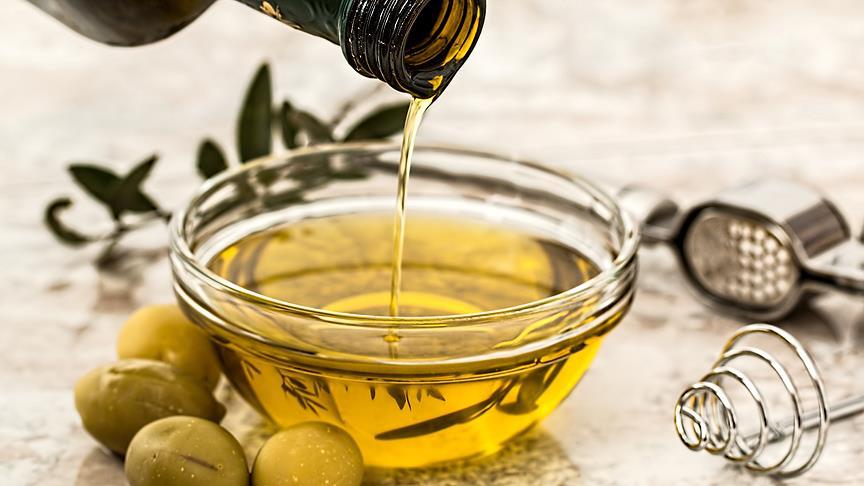
Soma Olive Oil is a natural extra virgin olive oil produced from Edremit Yağlık and Gemlik olive varieties cultivated in the Soma district of Manisa province. Its color ranges from light green to golden yellow; its sensory profile is characterized by fruity, bitter, and pungent notes.

Soma Olive Oil (Turkish Patent)
The semi-humid Mediterranean climate of the Soma district provides favorable conditions for olive cultivation. The annual average temperature is 15.3°C and annual rainfall reaches 652.4 mm. This climatic structure enhances the yield of olive varieties resistant to low temperatures. For instance, yields of Edremit Yağlık and Gemlik varieties can reach up to 796.22 kg per hectare.
Soil composition is another distinctive feature unique to Soma. Widespread lignite deposits in the region enrich the soil with organic substances such as leonardite and humic acid. These components support olive tree development and prevent damage to trees even under low temperatures. This soil structure directly influences the quality of the olive oil.
Harvesting: Conducted manually or mechanically between mid-October and early November without damaging the fruit. Olives are transported to processing facilities in plastic crates.
Cleaning: Foreign materials such as leaves, dust, and stones are removed using vibration, air flow, and sieves. Washing is performed using water and air spray systems.
Crushing and Milling: Olives are broken down in crushing units to form a paste.
Malaxation: The paste is mixed at a temperature of 27–30°C to facilitate the coalescence of oil droplets.
Extraction
Separation: Oil, water, and pomace are separated using centrifuges. Vertical separators operating at 7000 revolutions per minute are employed.
Filtration: Removal of sediment and moisture is carried out using earth or paper filters.
Soma Olive Oil is stored in stainless steel or chrome-nickel coated tanks using inert gas or floating lid systems. It is preserved in cool, dry, and shaded environments at temperatures not exceeding 22°C. Packaging is performed using light-blocking and food-safe materials.
Soma Olive Oil is produced exclusively from olives grown in the Soma district and using production techniques applied within this region. The product’s deep-rooted history in local culinary culture and its role in the regional economy establish its geographical indication and appellation. All processes up to and including filtration are carried out within the boundaries of the Soma district.
Inspections are conducted at least once annually under the coordination of the Soma District Governorship. The inspection authority consists of experts from the Soma District Directorate of Agriculture and Forestry, the Soma Chamber of Commerce and Industry, and the Soma District Governorship.
Criteria include the suitability of olive varieties used, control of chemical and sensory properties, compliance with production methods, and correct use of the geographical indication label and the term “Soma Olive Oil”.
Anadolu Ajansı. "Kaliteli Zeytinyağını Anlamanın Püf Noktaları." Accessed August 18, 2025. https://www.aa.com.tr/tr/ekonomi/kaliteli-zeytinyagini-anlamanin-puf-noktalari/1060088.
Turk Patent and Trademark Office. "Mahreç İşareti: Soma Zeytinyağı." Coğrafi İşaretler Portalı. Accessed August 18, 2025. https://ci.turkpatent.gov.tr/Files/GeographicalSigns/ad536503-89e8-498a-91a3-4e4f2eb708dd.pdf.
Turk Patent and Trademark Office. "Soma Zeytinyağı." *Coğrafi İşaretler Portalı.* Accessed August 18, 2025. https://ci.turkpatent.gov.tr/cografi-isaretler/detay/4674.

Type of Geographical İndication | Mahreç Signal | ||||||||
|---|---|---|---|---|---|---|---|---|---|
Application Date | 30.07.2021 | ||||||||
Registration Number | 1436 | ||||||||
Registration Date | 04.08.2023 | ||||||||
Product / Product Group(s) | Solid and liquid fats including butter | ||||||||
Province(s) | Manisa | ||||||||
Applicant/Registrant(s) | Soma District Governorship | ||||||||
Characteristics of the Olive Varieties Used in Production
Edremit Yağlık Olive Variety
Gemlik Olive Variety
Production Process
Storage and Packaging
Geographical Boundary and Appellation
Control Process
Inspection Criteria