


This article was automatically translated from the original Turkish version.
+1 More
Sorkun Pottery is an original craft product that has survived to the present day as the result of an 800-year-old artisanal tradition in Sorkun Village, located in the Mihalıççık district of Eskişehir. These pots, protected under a geographical indication registration, are produced using methods rooted in nature and traditional knowledge, far removed from the mass production effects of the industrial age.
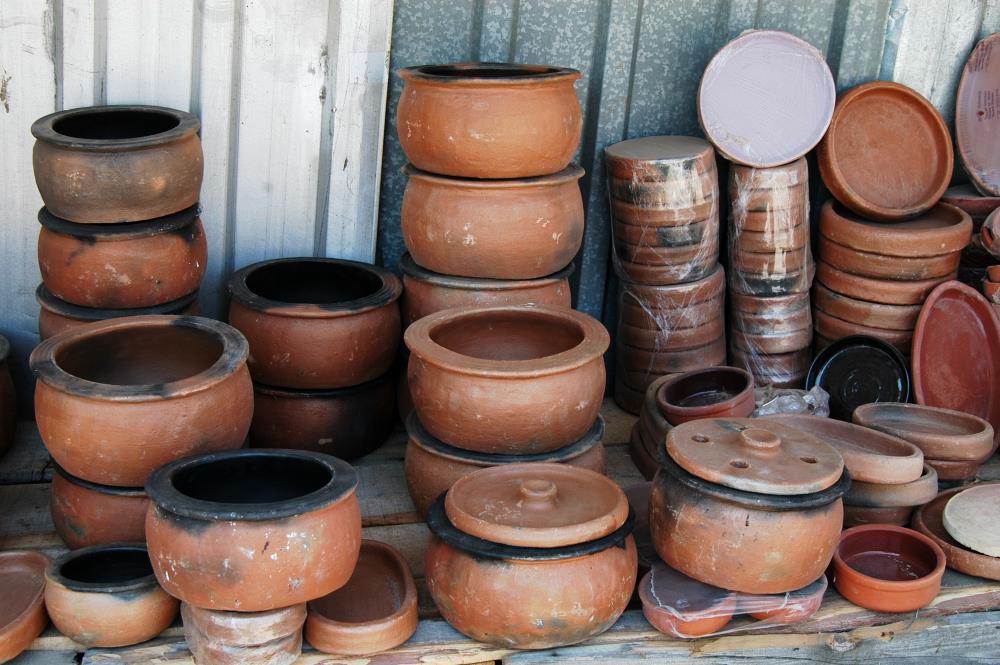
Sorkun Çömleği (Eskişehir Provincial Directorate of Culture and Tourism)
Sorkun Village is a settlement of approximately 500 inhabitants and 80 households, located 12 kilometers from the Mihalıççık district. Almost all residents of this village, situated between the Sakarya and Porsuk rivers, practice pottery in their homes, which function as workshops. This craft serves as a livelihood passed down with mastery from one generation to the next.
Sorkun Pottery is produced from clay made by mixing red and white earth in specific proportions.
The porous structure resulting from this clay mixture makes Sorkun Pottery resistant to thermal shock. As a consequence of the open-firing method, the interior surfaces are black while the exterior surfaces take on reddish tones.
Sorkun Pottery is produced through six main stages:
Sorkun Pottery represents a cultural heritage that preserves Neolithic-era clay shaping and open-firing techniques to the present day. This tradition is linked to the Mother Goddess cult and is sustained by the women of the village.
The typical pot sizes used in the region have remained unchanged for thousands of years:
The products are sold in Sorkun Village and at the Atlıhan Handicrafts Bazaar in Odunpazarı. The village municipality encourages tourists visiting during the summer months to tour the workshop homes and make purchases. No issues arise in the marketing process, and the products are typically wrapped in paper packaging.
Sorkun Pottery was registered as a geographical indication on 27 May 2021 under Law No. 6769 on Industrial Property. Monitoring is coordinated by the Eskişehir Chamber of Commerce and involves experts from the Eskişehir Geological Engineers Chamber and the Ceramics Department of the Faculty of Fine Arts at Anadolu University. These inspections are conducted at least once annually.
Sorkun Çömleği Belgeseli (ETOTV)

Geographical Boundary and Production Area
Raw Materials and Technical Characteristics
Production Stages
Regional Variants and Cultural Identity
Sales and Marketing
Monitoring and Protection