


 Recently Added:
This article was automatically translated from the original Turkish version.
21 March 2025 forest fires occurred in the southeastern region of forest. They are recorded as the third largest fire disaster in the country’s recent history. The fires affected numerous settlements, resulting in loss of life, thousands of hectares reduced to ash, and widespread evacuations and disaster declarations across the nation.
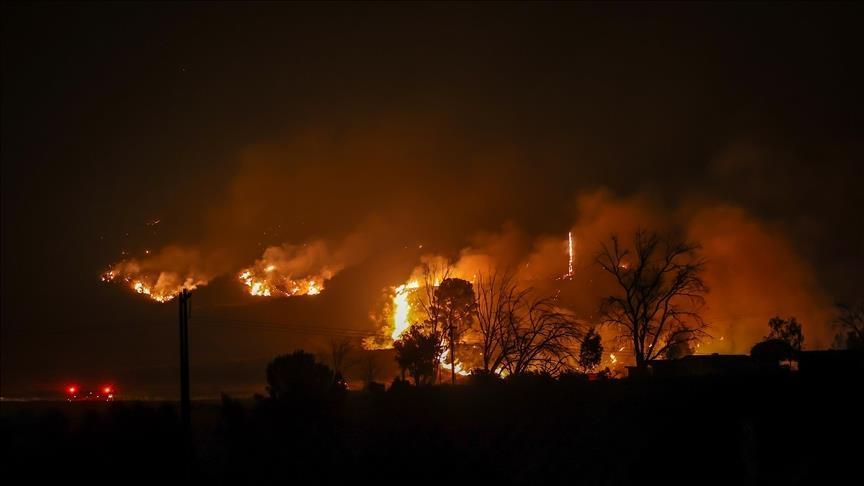
Forest fires in South Korea, 21 March 2025 – Anadolu Agency
The forest fires began on 21 March 2025 in Sancheong County, part of South Gyeongsang Province. The initial fire was reported to have been sparked by sparks from a lawn mower. In the following days, the fires spread northeastward, affecting numerous settlements including Uiseong (North Gyeongsang), Ulju (Ulsan), Gimhae (South Gyeongsang), Andong, Yeongdeok, and Cheongsong. The fire in Uiseong was attributed to a person accidentally igniting a flame while cleaning a family gravesite.
The South Korean Ministry of the Interior deployed 6,700 personnel and 110 helicopters to combat the fires. The Ministry of National Defense also mobilized approximately 5,000 soldiers and 146 helicopters in support. More than 3,300 people were evacuated from the fire-affected areas.
The Ministry of Justice evacuated 2,600 inmates from Cheongsong Prison, which was under threat from the fires, relocating them to other correctional facilities. As the fire approached the campus of Andong University, villages and settlements in the region were emptied.
A total of six people lost their lives due to the fires. Four of them were firefighters and public officials who died while performing their duties. At least eleven others were injured. During the fires, at least 162 buildings across the country sustained damage.
The Gounsa Temple, a Buddhist temple constructed in 681 CE, suffered damage from the fires. Some historical artifacts preserved within the temple were moved to safe locations before the fire reached them.
The fires also reached Hahoe Folk Village, a UNESCO World Heritage Site, prompting the evacuation of the area.
The fires consumed a total area of approximately 14,694 hectares. This scale of destruction made the event the third largest forest fire in South Korea’s history. The largest fire occurred in April 2000 and affected an area of 23,913 hectares.
The South Korean government declared a national disaster status in the affected provinces of Ulsan, South Gyeongsang, and North Gyeongsang. Following Sancheong, three additional areas in these provinces were designated as “special disaster zones.” This status enabled the central government to allocate additional resources and implement extraordinary emergency measures.
According to authorities, the majority of the fires were caused by human negligence. Open flames used during gravesite cleanings and machinery producing sparks were identified as the primary causes. Meteorological officials also noted that during the period of the fires, southeastern Korea experienced extremely dry and windy conditions, which created ideal conditions for rapid fire spread.
Prime Minister Han Duck-soo announced that all available resources had been mobilized to combat the fires and urged the public to remain vigilant.
Anadolu Ajansı. “Güney Kore’deki Orman Yangınları 15 Bin Hektarlık Alanı Kül Etti.” Anadolu Ajansı, March 25, 2025. Accessed March 25, 2025. https://www.aa.com.tr/tr/dunya/guney-koredeki-orman-yanginlari-15-bin-hektarlik-alani-kul-etti/3519202.
Associated Press. “South Korea Wildfires Spread as Dry Winds Fan Flames.” AP News, March 25, 2025. Accessed March 25, 2025. https://apnews.com/article/south-korea-wildfires-dry-winds-sancheong-2485c8d2af33d66d9e549e6945ef79e8.
CNN. “South Korea Wildfires Prompt Disaster Alerts as Flames Spread.” CNN International, March 24, 2025. Accessed March 25, 2025. https://edition.cnn.com/2025/03/24/asia/south-korea-wildfires-intl-hnk/index.html.
Reuters. "South Korean Wildfires Spread, Three More Disaster Zones Named." Reuters, March 25, 2025. Accessed March 25, 2025. https://www.reuters.com/world/asia-pacific/south-korean-wildfires-spread-three-more-disaster-zones-named-2025-03-24/.
TRT World. “South Korean Wildfires Destroy Thousands of Hectares.” TRT World, March 25, 2025. Accessed March 25, 2025. https://trt.global/world/article/9e376d98bee5.
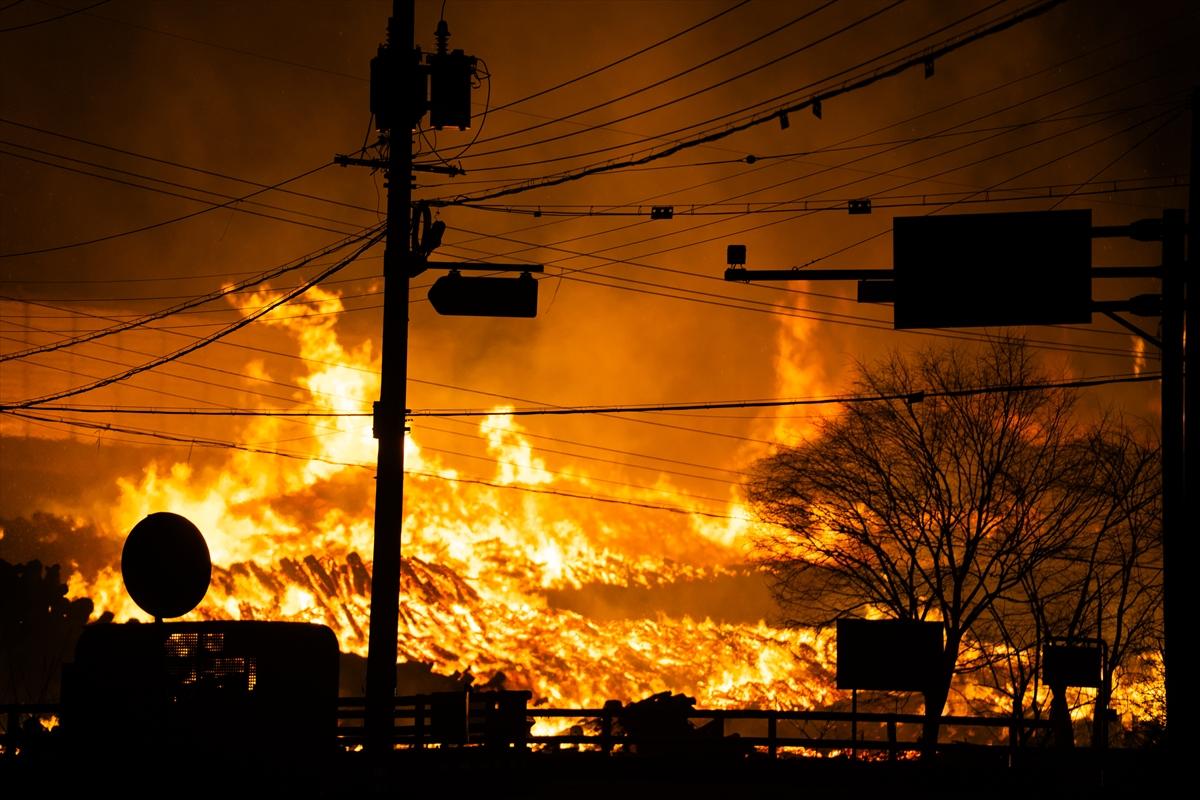
Five days after the fires began, as of 26 March 2025, the number of fatalities has increased. According to data from the South Korean Ministry of the Interior and Safety, the death toll has risen to 18. Fourteen of these deaths are linked to fires in Uiseong County, and four to fires in Sancheong. Most of those who lost their lives were between 60 and 70 years of age.
class=\
The fires in Uiseong have been brought under control at only 68 percent, and they continue to threaten cultural heritage sites listed on UNESCO’s World Heritage List, including the Hahoe Folk Village in Andong and the Byeongsan Confucian Academy. An area of 17,000 hectares of forest has been reduced to ash due to the fires. Additionally, 209 structures have been damaged, including residential buildings and public facilities.
The number of people forced to abandon their homes has exceeded 27,000, with entire neighborhoods wiped out in some areas. Schools have been closed and prisoner evacuations from correctional facilities are ongoing. The South Korean Forest Service has reported deploying 87 helicopters and approximately 5,000 personnel to combat the fires. In response to the growing scale of the forest fires, the South Korean Forest Service has announced plans to acquire additional helicopters and technological equipment for firefighting efforts.
Anadolu Ajansı. “Güney Kore’deki Orman Yangınlarında Ölü Sayısı 18’e Yükseldi.” Accessed March 26, 2025. https://www.aa.com.tr/tr/dunya/guney-koredeki-orman-yanginlarinda-olu-sayisi-18e-yukseldi/3519999.
Reuters. “Death Toll from South Korea Wildfires Rises to 15, Yonhap Says.” Reuters. Accessed March 26, 2025. https://www.reuters.com/world/asia-pacific/death-toll-south-korea-wildfires-rises-15-yonhap-says-2025-03-25/.
As of 27 March 2025, the ongoing forest fires in South Korea have been declared the largest fire disaster in the country’s history. Authorities have confirmed that at least 26 people have lost their lives since the fires began. The number of evacuated individuals has approached 30,000. The fires, which started in Sancheong County, have spread to numerous settlements, primarily in Gyeongbuk, Uiseong, Andong, Cheongsong, Yeongyang, and Sancheong, affecting a total area of 33,000 hectares (approximately 81,500 acres). This exceeds the scale of the previous largest fire in 2000, which impacted 24,000 hectares.
The fires have spread rapidly due to the dense dry grasslands in mountainous areas and strong winds. Although the South Korea Meteorological Agency reported that rainfall was expected in the region, it was noted that the predicted rainfall would not exceed 5 mm and would therefore provide negligible assistance to firefighting efforts.
Anadolu Ajansı. “Güney Kore'deki Orman Yangınlarında Ölü Sayısı 24’e Yükseldi.” Accessed March 27, 2025. https://www.aa.com.tr/tr/dunya/guney-koredeki-orman-yanginlarinda-olu-sayisi-24e-yukseldi/3519999.
Reuters. “South Korea Battles Worst-Ever Wildfires, Death Toll Hits 26.” Reuters. Accessed March 27, 2025. https://www.reuters.com/world/asia-pacific/south-korea-battles-worst-ever-wildfires-death-toll-hits-26-2025-03-27/.
The forest fires that began on 21 March 2025 and spread over a vast area in southeastern South Korea within a week have been fully brought under control as of 28 March 2025. According to the South Korea Forest Service, overnight rainfall improved visibility and lowered air temperatures, playing a decisive role in firefighting efforts. As of 17:00 local time, all active fires were reported to be under control.
In the operations against the fires, a total of 5,580 personnel, 86 firefighting helicopters and 569 fire trucks were deployed across multiple regions, including Uiseong in Gyeongsangbuk-do. The South Korea Forest Service stated that the area burned reached approximately 48,000 hectares, equivalent to about 80 percent of the total land area of the capital Seoul.
During the fires, 28 people lost their lives, 37 were injured, and approximately 38,000 people were evacuated. These figures have made the March 2025 fires the most destructive forest disaster in the country’s history in terms of both geographic impact and human losses.
Deputy President Han Duck-soo, in his assessment following the containment of the fires, described the events as “the worst fires to date” and thanked all government agencies, military and civilian personnel involved in the response. Damage assessment surveys and long-term resettlement support programs are planned for the post-disaster phase.
Anadolu Ajansı. "Güney Kore'deki orman yangınları 1 haftanın ardından kontrol altına alındı." Accessed March 29, 2025. https://www.aa.com.tr/tr/dunya/guney-koredeki-orman-yanginlari-1-haftanin-ardindan-kontrol-altina-alindi/3522430

On 21 March 2025, forest fires that erupted in the southeastern region of South Korea were recorded as the third largest fire disaster in the country's history. The fires began in Sancheong, spread to numerous residential areas, and reduced 14,694 hectares of land to ashes. Six people lost their lives, thousands were evacuated, and historical structures and buildings suffered damage. The government declared a national disaster in some areas.
No Discussion Added Yet
Start discussion for "South Korea Forest Fires (March 2025)" article
March 25, 2025
Origin and Spread
March 25, 2025
Response and Evacuation
March 25, 2025
Loss of Life and Property
March 25, 2025
Affected Areas and Disaster Declarations
March 25, 2025
Causes of the Fires
March 26, 2025
Current Status of the Fires and Rising Losses
March 27, 2025
Current Status of the Fires
March 29, 2025
Containment of the Fires and Latest Developments (28 March 2025)