


This article was automatically translated from the original Turkish version.
+1 More
KÜRE
KÜRE Encyclopedia is a digital information platform established in 2024 under the leadership of Selçuk Bayraktar, offering open-source content with identifiable and verifiable authorship. It is developed by a core team of experts specializing in diverse fields such as software, artificial intelligence, electrical and electronics, aviation management, politics, international relations, business, media and communication, graphic design, literature, and history. The development of KÜRE is ongoing, and its public launch is planned for 2025.
KÜRE is an open-source information platform designed to counter the growing information pollution of the digital age. Aiming to provide content with identifiable authors, verifiability, and neutrality, KÜRE bases reliable information production on transparent source usage and editorial oversight processes, adhering to academic and ethical publishing principles. Every user can create content, comment, propose corrections, or request co-authorship. By hosting various content types including encyclopedia entries, biographies, dictionaries, children’s content, and blogs, KÜRE offers a participatory and sustainable ecosystem that facilitates access to information and actively involves users in its production.

KÜRE Encyclopedia Homepage (KÜRE)
KÜRE Encyclopedia is a digital encyclopedia platform that prioritizes reliability in the digital information environment, encourages participatory creation, and publishes content subject to academic review. Thanks to its open-source structure, content is both readable by everyone and creatable by anyone within defined principles. The platform’s fundamental goal is to establish a transparent, traceable, and author-attributed information architecture in opposition to anonymous, unmonitored, and source-unclear information flows.
Today, most content produced in digital environments consists of information published without identifiable authors, references, or verification. This situation leads to serious information pollution and misleading content, particularly in disciplines such as education, culture, history, and science. KÜRE Encyclopedia was founded to address this problem by offering a transparent, source-based, neutral, and verifiable approach both in content production and user experience.
The founding purpose is not merely to ensure access to accurate information, but to develop a model that distributes responsibility in information production by involving volunteer experts, academics, researchers, and engaged citizens in the process. In this sense, KÜRE designs a hybrid system between classical encyclopedic structures and contemporary digital production environments. This structure, where content is both centrally editorially controlled and enriched through individual contributions, creates a platform where responsibility and participation are balanced.
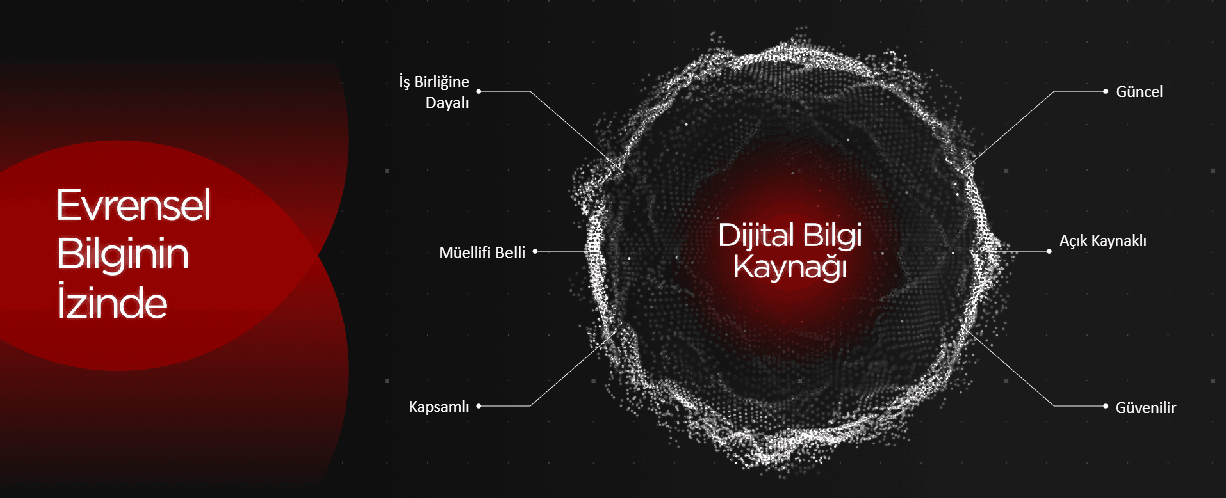
KÜRE’s Genetic Code (KÜRE)
KÜRE Encyclopedia is founded on the principle of transparency not only regarding access to information but also regarding how and by whom that information is produced. Every piece of content is published with the name of its author. The platform does not permit anonymous contributions. This is essential both for protecting authors and for strengthening content credibility for readers.
During its development, KÜRE created a comprehensive set of writing guidelines, editorial review mechanisms, technical criteria, and community rules through contributions from experts across various disciplines, aiming to ensure that the platform evolves on the basis of high-quality information production rather than random contributions. In this context, KÜRE offers its users not merely a “reading space” but a clearly defined “information production environment” with established rules and methodologies.
From a philosophical standpoint, KÜRE’s core proposition is: “Accurate information must not only be accessible but also its production process must be verifiable.” With this understanding, the goal is not only to present content to users but also to make sources, methods, and editorial processes visibly transparent.
In summary, the founding purpose of KÜRE Encyclopedia rests on three fundamental principles:
In pursuit of these goals, KÜRE operates as an integrated information ecosystem through continuously updated writing and review guidelines, community rules, and volunteer editorial mechanisms.
KÜRE Encyclopedia is an open-source, multilingual, and AI-supported digital encyclopedia platform that prioritizes information production through identifiable, verifiable, and source-attributed content. This participatory structure aims not only to enable users to access information but also to actively involve them in the processes of creating, editing, and contributing to knowledge. Below are the platform’s core structural and functional features detailed.
One of KÜRE Encyclopedia’s most fundamental features is that all content is attributed to a specific author. The platform does not accept anonymous contributions. This ensures accountability and transparency in information production. Every piece of content is registered in the system with the author’s name from the moment of creation; users can directly view this information. Authors can update their entries over time and establish co-authorship relationships through developmental contributions.
KÜRE enables content creation by volunteer writers and editors. Any user wishing to join can, after registering, create content, contribute to existing entries, and become visible within the system. Content is developed not only by a central team but through the collective participation of all platform components. In this way, KÜRE is grounded in open-source information production, yet all content must pass through an editorial approval process before publication.
KÜRE has developed distinct content types corresponding to different kinds of information. Users can create content in the following categories:
This structure allows users to produce or access content according to varying levels of reading proficiency and areas of interest.
Every piece of content is evaluated by editors and subject-area committees before publication. During this process, content is reviewed for language, style, source usage, neutrality, and adherence to academic standards. Suggestions for revision are provided, and content is collaboratively improved with the author. This model ensures content quality while encouraging collective knowledge production.
KÜRE Encyclopedia encourages the use of AI tools in content production processes. Functions such as text generation, language checking, summarization, visual creation, audio narration, and translation are supported by AI-powered systems. This allows content creators to streamline technical tasks and focus their time on information and content development.
KÜRE operates as a system targeting global accessibility through multilingual content production and translation infrastructure. Content is translated into multiple languages over time to reach a broad user base. Additionally, the KÜRE platform features a responsive design compatible with desktop, tablet, and mobile devices and has been developed in accordance with accessibility principles. Special modes for visually impaired users and child users are also planned.
Authors can build a digital portfolio from all content they create on the platform. Each entry is linked to the user’s profile. Authorship history, contributed entries, reading data, and interaction metrics can be tracked via the author dashboard. This system enables users to document their authorship experience and manage their own production history.
KÜRE is not limited to content written online. Users can upload academic content prepared offline (theses, articles, essays, conference papers, etc.) in PDF or Word format to the system. Provided there are no copyright issues, these documents can be published under the “My Files” tab and added to the user’s portfolio.
KÜRE Encyclopedia treats information not merely as content to be read but as a dynamic process to be collaboratively produced and developed. In line with this understanding, every entry is not only published but also structured to remain open to user contributions and feedback after publication. The comment and feedback sections on each entry page allow users to share their thoughts, propose corrections, or suggest alternative sources.
This system transforms users from passive readers into active co-producers of knowledge. Comments are not limited to expressing opinions; they may also include suggestions for improvement, critiques, or requests for clarification. Particularly users seeking to contribute at an academic level can provide high-quality input by identifying gaps and supporting them with relevant sources.

Interaction Example on KÜRE (KÜRE)
Functions such as likes and contribution points enable tracking of content engagement and enhance the visibility of content creators’ efforts. Users can follow entries of interest, regularly monitor the productions of specific authors, and sustain interactions within the community. These interactions also open the way for collaborations between authors and co-authorship requests based on production.
The fundamental principle of the discussion culture is maintaining a respectful and constructive communication environment. Every comment on KÜRE is recorded by the system and subject to moderation when necessary. Critiques are expected to be presented objectively, focused on the content and information rather than on individuals. Thus, KÜRE transforms into a participatory knowledge community where users not only publish information but also discuss, revise, and collectively develop it.
This structure distinguishes KÜRE from classical encyclopedia models. Here, information is not a final product but a process continuously reshaped through collective effort. This model, which encourages user interaction, ensures higher content quality and fosters a culture of learning-based dialogue among participants.
KÜRE Encyclopedia incentivizes users through various methods to strengthen the culture of voluntary contribution and ensure continuity in knowledge production. Authors and editors who contribute are highlighted both in terms of content visibility and profile performance. Each user’s contribution points, interaction rates, and volume of content production are regularly assessed. Based on this data, monthly rankings foster a healthy competitive environment among participants, while contests make the process more engaging and motivating. Contests may be organized around thematic topics or based on content quality or editorial contributions.
At year-end, achievement lists and special campaign events further reward long-term users. These rewards are not limited to digital badges or tags; sometimes they include physical prizes such as book sets, seminar invitations, or technological tools. Special awards given to the most active contributors are occasionally presented by the platform’s strategic supporters or public figures (e.g., scientists, cultural and artistic representatives) and publicly announced. This incentive system builds a structure that supports not only individual achievement but also collective effort and productivity within the community.
KÜRE bases its information production on academic ethics and neutrality principles. No content may include praise, criticism, advertising, propaganda, or discriminatory expressions. Such content is immediately rejected by the system. Additionally, all references and footnotes must be formatted according to the Chicago Manual of Style (CMS).
KÜRE Encyclopedia classifies its content under more than 60 subcategories, taking into account the diversity of knowledge domains. This comprehensive structure enables both specialization by field and systematic access to information users need. Categories are organized according to thematic, disciplinary, and functional criteria. For example, the Natural Sciences category includes scientific subfields such as Astronomy, Biology, Chemistry, Health and Medicine; while the Religion and Belief Systems category addresses belief structures such as Islam, Christianity, Ancient Mythologies, and Paganism under separate headings. Each subcategory has its own terminology, entry structure, and source system.
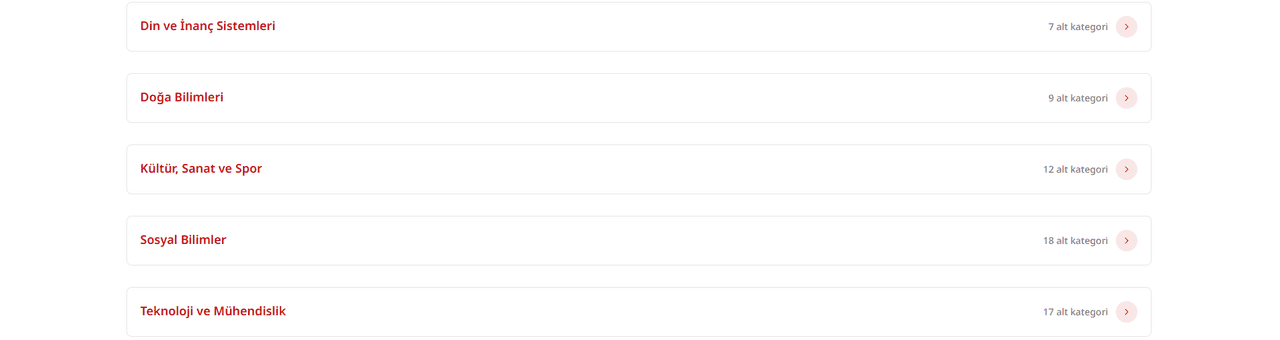
KÜRE Main Categories (KÜRE)
Another major group of the platform, the Social Sciences category, includes fields such as History, Philosophy, Psychology, Economics, Law, Education, and International Relations. The Culture, Art, and Sports category focuses on cultural production and experiences such as music, architecture, digital arts, gastronomy, cinema, and tourism, while the Technology and Engineering category enables content production on topics reflecting the evolving technological landscape, including software, artificial intelligence, electrical and electronics, environmental engineering, and defense industry. This diversity demonstrates that KÜRE is not merely an information source but a multidisciplinary digital knowledge universe.
KÜRE Agenda is a dedicated content area that presents current national and international developments in an encyclopedic format. Agenda entries analyze events chronologically, neutrally, and contextually, distinct from journalistic language. The platform does not merely report current events but also explains their historical background, associated institutions, personalities, and concepts. Thus, readers gain comprehensive knowledge not only of an event but also of its causes and consequences.
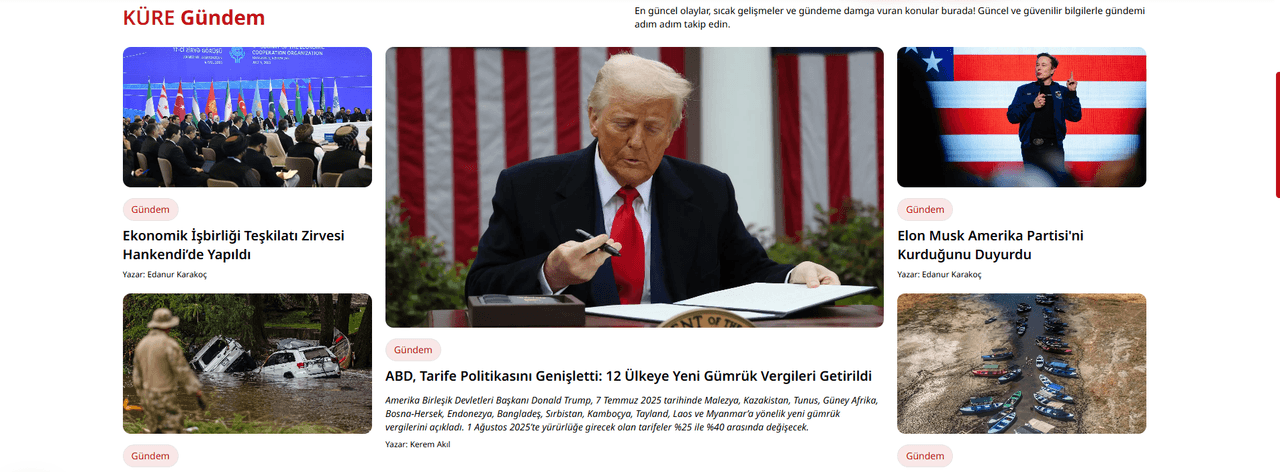
KÜRE Agenda Page (KÜRE)
All content published in this section undergoes editorial review, relies on verifiable sources, and employs a non-opinionated narrative. A wide range of topics including current crises, scientific advances, political transformations, natural disasters, cultural events, and technology news are covered under KÜRE Agenda. Additionally, agenda entries are designed to be updated as needed; thus, information is revised within the system as events evolve. The agenda section enables readers to follow current developments while providing intellectual depth by situating events within broader contexts.
KÜRE includes a dedicated Children’s Mode developed specifically for children, offering simple, safe, and age-appropriate content. Entries in this mode are supported by short paragraphs, simple language, pedagogical visuals, and information boxes. These contents are not only educational but also structured to nurture children’s curiosity.

KÜRE Children’s Mode (KÜRE)
The founding purpose of KÜRE Children’s Mode is to introduce children at an early age to skills such as critical thinking, accessing reliable information, recognizing fundamental concepts, and cultural awareness. The platform aims to protect children from complex, contradictory, or harmful content they may encounter in digital environments and support their learning. Therefore, content is prepared not only according to subject matter but also considering children’s cognitive development levels, attention spans, visual perception, and language comprehension abilities.
According to guidelines, children’s entries are created using three core pedagogical approaches:
Entries in Children’s Mode are prepared differently from adult content, using short paragraphs, simple sentence structures, and explanatory visuals. Technical terms and abstract concepts are avoided as much as possible; if such concepts must be included, they are always supported by explanatory boxes, examples, or metaphors. While not every children’s entry follows a full narrative arc, its structure is designed to maintain the child’s attention from beginning to end.
A typical children’s entry generally includes the following components:
All content published in KÜRE Children’s Mode is reviewed by expert editors and experienced content moderators specializing in children’s publications. No content is automatically approved; each entry undergoes review for both linguistic accuracy and content safety before publication.
The platform ensures for children:
KÜRE Children’s Mode is designed not only for children but also for their educators and parents. Entries can be used as supplementary materials in classroom activities or home learning processes. Each children’s entry may include suggested activity questions and guiding explanations for educators or parents.
The content of Children’s Mode is designed to be compatible with multilingual infrastructure, enabling content production in languages other than Turkish. The platform’s design has been simplified to ensure full compatibility with mobile devices. Color palettes, symbols, and icons are structured according to child-friendly design principles.
KÜRE Encyclopedia presents an original model by integrating the technological opportunities of the digital age with ethical and academic principles in knowledge sharing. It does not merely disseminate information rapidly; it also builds a system that verifies, cites sources, and clearly identifies authors.
KÜRE’s information production process is structured to encourage user contributions while preventing random or unvetted publication. Every piece of content is reviewed through editorial processes developed by editors, subject advisors, and established guidelines. The system transparently tracks who produced the content, which sources it relies on, and when it was published.
Moreover, KÜRE’s open-source and collaborative structure enables users at different levels — academics, teachers, students, or curious individuals — to co-produce content on the same entry. This model functions as an intermediary structure that integrates classical encyclopedia systems with the participatory culture of digital platforms.
KÜRE aims not only to facilitate individual access to information but also to raise the general level of knowledge in society. In this sense, the platform functions as a public instrument for knowledge production and sharing. Its structure supports educational equity, making accurate information accessible to every individual regardless of age, income, geographic location, or institutional affiliation. Particularly in rural or information-scarce regions, KÜRE’s open-access model makes academic content attainable. The children’s mode, agenda entries on current events, biographies, and dictionary-type content ensure that individuals of all ages and levels can access information suited to their interests and needs. This diversity contributes to the expansion of the societal knowledge base and the development of intellectual pluralism.
KÜRE
No Discussion Added Yet
Start discussion for "SPHERE Encyclopedia" article
Founding Purpose
General Features
Authorship Principle
Participatory and Open-Source Structure
Content Types and Diversity
Editorial Review and Committee Approval
AI-Supported Infrastructure
Multilingual and Accessible Design
Portfolio System and Personal Archive
File Upload Feature
User-to-User Interaction
Incentives and Community Engagement
Neutrality, Ethics, and Verifiability
Categories
KÜRE Agenda
KÜRE Children
Founding Purpose and Pedagogical Basis
Content Format and Structure
Security and Content Moderation
Parent and Educator Guidance
Multilingual Infrastructure and Accessibility
Collaborative and Reliable Information
Contribution to Societal Development