


This article was automatically translated from the original Turkish version.
+1 More
Stigma refers to the disapproval, labeling, or discrimination directed at an individual or group due to perceivable characteristics that distinguish them from societal norms. Labeling involves assigning undesirable traits to these individuals in a stereotypical manner.【1】 Social theorist Erving Goffman defines stigma as “a behavior that devalues an individual, rendering those bearing the label less desirable and barely perceived as human.” 【2】 When society categorizes and labels individuals into specific groups, it leads to direct loss of reputation and exposure to discrimination. Once cultural stereotypes (prejudices) become entrenched, society begins to develop specific expectations about these labeled groups.
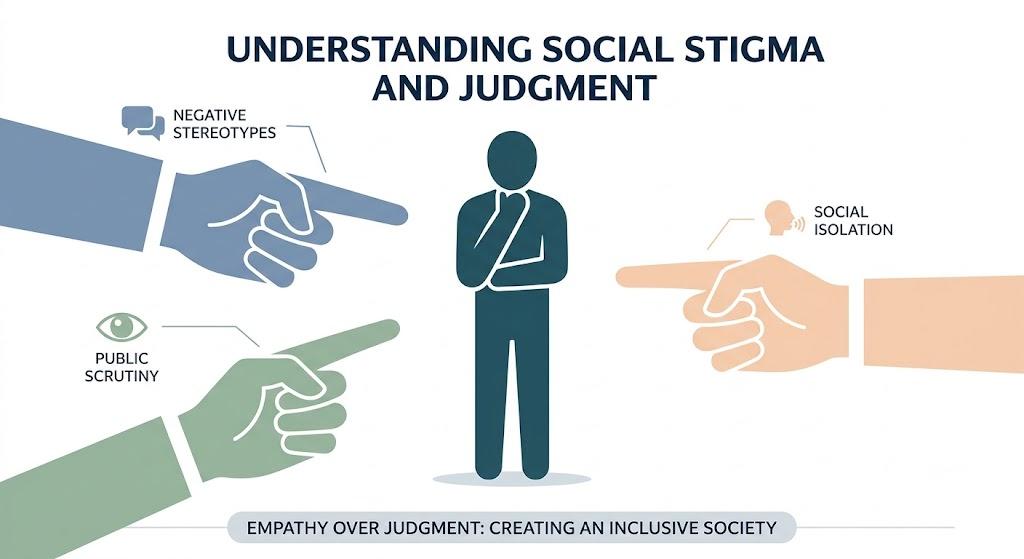
Damgalama. (Fotoğraf Yapay Zeka İle Oluşturulmuştur.)
Social stigmas are commonly associated with culture, gender, race, religion, socioeconomic class, age, physical attributes, and health conditions. Some stigmas are visibly apparent, while others are concealable and only revealed through disclosure. 【3】Members of stigmatized groups often feel different from others, perceive themselves as devalued, and encounter prejudices that lead to psychological distress.【4】
Stigmatization directly shapes the behavior, emotions, and beliefs of those subjected to it; individuals exposed to stereotypical judgments may gradually begin to act in ways that conform to the negative roles expected of them by their stigmatizers. This process, which threatens the individual’s social identity by undermining self-esteem, has been central to theories of identity threat and labeling. 【5】 Individuals become aware that they are not treated the same as others and that they are subjected to discrimination. Research shows that by the age of ten, most children are aware of cultural stereotypes in society, and children belonging to stigmatized groups understand these dynamics at much younger ages.【6】
In his foundational work Stigma, Erving Goffman categorizes stigma into three main types: “bodily stigmas” based on physical deformities, “character stigmas” attributed to personal flaws such as weak will or inconsistent beliefs, and “tribal (group-based) stigmas” passed down through generations, such as those tied to race, religion, or nationality.【7】 Goffman further distinguishes between two types of stigmatized individuals: “discredited” individuals whose stigma is immediately apparent upon observation, and “discreditable” individuals whose stigma is not initially visible or known. Discreditable individuals constantly engage in “information control” to manage the tension between concealing or revealing their identity, seeking social acceptance and protection from discrimination. 【8】
Köseoğlu Örnek, Özlem, and Elif İşcan Kocamış. “Hastane ve Üniversite’de stigma: HIV/AIDS Pozitif Hastalarına Yönelik Tutum, Davranış ve İnanışların İncelenmesi, İstanbul.” *STED / Sürekli Tıp Eğitimi Dergisi* 31, no. 1 (2022): 2–13. Accessed July 8, 2026.https://dergipark.org.tr/tr/download/article-file/1593454
Yıldırım Üşenmez, Tülay, and F. Kavak Budak. "The Effect of Internalized Stigma on Psychological Resilience in People with Mental Illness." *Journal of Midwifery and Health Sciences* 8, no. 2 (2025): 102–110. Accessed July 8, 2026.https://dergipark.org.tr/en/download/article-file/4101141
Yılmaz, Medine, Gülçin Dişsiz, Filiz Göçmen, Ayşe Kurtuluş Usluoğlu, and Ahmet Alacacıoğlu. “Kansere İlişkin Tutumları (Kanser Damgası) Ölçme Anketi Toplum Versiyonu’nun Türkçe Geçerlilik ve Güvenirlik Çalışması.” *Anadolu Hemşirelik ve Sağlık Bilimleri Dergisi* 20, no. 2 (2017): 99–106. Accessed July 8, 2026.https://dergipark.org.tr/tr/download/article-file/348660
Çam, Olcay, and Emre Çuhadar. “Ruhsal Hastalığa Sahip Bireylerde Damgalama ve İçselleştirilmiş Damgalama.” *Psikiyatri Hemşireliği Dergisi* 2, no. 3 (2011): 136–140. Accessed July 15, 2026.https://pdf.journalagent.com/phd/pdfs/PHD_2_3_136_140.pdf
[1]
Medine Yılmaz vd., “Kansere İlişkin Tutumları (Kanser Damgası) Ölçme Anketi Toplum Versiyonu’nun Türkçe Geçerlilik ve Güvenirlik Çalışması,” Anadolu Hemşirelik ve Sağlık Bilimleri Dergisi 20, no. 2 (2017): 100, erişim tarihi 8 Temmuz 2026, https://dergipark.org.tr/tr/download/article-file/348660.
[2]
Özlem Köseoğlu Örnek ve Elif İşcan Kocamış, “Hastane ve Üniversite’de stigma: HIV/AIDS Pozitif Hastalarına Yönelik Tutum, Davranış ve İnanışların İncelenmesi, İstanbul,” STED / Sürekli Tıp Eğitimi Dergisi 31, no. 1 (2022): 3, erişim tarihi 8 Temmuz 2026, https://dergipark.org.tr/tr/download/article-file/1593454
[3]
Tülay Yıldırım Üşenmez ve F. Kavak Budak, “The Effect of Internalized Stigma on Psychological Resilience in People with Mental Illness,” Journal of Midwifery and Health Sciences 8, no. 2 (2025): 103, erişim tarihi 8 Temmuz 2026, https://dergipark.org.tr/en/download/article-file/4101141
[4]
Yıldırım Üşenmez ve Kavak Budak, “The Effect of Internalized Stigma,” 103.
[5]
Yıldırım Üşenmez ve Kavak Budak, “The Effect of Internalized Stigma,” 103-104.
[6]
Yıldırım Üşenmez ve Kavak Budak, “The Effect of Internalized Stigma,” 107.
[7]
Olcay Çam ve Emre Çuhadar, “Ruhsal Hastalığa Sahip Bireylerde Damgalama ve İçselleştirilmiş Damgalama,” Psikiyatri Hemşireliği Dergisi 2, no. 3 (2011): 136-137, erişim tarihi 15 Temmuz 2026, https://pdf.journalagent.com/phd/pdfs/PHD_2_3_136_140.pdf
[8]
Çam ve Çuhadar, “Ruhsal Hastalığa Sahip Bireylerde Damgalama,” 137.

General Characteristics and Behavioral Transformation
Types of Stigma and Information Management