This article was automatically translated from the original Turkish version.
+1 More
Type of Geographical Indication | Place of Origin | ||||||||
|---|---|---|---|---|---|---|---|---|---|
Registration Number | 644 | ||||||||
Registration Date | 08.01.2021 | ||||||||
Product / Product Group(s) | Processed and Unprocessed Fruits Vegetables and Mushrooms | ||||||||
Province(s) | Afyonkarahisar | ||||||||
Applicant/Registrant(s) | Sultandağı District Governorship | ||||||||
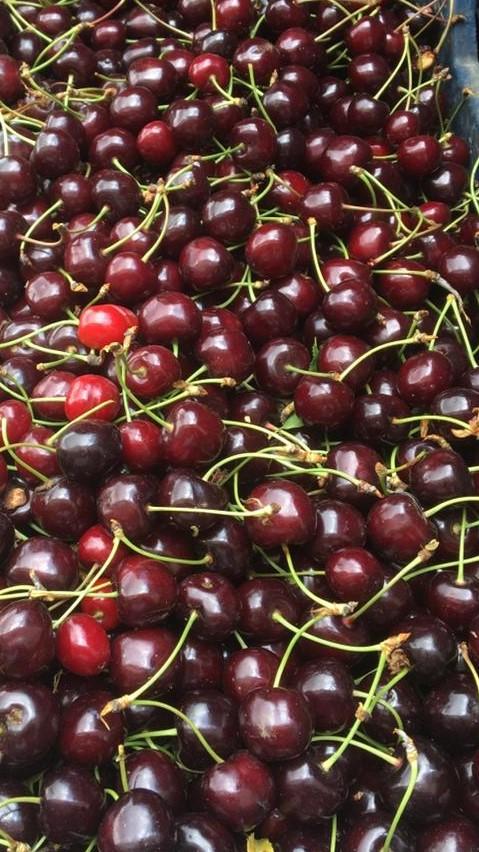
Afyonkarahisar province’s Sultandağı and Çay districts produce a fruit made from the cherry variety known as “0900 Ziraat”, with the Latin botanical name Prunus avium L. Cherry cultivation in the region dates back to the 1940s and 1950s, and the product’s reputation and recognition are closely tied to its geographical origin. This has established the cherry as one of the region’s key export agricultural products. Sultandağı cherry was officially registered as a geographical indication by the Turkish Patent and Trademark Office on 08.01.2021 under registration number 644. The microclimate conditions shaped by the influence of Eber and Akşehir lakes contribute significantly to the development of the fruit’s distinctive characteristics.
Sultandağı cherry possesses unique color, taste, and size. The fruit has a broad heart-shaped form, with pink to red flesh and a glossy dark red skin. The flesh is classified as firm.
Average (± 10%) product characteristics are as follows:
The climate and soil structure of the geographical area support the fruit’s distinguishing qualities. The evaporation effect from the lakes reduces water loss during ripening while maintaining an optimal balance of acidity and sugar. The predominantly silty soil structure helps maintain ideal levels of moisture and soil temperature for the trees.
Sultandağı cherry cultivation is carried out through specific stages and techniques:
The registered geographical boundary for Sultandağı cherry comprises the Sultandağı and Çay districts of Afyonkarahisar province.
Monitoring activities are conducted by a monitoring body coordinated by the Sultandağı District Governorship and the Sultandağı District Directorate of Agriculture and Forestry. This body consists of at least three members, including one representative each from the Sultandağı District Directorate of Agriculture and Forestry, the Çay Chamber of Commerce and Industry, and the Sultandağı Chamber of Agriculture.
Monitoring is carried out at least once annually; additional inspections may be conducted upon complaint or necessity.
The responsibilities of the monitoring body include:
Monitoring results are reported annually in accordance with Law No. 6769 on Industrial Property and submitted to the Turkish Patent and Trademark Office by the Sultandağı District Governorship.
Turk Patent and Trademark Office. "Sultandağı Kirazı Sicil Belgesi." Geographical Indications Portal. Accessed October 24, 2025. https://ci.turkpatent.gov.tr/Files/GeographicalSigns/d281e5e3-0443-449a-b5d0-4aff3f206532.pdf
Turkish Patent and Trademark Office. "Sultandağı Kirazı." Geographical Indications Portal. Accessed October 24, 2025. https://ci.turkpatent.gov.tr/cografi-isaretler/detay/38638

Type of Geographical Indication | Place of Origin | ||||||||
|---|---|---|---|---|---|---|---|---|---|
Registration Number | 644 | ||||||||
Registration Date | 08.01.2021 | ||||||||
Product / Product Group(s) | Processed and Unprocessed Fruits Vegetables and Mushrooms | ||||||||
Province(s) | Afyonkarahisar | ||||||||
Applicant/Registrant(s) | Sultandağı District Governorship | ||||||||
Product Characteristics
Production Method
Geographical Boundary and Monitoring