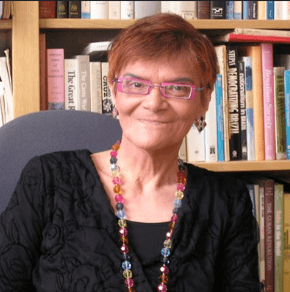



One of the best-known historians of Ottoman history, Suraiya Faroqhi is recognized for her multifaceted research in social, economic, and cultural history. She was born on 2 October 1941 in Berlin. Throughout her academic career, she held positions at various universities in Europe, America, and Türkiye, offering a multidimensional analysis of daily life and production relations in the Ottoman world.
Faroqhi’s father, Abdulqudus Faroqhi, was Indian, and her mother was German. Her father came to Germany in his youth, worked as a pilot in the 1920s, then began medical studies and became a doctor at the age of 35. Her mother lost her family during the First World War and worked as a governess in various countries across Europe at a young age. The family’s life unfolded between India, Indonesia, and Germany. Suraiya Faroqhi spent her childhood in numerous countries and educational systems, an experience that shaped her into a scholar with a multicultural perspective.
After briefly living in India with her family, she moved to Indonesia due to her father’s assignment and completed her primary education there. In 1953, she returned to Germany and continued her education in Bonn. Although German was her native language, she learned many languages including English, French, Turkish, Ottoman Turkish, Arabic, and Urdu.
She studied history at the University of Hamburg, where she began to focus on Ottoman history during her university years. In 1962, she came to Istanbul through a scholarship program and became a student of Ömer Lütfi Barkan. During her research in Istanbul, she examined manuscripts at the Süleymaniye Library and the Ottoman Archives, learning to decipher Ottoman Turkish script.
She completed her doctoral dissertation at the University of Hamburg. Although her supervisor had no expertise in Ottoman history, under the guidance of Ömer Lütfi Barkan, she concentrated on the telehises of Sinan Pasha. In her work, she analyzed the relationship between sultans and grand viziers and the bureaucratic modes of correspondence.
In 1971, Faroqhi began her career as an English lecturer at Middle East Technical University and soon transferred to the Department of History. She earned the title of associate professor twice: in Türkiye in 1980 and in Germany in 1981. Her Turkish associate professorship thesis examined urban life in the Ottoman Empire, while her German thesis studied Bektaşi tekkes in Anatolia.
In 1988, she was appointed professor at Ludwig Maximilian University in Munich, where she worked at the Institute for the History and Culture of the Middle East. From 2002 to 2007, she served as director of the Institute for Turkish and Middle Eastern Studies in Munich. After retiring in 2007, she worked as a professor in the Department of History at Istanbul Bilgi University. She is currently a faculty member in the Department of History at Ibn Haldun University in Istanbul.
Suraiya Faroqhi has been one of the pioneers of microhistory and daily life studies in Ottoman historiography. She has examined the social structure of Ottoman society, modes of production, living conditions of urban populations, and the historical positions of women and slaves. From the 1980s onward, she conducted research on women’s history, artisanal production, material culture, the historical value of objects, and intercultural interactions.
In her work, she treated not only archival documents but also travelogues, endowment deeds, and literary sources as historical evidence. She argued that Ottoman society could be understood not only through its ruling elites but also through the lives of “ordinary people.” This approach introduced a new dimension to Ottoman historiography.
Faroqhi has an extensive bibliography. Her major books include:
A large portion of her works have been translated into Turkish, and some have also been translated into Greek, Arabic, Italian, and Croatian.
Faroqhi has sought to go beyond documents in the discipline of history to explain social dynamics. She argued that Ottoman history is not limited to political events but must also incorporate daily life, modes of production, and social relations. This perspective parallels the methodologies developed by the French Annales school in Europe during the second half of the 20th century.
Moreover, she did not confine her identity as a historian solely to academia; in her lectures and writings, she emphasized the connection between historical consciousness and social thought. Themes such as women’s labor, slavery, trade networks, and production relations lie at the heart of her original contributions to Ottoman historiography.
In 2022, Suraiya Faroqhi was elected a “Corresponding Fellow” by the British Academy in the category “Early Modern History up to 1850.” She currently teaches graduate students at Ibn Haldun University on Ottoman social history and archival research.
In her work, she has focused particularly on the social structure of the Ottoman Empire between the 16th and 18th centuries and traced cultural and economic connections across different regions in historical writing. Through her approach, which she describes as “looking from the margins,” she has shifted attention from the center to the periphery in Ottoman historiography.
Boğaziçi Üniversitesi. "Suraiya Faroqhi | Department of History." Boğaziçi Üniversitesi Tarih Bölümü. Accessed October 10, 2025. https://hist.bogazici.edu.tr/tr/kisiler/suraiya-faroqhi
Hacettepe Üniversitesi. "Suraiya Faroqhi." *kaynakça.info.* Accessed October 10, 2025. http://kaynakca.hacettepe.edu.tr/kisi/94387/suraiya-faroqhi
Ibn Haldun University. “Professor Doctor Suraiya Roschan Nadira Erika Faroqhi.” Ibn Haldun University School of Humanities and Social Sciences. Accessed October 10, 2025. https://akademik.ihu.edu.tr/en/erika-faroqhi
NadirKitap Blog. "‘Bazı konular kenardan baktığınız zaman daha kolay anlaşılabilir.’" *nadirkitap.* Accessed October 10, 2025. https://www.nadirkitap.com/sureyya-faruki-roportaji-blog79.html
Turk Tarih Kurumu. “‘#YaşayanTarih - Suraiya Faroqhi.’” YouTube. Accessed October 10, 2025. https://www.youtube.com/watch?v=Wvl_yL_3X90&t=1663s
Çuluk, Sinan. “Prof. Dr. Suraiya Faroqhi ile Mülakat.” *Tarih Yazıları - Sinan Çuluk.* Accessed October 10, 2025. https://sinanculuk.blogspot.com/2012/06/prof-dr-suraiya-faroqhi-ile-mulakat.html

Family Origins and Childhood Years
Academic Education
Academic Career
Scholarly Work and Research Areas
Publications
Methodological Approach
Current Work and Honors