This article was automatically translated from the original Turkish version.
+1 More
Location | Mardin Türkiye | ||||||||
|---|---|---|---|---|---|---|---|---|---|
Year of Construction | 1650 | ||||||||
Architectural Feature(s) | Built using red soil and used for worship and education | ||||||||
Current Status | Private ownership; maintained and preserved by a small number of Armenian communities | ||||||||
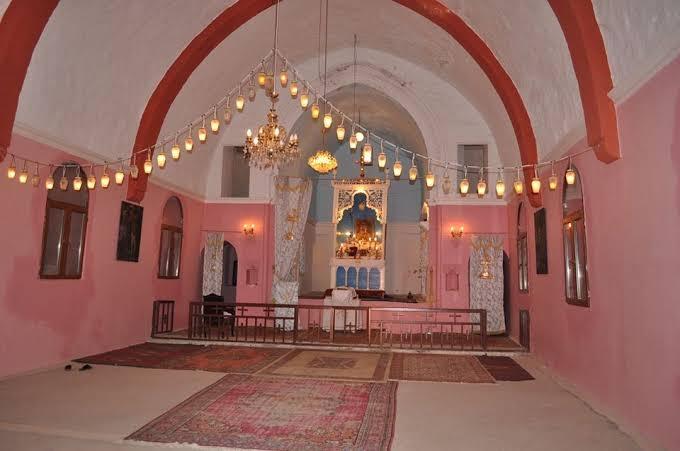
Surp Kevork Armenian Church is located in the Derik district of Mardin province in southeastern Türkiye. It is one of six churches serving the Syriac, Armenian and Chaldean communities in the region. Today, it is the only Armenian church in the district open for worship. Although the majority of the local population consists of Kurds, the Armenian minority continues to preserve the church as a sacred site.

Surp Kevork Armenian Church (Mardin Provincial Directorate of Culture and Tourism)
The exact construction date of the church is not definitively known, but various sources state it was built in 1650. The local population named the building “Dêra Sor,” meaning “Red Church” in Kurdish, due to the red clay used in its construction. After the Armenian Deportation of 1915, ownership of the church was transferred to the state treasury, during which time it was used for various purposes. In 1957, a small number of Armenians living in Derik purchased the church from the state, and the title deed was registered in the name of Garabed Keçeci, an Armenian resident of Derik. After Garabed Keçeci’s death, ownership passed to his heirs.
Surp Kevork Church was constructed using local materials. Red clay and stone are characteristic elements of the building. Its architectural design is suited for both worship and educational purposes. The exterior façade and interior layout reflect traces of regional Armenian architectural traditions. The building’s uniqueness and material use are important indicators of its cultural identity.
Over the years, the church suffered structural deterioration and underwent comprehensive restoration in 2004. This restoration preserved the church’s physical integrity and enabled its return to active use as a place of worship. Following the restoration, it was consecrated and opened for worship by Archbishop Aram Ateşyan.
Surp Kevork Church is an important religious center for the small Armenian community in the region. It is also one of the symbols of cultural and religious tolerance in Derik, where diverse ethnic and religious communities coexist. The church has been embraced and preserved by the local population, and its continued reference as “Dêra Sor” reflects its integration into local culture.
In Derik, where only a few Armenian families currently reside, the church is regularly used by this small community. In 2022, it was visited by Patriarch Sahak Maşalyan of the Armenian Church in Türkiye, during which a special liturgy was held. This visit reinforced the church’s religious and cultural importance in the region.
The population of Derik is predominantly Kurdish, while the Armenian population has drastically diminished. Nevertheless, the church has become not only a place of worship but also a symbol of dialogue and peace among the different communities living in the region. Its designation as “Dêra Sor” expresses the community’s respect and sense of belonging toward the church.
T.C. Derik Kaymakamlığı. "Surp Kevork Ermeni Kilisesi." Accessed August 16, 2025. http://www.derik.gov.tr/surp-kevork-ermeni-kilisesi
T.C. Kültür ve Turizm Bakanlığı. "Surp Kevork Ermeni Kilisesi." Mardin İl Kültür ve Turizm Müdürlüğü. Accessed August 16, 2025. https://mardin.ktb.gov.tr/TR-311941/surp-kevork-ermeni-kilisesi.html
Türkiye Turizm Ansiklopedisi. "Surp Kevork Ermeni Kilisesi." Türkiye Turizm Ansiklopedisi. Accessed August 16, 2025. https://turkiyeturizmansiklopedisi.com/mardin-derik-surp-kevork-ermeni-kilisesi
Location | Mardin Türkiye | ||||||||
|---|---|---|---|---|---|---|---|---|---|
Year of Construction | 1650 | ||||||||
Architectural Feature(s) | Built using red soil and used for worship and education | ||||||||
Current Status | Private ownership; maintained and preserved by a small number of Armenian communities | ||||||||
No Discussion Added Yet
Start discussion for "Surp Kevork Armenian Church" article
History
Architectural Features
Restoration Process
Cultural and Religious Significance
Current Status and Visits
Local Population and Social Impact