

This article was automatically translated from the original Turkish version.
+2 More
Type of Geographical İndication | Place of Origin | ||||||||
|---|---|---|---|---|---|---|---|---|---|
Application Date | 11 January 2023 | ||||||||
Registration Date | 29 July 2024 | ||||||||
Registration Number | 1619 | ||||||||
Product / Product Group(s) | Spices sauces and salt for food flavorings | ||||||||
Province(s) | Isparta | ||||||||
Applicant/Registrant(s) | Isparta Provincial Special Administration | ||||||||
Sütçüler Oregano is a medicinal and aromatic product derived from Origanum minutiflorum, an endemic oregano species cultivated in the provinces of Isparta and Antalya. This rare plant in Türkiye is renowned for its high volatile oil content and quality. Although commonly referred to as “Sütçüler Oregano,” it is known in international literature as “Tota Oregano” or “Yayla Oregano.” It is protected as a geographical indication under Law No. 6769 on Industrial Property and was officially registered on 29 July 2024 by the Isparta Provincial Special Administration.
Sütçüler Oregano is a plant belonging to the genus Origanum that grows naturally in the high-altitude (up to 1800 meters), rocky, partially calcareous, and sloping terrains of Isparta and Antalya. The plant exhibits tolerance to drought and cold and adapts well not only to the mild Mediterranean climate but also to continental climatic conditions. Although it has low soil selectivity, the highest yield and quality are obtained in loamy-clayey, alluvial soils with limited water availability. Sandy soils are unsuitable for this species.
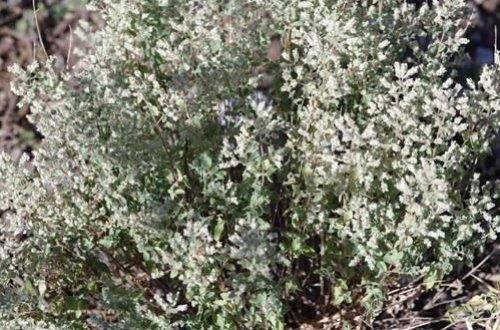
The plant is a perennial herbaceous species that can reach up to 60 cm in height. Its stems are grayish-green with white hairs. Flowers are arranged in spike-like inflorescences at the stem tips, with pedicels approximately 0.5 mm long. Leaves are oval or elliptical, pointed at the apex, up to 6 mm in length, densely hairy, and covered with white trichomes. Bracts are blunt-tipped and leaden-green in color. The calyx is about 2 mm long, with broad triangular teeth on both upper and lower lips. The corolla is white and approximately 4 mm long. Seeds are small, oval-shaped, and brown.
Sütçüler Oregano is typically consumed as a spice, prepared by drying and crushing the leaves, flowers, and terminal shoots. It is also used in herbal tea production and for the extraction of volatile oil through distillation. The volatile oil content in dry matter is at least 1.8 ml/100 g and can reach up to 5% under optimal conditions. The primary compound determining oil quality is carvacrol, which constitutes at least 50% of the oil. This compound imparts the distinctive sharp aroma and flavor to the product and is the key factor enhancing its added value and market price. Volatile oil content peaks during mid-bud formation and early flowering, then declines during maturation. Harvesting is recommended when 50–80% of the plant has flowered to achieve maximum leaf yield and oil content.
Sütçüler Oregano is a plant that spreads naturally through pollination and wind dispersal. Therefore, field establishment typically does not require irrigation or fertilization. In dry, high-altitude areas with limited water, volatile oil content increases but yield decreases; conversely, in areas with abundant water, yield increases but oil content declines.
Harvesting is generally carried out in August and September, depending on climatic conditions, coinciding with the plant’s maturity and seed production phase. Controlled harvesting is conducted in designated areas and times as determined by the Ministry of Agriculture and Forestry. To avoid damage to the plant’s roots, appropriate tools such as knives are used instead of uprooting by hand. Harvesting is performed approximately 10 cm above ground level to ensure the plant’s sustainability.
Harvested oregano is spread on clean, food-safe surfaces, tents, or mats to dry, either under sunlight or in shade, for approximately two weeks. The plants are periodically turned to prevent discoloration and scorching. Modern drying techniques may also be employed. After drying, thick stems and foreign materials are removed; leaves and buds are sieved, classified, and appropriately crushed or ground. Hygiene and contamination prevention measures are strictly applied throughout these processes.
Sütçüler Oregano is stored in dry, cool, clean, and odor-free environments. It is preserved in well-ventilated storage areas without excessive stacking. The product should be delivered to consumers or processed as soon as possible. It is marketed either in bulk or in packaging compliant with food regulations, accompanied by the required labeling information.
Sütçüler Oregano was registered as a geographical indication limited to the provinces of Isparta and Antalya. The application was submitted on 11 January 2023 and officially registered on 29 July 2024. The product or its packaging bears the label “Sütçüler Oregano” and the geographical indication emblem; if this is not feasible, the emblem must be clearly visible at the production site.
Inspections are conducted at least once annually by a minimum three-member authority coordinated by the Isparta Provincial Special Administration, with participation from the Isparta Provincial Directorate of Agriculture and Forestry and the Western Mediterranean Agricultural Research Institute. Additional inspections are carried out upon complaint or as deemed necessary. Inspections verify the correct use of the label and emblem, the origin of the product within the designated geographical area, compliance with harvesting and post-harvest procedures, and adherence to storage and market supply conditions. Non-compliances are documented and communicated to the relevant parties. Inspection reports are regularly submitted to the Turkish Patent and Trademark Office.
Turk Patent and Trademark Office. "SÜTÇÜLER KEKİĞİ PDF." *Geographical Indications Portal.* Accessed August 16, 2025. https://ci.turkpatent.gov.tr/Files/GeographicalSigns/27465ca4-c04f-4e66-8dc6-0e3c299f95d2.pdf
Türk Patent ve Marka Kurumu. "Sütçüler Kekiği." Coğrafi İşaretler Portalı. Accessed August 16, 2025. https://ci.turkpatent.gov.tr/cografi-isaretler/detay/8464

Type of Geographical İndication | Place of Origin | ||||||||
|---|---|---|---|---|---|---|---|---|---|
Application Date | 11 January 2023 | ||||||||
Registration Date | 29 July 2024 | ||||||||
Registration Number | 1619 | ||||||||
Product / Product Group(s) | Spices sauces and salt for food flavorings | ||||||||
Province(s) | Isparta | ||||||||
Applicant/Registrant(s) | Isparta Provincial Special Administration | ||||||||
No Discussion Added Yet
Start discussion for "Sütçüler Oregano (Origanum minutiflorum)" article
Definition and Characteristics
Production Method
Growth Conditions
Harvesting
Post-Harvest Processing
Storage and Market Supply
Geographical Indication and Monitoring