

This article was automatically translated from the original Turkish version.
Type of Geographical İndication | Place of Origin | ||||||||
|---|---|---|---|---|---|---|---|---|---|
Application Date | 11.01.2023 | ||||||||
Registration Number | 1536 | ||||||||
Registration Date | 06.02.2024 | ||||||||
Product / Product Group(s) | Other products | ||||||||
Province(s) | Isparta | ||||||||
Applicant/Registrant(s) | Isparta Provincial Special Administration | ||||||||
Sütçüler Kekik Yağı is a volatile oil registered as a geographical indication under Law No. 6769 on Industrial Property, derived exclusively from an endemic plant cultivated only in the provinces of Isparta and Antalya. This product, registered on 06.02.2024, is produced by distilling the above-ground parts of Sütçüler oregano, scientifically known as Origanum minutiflorum, a species within the genus Origanum.
Because the product can only be obtained from plants grown within the defined geographical boundaries, it is protected under geographical indication status. The packaging must bear the label “Sütçüler Kekik Yağı” and the geographical indication emblem; in cases where this labeling cannot be applied to the packaging, the label must be visibly displayed at the production facility.
Sütçüler Oregano is a medicinal and aromatic plant rare in the flora of Türkiye, valued highly for its volatile oil content and composition. The climatic and soil conditions of Isparta and Antalya provinces support the production of volatile oils rich in carvacrol.
Although yield is low under dry conditions, the oil content is high; in areas with abundant water, yield increases but oil content decreases. Under optimal growing conditions, volatile oil yield can reach up to 5%. Oil synthesis occurs in the secretory trichomes of the plant’s leaves and flowers.
The characteristic aroma and commercial value of Sütçüler Kekik Yağı depend on the proportions of its volatile oil components. At least one liter of oil is obtained from 100 kg of oregano through steam distillation. The oil composition is as follows:
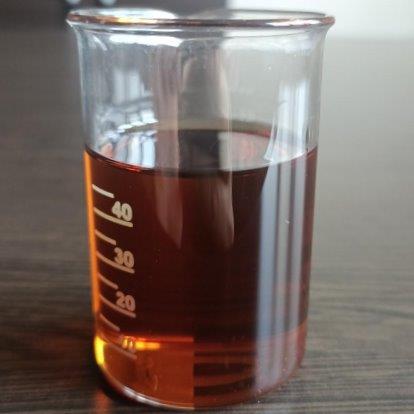
Carvacrol is a phenolic compound with antioxidant activity and determines the oil’s sharp, herbaceous, and slightly floral aroma. Its color ranges from pale yellow to orange.
Sütçüler Oregano is harvested in a controlled manner during August and September in areas designated by the Ministry of Agriculture and Forestry. The plant’s roots are not uprooted by hand to prevent damage; instead, the plant is cut approximately 10 cm above ground level using appropriate tools such as knives.
The highest volatile oil yield is achieved when 50–80% of the plants are in bloom. Harvest timing is a critical factor directly affecting product quality.
Harvested oregano is dried for approximately two weeks under sunlight or in shade on surfaces suitable for food contact. It is periodically turned to prevent darkening and scorching. Modern drying techniques may also be employed.
After drying, thick stems and foreign materials are removed; leaves and buds are sieved and classified. This process is carried out under hygienic conditions in protected areas to prevent contamination.
Dried oregano is placed in distillation vessels suitable for food contact. Steam at approximately 100 °C is passed through serpentine pipes to the oregano. Steam distillation lasts an average of two hours, during which volatile oils are separated and transferred to a condenser.
The obtained oil is stored in dry, cool, odorless, and dark environments. Non-transparent packaging is preferred. When presented to consumers, the oil is marketed in food-safe packaging with labeling that complies with relevant regulations.
Inspections are conducted at least once annually under the coordination of the Isparta Provincial Special Administration, with participation from the Isparta Provincial Directorate of Agriculture and Forestry and the Western Mediterranean Agricultural Research Institute Directorate.
Inspection criteria include:
Non-compliances are reported to the relevant individuals or institutions. Inspection reports are submitted to the Turkish Patent and Trademark Office.
Turk Patent and Trademark Office. "Sütçüler Kekik Yağı Coğrafi İşaret Tescil Belgesi." Turk Patent and Trademark Office. Accessed August 16, 2025. https://ci.turkpatent.gov.tr/Files/GeographicalSigns/aa4caac0-18d9-4af4-b44e-b0566527e7a0.pdf.
Turk Patent and Trademark Office. "Sütçüler Kekik Yağı." Turk Patent and Trademark Office. Accessed August 16, 2025. https://ci.turkpatent.gov.tr/cografi-isaretler/detay/8465.

Type of Geographical İndication | Place of Origin | ||||||||
|---|---|---|---|---|---|---|---|---|---|
Application Date | 11.01.2023 | ||||||||
Registration Number | 1536 | ||||||||
Registration Date | 06.02.2024 | ||||||||
Product / Product Group(s) | Other products | ||||||||
Province(s) | Isparta | ||||||||
Applicant/Registrant(s) | Isparta Provincial Special Administration | ||||||||
No Discussion Added Yet
Start discussion for "Sütçüler Oregano Oil" article
Botanical Origin and Geographical Boundary
Distinctive Chemical Components
Production Process
Harvesting
Drying and Classification
Distillation
Storage and Packaging
Inspection and Registration Process