

This article was automatically translated from the original Turkish version.
Ethnic Origin | Oghuz tribe | ||||||||
|---|---|---|---|---|---|---|---|---|---|
Settlement Areas | Kazdağları, Taurus Mountains, Mersin, Antalya, Adana, Balıkesir, İzmir, Manisa, Aydın | ||||||||
Belief | Alevi-Bektashi tradition | ||||||||
Traditional Profession | Carpentry, log cutting, lumber trade, shipbuilding | ||||||||
Naming Conventions | Tahtacılar, Ağaçeriler | ||||||||
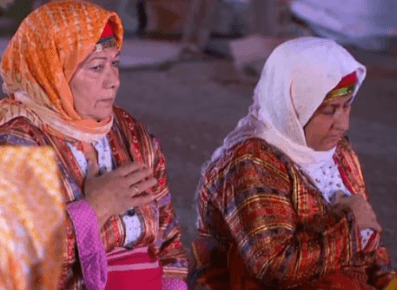
Tahtacı Türkmenleri are a community ethnically identified as Turkmen and religiously affiliated with Anatolian Alevism and Kızılbaş traditions, deriving their name from their traditional occupations of timber cutting, sawmill work, and woodworking. The term "Tahtacı" originally functioned as a professional designation in Ottoman archival documents, referring to those skilled in processing forest products; over time, it became the identity marker of a specific Alevi community.
Research into their ethnic origins presents two main perspectives: the first holds that the Tahtacı descend from a Turkmen group called "Tahtah" who migrated to Anatolia alongside the Bayat tribe; the second asserts that they are descendants of the "Ağaçeriler," a Turkic group originating in Central Asia that moved through the Caucasus into Azerbaijan in the 5th century CE and later spread into Anatolia.
Throughout history, the Tahtacı Turkmen have lived primarily in forested and mountainous regions, within closed community structures that enabled them to preserve both their occupational skills and their religious and cultural traditions. Their belief system exhibits a syncretic structure, deeply interwoven with nature cults.
Today, the identity of "Tahtacı" reflects both a cultural memory rooted in their professional past and a conscious sense of being a distinct subgroup within Anatolian Alevism. For centuries, this community has transmitted its expertise in forestry and carpentry across generations, developing production and construction techniques adapted to the local ecology, thereby making significant contributions to Anatolia’s technical and cultural heritage.
Tahtacı Fatma Documentary (Suha Arın Documentaries)
The origins of the Tahtacı Turkmen have been interpreted differently in both oral traditions and written sources. The two most widely accepted views are: the first posits that they descend from a Turkmen group known as "Tahtah" who migrated to Anatolia alongside the Oghuz Bayat tribe. This view argues that the term "Tahtacı" directly derives from their craft of woodworking and that the community solidified this identity by continuing this occupation after settling in Anatolia.
The second view traces their origins to the "Ağaçeriler," who are described as a Turkic group that arrived in Azerbaijan via the Caucasus in the 5th century CE and subsequently spread into Anatolia, eventually becoming the ancestors of today’s Tahtacı Turkmen.
The migration from Central Asia to Anatolia shaped both the cultural and economic structures of the Tahtacı. As nomadic or semi-nomadic groups in Central Asia, they brought with them knowledge of forestry and forest products. The relationships they formed with natural elements along their migration routes influenced both their belief systems and their occupational expertise.
During the Seljuk and Anatolian Beylik periods, the Tahtacı Turkmen settled or camped in forested and mountainous regions, often in strategically significant areas. They played key roles in timber harvesting, processing, and supplying lumber for military needs. Their settlement preferences were directly linked to their profession, with most communities locating near forested areas close to coastlines or major rivers to facilitate the transport of timber and shipbuilding materials.
In the Ottoman period, the title "tahtacı" appeared in archival records both as a professional designation and as the name of a specific community. Registers of taxation and labor obligations identify groups known as "tahtacı" who specialized in timber cutting, log preparation, transportation, and shipbuilding. Documents reveal their activities extended across a vast geography, from the Kazdağları to the Taurus Mountains, and from the western Anatolian highlands to the Mediterranean coast. The state relied on them as trusted masters for critical tasks such as supplying timber for fortresses and ships.
During this period, their life in remote forests and mountainous areas served two important purposes: first, to live close to the raw materials of their trade; and second, to safeguard their Alevi-Kızılbaş beliefs from external pressures. This closed community structure ensured the continuity of cultural integrity and traditional knowledge transmission.
In the Republican era, nomadic and semi-nomadic lifestyles were largely abandoned in favor of settled life. The Tahtacı began engaging not only in forestry and sawmill work but also in agriculture, animal husbandry, and various urban trades. Nevertheless, social institutions such as cem ceremonies, musahiplik, and düşkünlük persisted, preserving their religious practices.
From the 1960s onward, the Tahtacı Turkmen became part of the wave of labor migration from Türkiye to Europe, particularly Germany, where communities gradually organized into associations, federations, and confederations. These organizations assumed partial functions of traditional belief institutions, playing vital roles in cultural transmission and community solidarity. Cem ceremonies, semah dances, and communal festivals continued to be held in the diaspora, ensuring the transmission of identity to new generations.
Tahtacı Semah (TRT Avaz)
Historically, the Tahtacı Turkmen spread across a wide portion of Anatolia, but their settlements consistently concentrated in forested, mountainous, and semi-coastal regions. This pattern reflects both the necessity of proximity to timber resources and the need to maintain their closed community structure.
Their primary settlement areas in Anatolia extend from the Kazdağları through İzmir, Manisa, Aydın, and Muğla to Antalya, Mersin, and Adana, and further into the Çukurova plains and the highlands of the Taurus Mountains. In inland regions, settlements are also found as far as Kahramanmaraş, Kayseri, and Malatya. Ottoman archival records and field research indicate that the Tahtacı used the western Anatolian mountains, especially the Kazdağları and their surroundings, as a primary base for centuries, moving to different highland pastures during summer months.
Traditionally, their settlement patterns followed a semi-nomadic (yaylak–kışlak) system: timber cutting and processing occurred in highland pastures during summer, while agriculture and animal husbandry were practiced in lower areas during winter. With the Republican era’s shift toward settled life, this seasonal cycle largely disappeared.
Sacred sites are also integral to their geographical distribution. Places such as Sarıkız Tepe in the Kazdağları, Sandras Dağı in Muğla, and Eren (Çiçek) Baba Tepe hold religious and cultural significance. These sites are visited annually, where cem ceremonies and votive rituals are performed.
The most notable diaspora concentrations emerged from the European labor migration beginning in the 1960s. Tahtacı communities in Germany, the Netherlands, Belgium, and France have organized under associations and federations to preserve their cultural and religious identity. Turkish Alevi (Tahtacı) groups in Germany maintain ties with their ancestral villages in Türkiye while transmitting identity to new generations.
Prayer Said by Tahtacı Turkmen While Cutting Trees (Kaygusuz Abdal - Turkish Folk Culture)
The social structure of the Tahtacı Turkmen integrates occupational solidarity and faith-based organization.
The Tahtacı communities are organized around the ocak system, one of the foundational institutional structures of Anatolian Alevism. Ocaks serve as authorities in religious guidance and resolving internal community matters. In some regions, ocaks such as Yanınyatır Ocağı, Hacı Emirli Ocağı, and Garip Musa Ocağı bind communities through both lineage and the master–disciple relationship. The ocak system is the most important institution preserving the Alevi-Kızılbaş belief unity of the Tahtacı.
The Tahtacı are divided into tribes based on settlement areas and ancestral ties. The tribal system is also documented in Ottoman archival records and has been decisive in shaping settlement and occupational distribution. Each tribe concentrates in a specific geographic area and maintains its own rules regarding solidarity, marriage, and labor division.
Musahiplik: A lifelong bond of brotherhood established between two families or individuals. Musahips share religious, social, and economic responsibilities toward one another.
Düşkünlük: The temporary or permanent social exclusion of individuals who violate moral or religious norms within the community. This institution aims to preserve social order.
Family and Marriage: Endogamy (marriage within the community) is generally preferred, contributing significantly to the preservation of cultural integrity.
Historically, the occupational organization of the Tahtacı operated through master–apprentice relationships and intra-family knowledge transmission. During the Ottoman period, Tahtacı assigned to state forestry tasks often carried out these duties in groups based on tribe or kinship.
Since the 1960s, Tahtacı Turkmen who migrated to Germany and other European countries have organized under associations, federations, and confederations, continuing cem ceremonies, cultural events, and holiday celebrations through these institutions. These organizations function as the diaspora counterpart of the traditional ocak system.
The belief system of the Tahtacı Turkmen can be understood as an interpretation of the Anatolian Alevi–Kızılbaş tradition. This system combines Islamic teachings centered on devotion to Ali and the Ahl al-Bayt with syncretic elements from Central Asian Turkic beliefs, including nature-centered, animist, and shamanistic components.
Religious practice is deeply integrated into daily life; production activities, social relations, and rituals unfold within a unified worldview shaped by faith.
Cem ceremony is the central act of worship and communal unity in Tahtacı belief. The cem is the moment when individuals transcend the "I" to become the "we," experiencing most powerfully the community’s egalitarian and solidarity-based structure.
The cem functions as a mechanism for social control, education, cultural transmission, and legal decision-making within the community.
Tahtacı cems are typically led by a dede (ocakzade) and completed through the performance of twelve designated services:
Cems may be held indoors (İçeri Cemi) or outdoors in sacred areas (Dışarı Cemi). Especially during summer months, outdoor cems conducted on sacred mountains and at yatır sites represent the fusion of faith and nature worship.
Tahtacı Semah and Mengisi (Uğur Önür)
"Hakka yürümek" is the fundamental concept of death among the Tahtacı Turkmen. Here, death is not an end but rather a return to God and a reunion with the true homeland.
These rituals clearly show both Islamic elements and traces of pre-Islamic Turkish funeral customs (e.g., funeral meals, offerings at gravesites).
The Tahtacı belief system possesses a nature-centered cosmology, which can be seen as the Anatolian continuation of Central Asian Yer-Su (earth and water spirits) beliefs.
Semah is both a form of worship and a cultural expression. According to some researchers, its origins extend to ancient Turkic shamanic rituals involving circular dance. It symbolizes cosmic transformation and the unity of the human soul with God. During cems, semah is performed to the rhythm of the saz and deyiş recitations by the zakir.
Sections
The lyrics of Tahtacı semahs frequently include expressions of love for the Ahl al-Bayt alongside vivid nature imagery, reflecting the integration of faith and environmental consciousness.
The Tahtacı observe both Islamic calendar-based and ancient Turkic seasonal festivals:
The occupational identity of the Tahtacı Turkmen has been shaped over centuries by forestry, sawmill work, and carpentry. Their name, derived from the word "tahta" (wood), directly reflects this specialization. The forested and mountainous regions where they settled during their migration from Central Asia to Anatolia determined their livelihoods and way of life.
Individuals recorded in Ottoman archives as "tahtacı" were assigned tasks such as cutting, processing, transporting logs, and preparing timber for shipbuilding to meet state demands for naval and construction materials. They were especially active in the forests of the Kazdağları, Taurus Mountains, Antalya region, and Mersin.
Forestry activities carried a ritual dimension. Before cutting trees, prayers were recited, permission was sought from nature, and respect was shown to the "soul" of the tree—demonstrating the deep connection between faith and profession. This practice represents the continuation of the Central Asian belief in "tree spirits" in Anatolia.
Tahtacı craftsmen processed timber into doors, windows, ceiling beams, boats, rafts, and ship components. They were also renowned for their fine craftsmanship in wooden sections of cem houses, village homes, and agricultural structures. Wood carving and decoration featured geometric patterns, botanical motifs, and occasionally religious symbols.
Forestry and carpentry work were primarily carried out through family or communal solidarity. Each task had a master and apprentices; occupational knowledge was transmitted orally across generations. The semi-nomadic system of moving to highland pastures in summer for work and returning to lowland winter quarters for rest ensured the continuity of both economic and social relationships.
The Tahtacı occupational expertise is inseparable from their cultural identity. The term "Tahtacı" has become more than a profession—it is an expression of identity that defines their historical memory and social belonging. Even after transitioning to settled life, this identity was preserved with pride among Tahtacı who pursued different urban occupations.
Anadolu Ajansı. "Beş asırdır sürdürülen Türkmen geleneği." Accessed August 14, 2025. https://www.aa.com.tr/tr/turkiye/bes-asirdir-surdurulen-turkmen-gelenegi/886484
Ağrı, Özlem. "Manisa Yöresindeki Tahtacı Semahlarının Edebi ve Müzikal Açıdan İncelenmesi." Master's thesis, Haliç Üniversitesi, 2023. Accessed August 14, 2025. https://tez.yok.gov.tr/UlusalTezMerkezi/TezGoster?key=a0OMTmEd_3mfOBxT8SiBTF7pKUTec5i43bXyUPT9e7mqgoG7jqAOX4AjfguEjF2P
Doğan, Nur Nihal. Osmanlı Devleti’nde Tahtacılar ve Tahtacılık (19. ve 20. Yüzyılda). Master's thesis, Akdeniz Üniversitesi, 2024. Accessed August 14, 2025. https://tez.yok.gov.tr/UlusalTezMerkezi/TezGoster?key=LY6e5xGA7WWUpEdrBmEPLkSupt-WqOd-cn2SjkHEgbtf3oQYEEmfa-cj9WFJ0qK6
Gülten, Sadullah. “Kökler ve Dallar: Tahtacı Alevilerinin Menşei ve Tahtacı Cemaatleri.” Hacı Bektaş Veli Araştırma Dergisi 95 (2020): 143-167. Accessed August 14, 2025. https://dergipark.org.tr/tr/pub/tkhcbva/issue/71944/1157424
Kaygusuz Abdal - Türk Halk Kültürü. "Tahtacı Türkmen Aleviler - Ağaç Kesme Duası." Accessed August 14, 2025. https://www.youtube.com/watch?v=7zVFVRwC8EY
Mutlu, Hüseyin Kahraman. “Balıkesir ve Batı Anadolu Yöresi Tahtacı Türkmenleri.” Turkish Studies 6, no. 1 (2011): 1557-1566. Accessed August 14, 2025. https://turkishstudies.net/turkishstudies?mod=sayi_detay&sayi_id=255
Suha Arın Belgeselleri Youtube Kanalı. "Tahtacı Fatma (HD) - Suha Arın Kanalı Özel Gösterimi." Accessed August 14, 2025. https://www.youtube.com/watch?v=D62eCwcSIIU
TRT Avaz YouTube Channel. "Tahtacı Semahı - Mersin / Çamalan - TRT Avaz." Accessed August 14, 2025. https://www.youtube.com/watch?v=tjcrpfGTAKc
Uluocak, Şeref. “Kazdağı Tahtacı Türkmen Kozmolojisinde ‘Hakka Yürümek.’” Türk Kültürü ve Hacı Bektaş Veli Araştırma Dergisi 71 (2014): 55-78. Accessed August 14, 2025. https://dergipark.org.tr/tr/pub/tkhcbva/issue/71952/1157527
Uğur Önür Youtube Kanalı. "Uğur Önür - Bir Nefescik Söyleyim & Şu Yüce Dağların Tahtacı Semahı & Tahtacı Mengisi." Accessed August 14, 2025. https://www.youtube.com/watch?v=hwdUv1Dqves
Çandarli Şahin, Aslı. “Kazdağları’ndan Sandras’a Tahtacı Türkmen Kültüründe Eski Türk Dininin İzleri.” Folklor Akademi Dergisi 5, no. 2 (2022): 215-230. Accessed August 14, 2025. https://dergipark.org.tr/tr/pub/folklor/issue/72308/1085301
Çil, Gürkan. “Çanakkale Yöresi Tahtacı Türkmenlerinde Tören, Kutlama ve Bayram.” Çanakkale Araştırmaları Türk Yıllığı 23, no. 37 (2024): 78–89. Accessed August 14, 2025. https://dergipark.org.tr/tr/pub/canakkalearastirmalari/issue/87939/1562616
Özduyğu, Ecem. Almanya’daki Türkmen Alevi (Tahtacı) Topluluklarının Sivil Toplum Örgütlenmeleri. Master's thesis, Aydın Adnan Menderes Üniversitesi, 2025. Accessed August 14, 2025. https://tez.yok.gov.tr/UlusalTezMerkezi/TezGoster?key=P3dtmmHrq-mzEcmCLi1CqQzSq7rk5R5etl82IYYQCwG8ZPWVkdoydKkNLLB78GMD

Ethnic Origin | Oghuz tribe | ||||||||
|---|---|---|---|---|---|---|---|---|---|
Settlement Areas | Kazdağları, Taurus Mountains, Mersin, Antalya, Adana, Balıkesir, İzmir, Manisa, Aydın | ||||||||
Belief | Alevi-Bektashi tradition | ||||||||
Traditional Profession | Carpentry, log cutting, lumber trade, shipbuilding | ||||||||
Naming Conventions | Tahtacılar, Ağaçeriler | ||||||||
No Discussion Added Yet
Start discussion for "Tahtacı Türkmenleri" article
History
Geographical Distribution
Social Structure and Organization
Ocak System
Tribes and Family Groups
Social Institutions
Occupational Organization
Diaspora and Modern Organization
Belief System and Rituals
Cem Ceremonies and the Twelve Services
Hakka Yürümek (Death Rituals)
Nature Worship and Sacred Sites
Semah
Social Belief Institutions
Annual and Holiday Rituals
Occupational Expertise and Cultural Production
Forestry and Sawmilling
Carpentry and Woodworking
Occupational Solidarity and Community Organization
Relationship Between Occupation and Cultural Identity