


This article was automatically translated from the original Turkish version.
+1 More
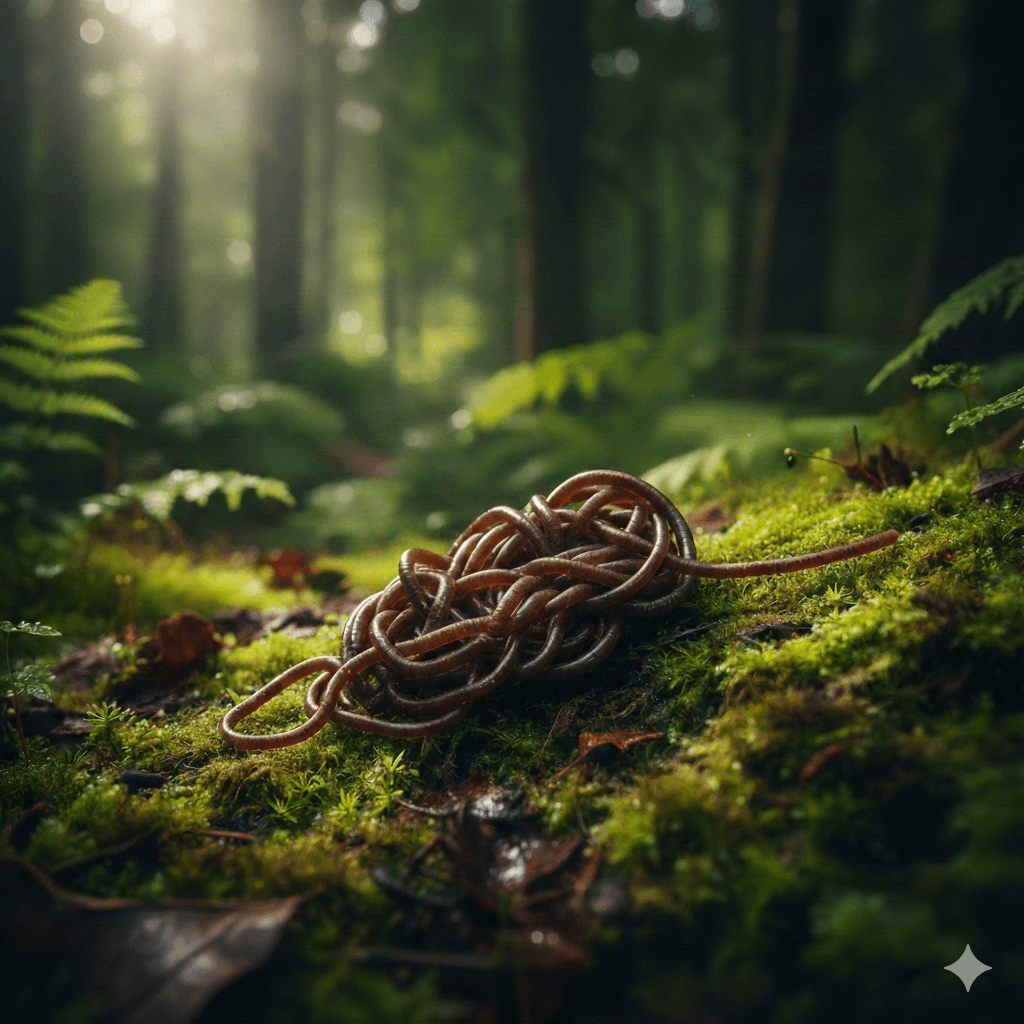
At Kuyruğu Kurtları
(Generated by artificial intelligence)
Horsehair Worms (Nematomorpha)
Branch | Nematomorpha | ||||||||
|---|---|---|---|---|---|---|---|---|---|
Reproduction(s) | Sexual reproduction | ||||||||
Body Structure | Long, thin, threadlike, unsegmented, cylindrical | ||||||||
Living Area | Adult individuals live in freshwater, while the larval stage is associated with terrestrial and semiaquatic ecosystems | ||||||||
Manors | Various arthropods, primarily insects | ||||||||
Lifestyle | Parasitic in the larval stage, free-living in the adult stage | ||||||||
World | Animalia | ||||||||
Nematomorpha is classified as an independent phylum within the kingdom Animalia. Although historically associated with Nematoda due to morphological similarities, it is distinguished based on embryological development, body wall structure, and life cycle characteristics. Within the phylum, classification relies on distinguishing features such as cuticle structure in adults, microstructures on the body surface, and the morphology of reproductive organs.
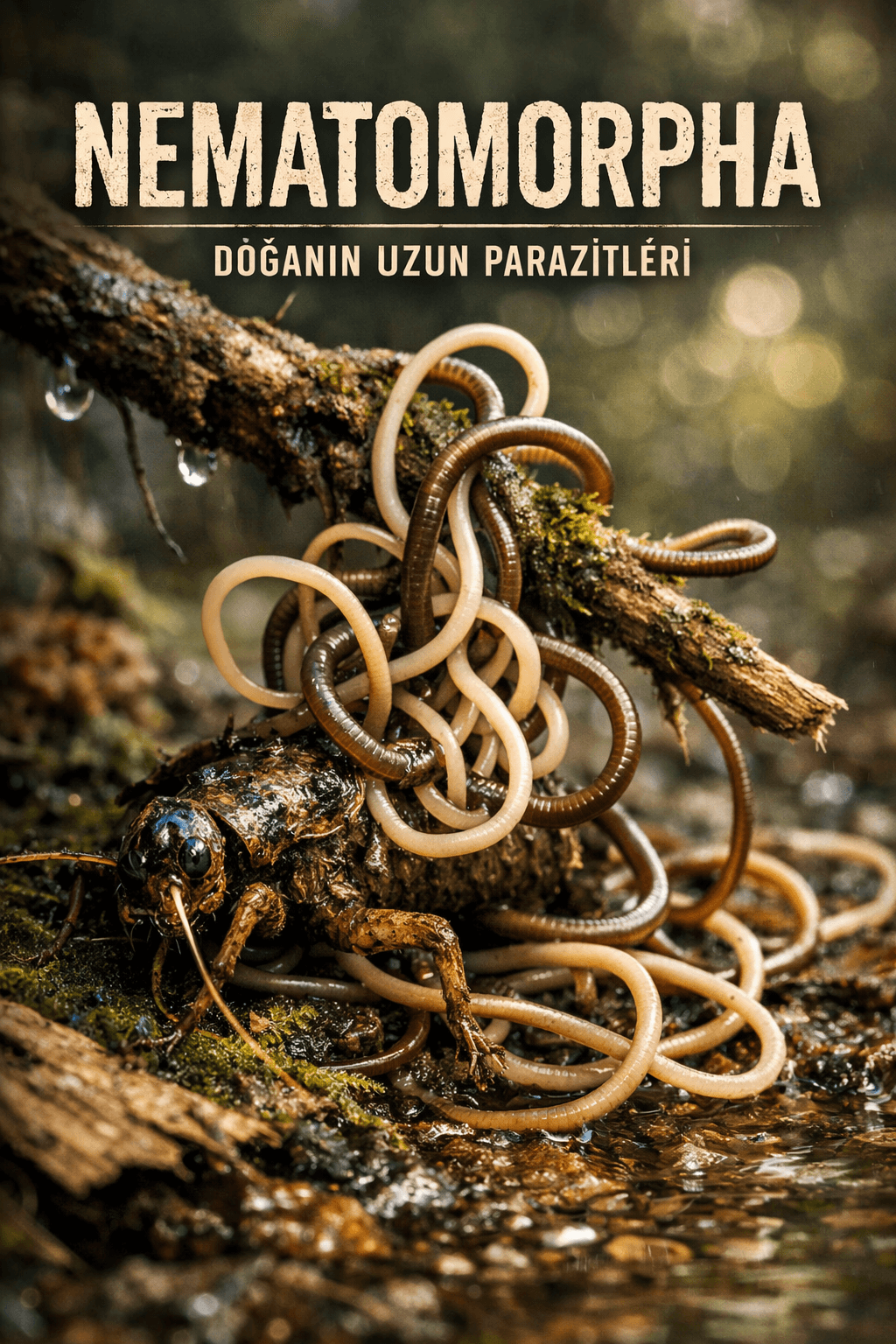
External Appearance of Horsehair Worms (Nematomorpha)
(Generated by Artificial Intelligence)
Eggs laid by females into aquatic environments are contained in gelatinous cords. Embryonic development is completed in water. The microscopic larvae hatched from eggs are capable of free swimming. Upon contact with a suitable host, larvae actively penetrate the host’s body or are transmitted via an intermediate host. During this stage, insects such as grasshoppers, crickets, and other arthropods serve as hosts. The larval stage marks the beginning of the phylum’s parasitic life strategy.
The larva establishes itself in the host’s body cavity (hemocoel), where it grows by feeding on host tissues and hemolymph. During development, it elongates significantly and assumes a threadlike form. At this stage, the digestive system is vestigial; nutrient uptake occurs directly through the body surface. The parasitic phase represents the key biological stage in which the organism achieves full morphological maturity. In some species, physiological changes that alter host behavior have been observed.
Once development is complete, the individual exits the host and enters an aquatic environment. This transition typically occurs when the host moves toward water. Adult worms are free-living. Reproduction occurs during this stage. The mouth and digestive system are non-functional; no feeding is observed. Lifespan is short, and the primary function is reproduction. After fertilization, females lay eggs, and the cycle begins anew.
Nematomorpha species depend on different habitats during various stages of their life cycle. Larval and parasitic stages require terrestrial or semiaquatic arthropod hosts. Adult individuals live in freshwater ecosystems. Ponds, small streams, and stagnant waters are their primary habitats. Members of the phylum have been recorded on all continents except Antarctica. Species diversity is highest in temperate and tropical regions.
Nematomorpha species indirectly influence ecosystem dynamics through their parasitic relationships with host organisms. They can affect host population behavior and survival rates. This effect is not a direct biological control mechanism but is considered part of the broader network of interspecific interactions. The lack of feeding in adults limits their role in trophic networks. However, the parasitic stage can be decisive in energy flow and host behavior modification.
Members of the Nematomorpha phylum do not cause true parasitism in humans. Their natural life cycles require arthropods as obligatory hosts. Human biology does not meet the developmental requirements of this phylum.
Occasional findings in the human body are typically accidental. These occurrences usually result from contact with contaminated water, use of open water sources, or encounters in moist environments. They may be temporarily detected in the digestive tract but cannot develop further in human tissues. This phenomenon is termed pseudoparasitism, defined as the temporary presence of an organism in a non-host without successful development. Clinically, it does not cause persistent infection. Reported cases in the literature are rare and usually resolve spontaneously.
No pathogenic effects of Nematomorpha species on human health have been demonstrated. They have no direct disease-causing role. However, rare encounters may cause anxiety in individuals. Therefore, accurate identification and public education are important.
The content in this article is provided solely for general encyclopedic information. These details must not be used for diagnosis, treatment, or medical advice. Before making any decisions regarding health, always consult a physician or qualified healthcare professional. The author and KÜRE Encyclopedia assume no responsibility for any consequences arising from the use of this information for diagnostic or therapeutic purposes.
Animal Diversity Web. "Nematomorpha." University of Michigan Museum of Zoology. Accessed February 1, 2026. https://animaldiversity.org/accounts/Nematomorpha/
Eren, Gökhan, and Şinasi Umur. “Nematomorpha Üzerine İnceleme: Evcil Hayvan ve İnsanlardaki Yalancı-Parazitizm Olguları ve Türkiye’deki Durum.” *Türk Bilimsel Derlemeler Dergisi* 14, no. 2 (2021): 111–123. Accessed February 1, 2026. https://www.derleme.gen.tr/index.php/derleme/article/view/372/363
Texas A&M University, Department of Entomology. “Horsehair Worms (Nematomorpha).” Accessed February 1, 2026. https://citybugs.tamu.edu/factsheets/landscape/others/ent-1001/
Topçu Gencay, Elif Burcu, and Cenk Soner Bölükbaş. “Parazitlerin Konak Davranışlarına Etkileri.” Vet Hekim Der Derg 95, no. 2 (2024): 164–177. Accessed February 1, 2026. https://dergipark.org.tr/en/download/article-file/3378657
At Kuyruğu Kurtları
(Generated by artificial intelligence)
Horsehair Worms (Nematomorpha)
Branch | Nematomorpha | ||||||||
|---|---|---|---|---|---|---|---|---|---|
Reproduction(s) | Sexual reproduction | ||||||||
Body Structure | Long, thin, threadlike, unsegmented, cylindrical | ||||||||
Living Area | Adult individuals live in freshwater, while the larval stage is associated with terrestrial and semiaquatic ecosystems | ||||||||
Manors | Various arthropods, primarily insects | ||||||||
Lifestyle | Parasitic in the larval stage, free-living in the adult stage | ||||||||
World | Animalia | ||||||||
No Discussion Added Yet
Start discussion for "Tail Worms (Nematomorpha)" article
Systematic Position
Morphology
External Structure
Internal Structure
Life Cycle
Embryonic and Larval Stage
Parasitic Stage
Adult Stage
Habitat and Distribution
Ecological Role
Relationship with Humans