


This article was automatically translated from the original Turkish version.
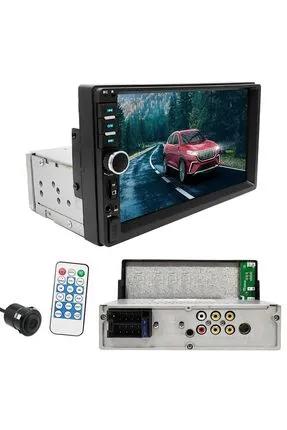
Tape
Task | Manage information, entertainment, and connectivity systems | ||||||||
|---|---|---|---|---|---|---|---|---|---|
Connections | USB, Bluetooth, AUX, Wi-Fi | ||||||||
Software Compatibility | Android Auto, Apple CarPlay | ||||||||
Application Area(s) | All passenger and commercial vehicles | ||||||||
Fault Indicator | No audio output, screen freeze, connection errors | ||||||||
The head unit is an electronic control unit located at the center of a vehicle’s information and entertainment system, integrating functions such as radio, music playback, connectivity systems, and a display interface. In modern vehicles, it manages the multimedia display, driver assistance systems, and connection ports.
The head unit processes various audio and video signals through a central processor and operates in synchronization with the vehicle’s integrated speaker system. It controls media playback, phone calls, navigation, and vehicle settings via input ports such as Bluetooth, USB, AUX, and Wi-Fi. Control can also be exercised through buttons on the steering wheel.
– Processor board and display module
– Audio output unit (amplifier or direct speaker connection)
– Input ports (USB, SD card, AUX, Bluetooth)
– Software interface (Android Auto, Apple CarPlay, manufacturer-specific operating systems)
– Support for rearview camera and parking sensor connections
– Provides information and entertainment for drivers and passengers
– Display interface for navigation and driver assistance systems
– Central control point for vehicle settings and driver interfaces
– Display screen for rearview camera and parking assistance systems
– Facilitates easy access to information while driving
– Integrates multimedia, phone, and navigation functions
– Compatible with steering wheel controls
– Advanced models offer wireless connectivity and voice assistant support
– Audio output may be weak in low-quality models
– Older systems have limited update and connectivity options
– Complex menus can negatively affect driving safety
– In case of failure, the entire integrated system may become inoperative
Milli Eğitim Bakanlığı (MEGEP). "Elektrik-Elektronik Teknolojisi: Amplifikatörler ve Ses Sistemi Bileşenleri." Ankara: MEB Yayınları. Accessed June 17, 2025.
Milli Eğitim Bakanlığı (MEGEP). "Elektrik-Elektronik Teknolojisi: Müzik Setleri." Ankara: MEB Yayınları. Accessed June 17, 2025.

Tape
Task | Manage information, entertainment, and connectivity systems | ||||||||
|---|---|---|---|---|---|---|---|---|---|
Connections | USB, Bluetooth, AUX, Wi-Fi | ||||||||
Software Compatibility | Android Auto, Apple CarPlay | ||||||||
Application Area(s) | All passenger and commercial vehicles | ||||||||
Fault Indicator | No audio output, screen freeze, connection errors | ||||||||
Operating Principle
Hardware/Software
Applications
Advantages
Disadvantages