


This article was automatically translated from the original Turkish version.
+1 More
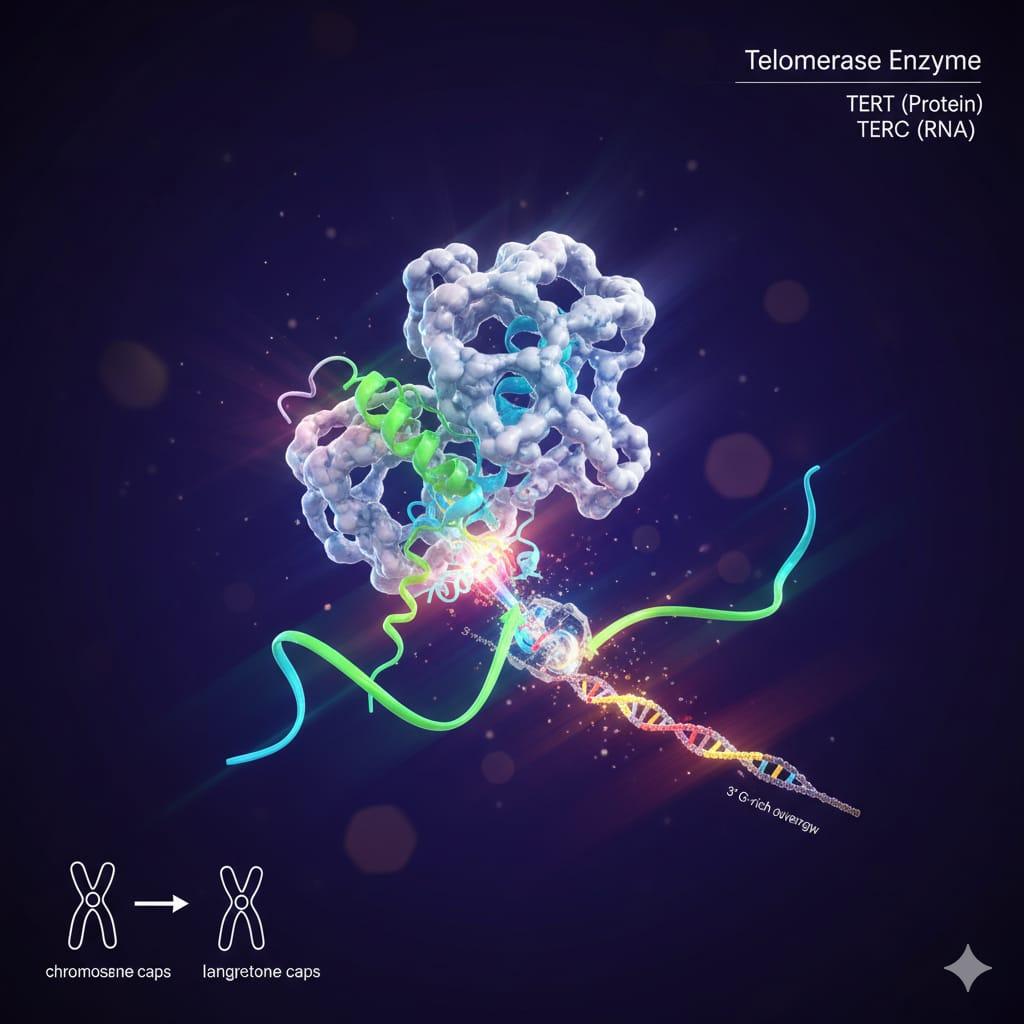
Telomeraz Enzimi
(Yapay Zeka ile Oluşturulmuştur)
Telomerase is a ribonucleoprotein enzyme that protects and extends repetitive DNA sequences called telomeres at the ends of chromosomes in eukaryotic cells. Its structure includes a catalytic reverse transcriptase subunit (TERT) and an RNA component (TERC) that serves as a template for the enzyme. Using RNA as a template, telomerase adds nucleotides to telomeric DNA, compensating for the shortening that occurs during replication.
The primary function of telomerase is to preserve the integrity of chromosome ends, preventing loss of genetic information and sustaining the cell’s capacity to divide. Since telomeres shorten with each cell division, their critical shortening triggers cell cycle arrest or cellular senescence; telomerase provides a mechanism that counteracts this process.
Telomerase activity varies by cell type: it is low in most somatic cells but high in germ line cells, certain stem cells, and cancer cells. Therefore, telomerase is regarded as a key biological factor in research on cellular renewal, aging, and cancer.
The foundations of the telomere concept stem from early cytogenetic studies that recognized the structural and functional importance of chromosome ends in cell division. Observations made in the first half of the 20th century established that chromosome ends are specialized structures involved in preserving genetic material. Subsequent molecular biology research revealed that telomeres consist of specific nucleotide repeats and that these terminal regions shorten with each cell division.
The first strong evidence for the existence of telomerase emerged when it became clear that telomere shortening imposes a limit on cellular proliferation. The observation that telomere length remains stable or even increases in certain cell types indicated the presence of a specialized mechanism counteracting this shortening. Experimental studies subsequently identified telomerase as a unique enzyme capable of synthesizing telomeric DNA.
In the following years, the molecular structure and mechanism of telomerase were examined in detail. It was demonstrated that the enzyme is a ribonucleoprotein complex composed of a protein component and an RNA component, with the RNA serving as the template for telomere synthesis. These findings revealed that telomerase operates via a mechanism distinct from classical DNA polymerases.
Telomerase research gained new momentum after it was determined that the enzyme is highly active in cancer cells. This discovery established telomerase as a central player in understanding the relationships between cellular immortality, aging, and cancer biology. Over time, telomerase has become not only a key subject in basic biology but also a major focus of diagnostic and therapeutic research.
Telomerase has a multi-component ribonucleoprotein complex structure necessary for its function. Its structure relies on the interaction between a protein component that provides catalytic activity and an RNA component that serves as a template for telomere synthesis. In addition to these two main components, the stability and intracellular regulation of the telomerase complex are supported by various accessory proteins.
The protein subunit of telomerase, telomerase reverse transcriptase (TERT), forms the enzyme’s catalytic center. TERT is classified within the reverse transcriptase family due to its ability to synthesize DNA using an RNA template. This protein contains an active site responsible for adding specific repeat sequences to telomeric DNA. Structural analyses have shown that TERT consists of distinct functional regions that interact with both the RNA component and telomeric DNA.
The presence and quantity of the TERT protein are fundamental determinants of telomerase activity in the cell. In many somatic cells, the TERT gene is either not expressed or expressed at very low levels, which is a primary reason for limited telomerase activity.
TERC, the RNA component of telomerase, is a short but functional RNA molecule that acts as the template for telomere synthesis. This RNA sequence contains specific nucleotides complementary to the repeats found in telomeric DNA. Although TERC itself lacks catalytic activity, it enables telomere elongation by forming a complex with the TERT protein.
The structural integrity and proper folding of TERC are critical for telomerase function. Structural defects or reduced levels of the RNA component can lead to decreased telomerase activity and accelerated telomere shortening. This clearly demonstrates that telomerase is not merely a protein enzyme but also an RNA-dependent enzyme.
The telomerase enzyme operates through a unique enzymatic mechanism that compensates for the shortening of telomeres during each cell division. During DNA replication, classical DNA polymerases cannot fully copy the ends of chromosomes. This is known as the “end replication problem” and leads to progressive telomere shortening. Telomerase functions as a specialized system that overcomes this structural limitation.
The telomerase mechanism begins with the enzyme binding to the 3′ end of the telomere. The RNA component (TERC) acts as a template complementary to the telomeric repeat sequences. The telomerase reverse transcriptase (TERT) uses this RNA template to add new DNA repeats to the telomere end. Thus, the telomere gains a specific number of nucleotides with each elongation cycle.
Telomere elongation is not limited to a single binding event. After synthesizing a set of repeats, telomerase can reposition itself on the same telomere end to perform multiple elongation cycles. This property enables the enzyme to function processively, contributing to the efficient maintenance of telomere length.
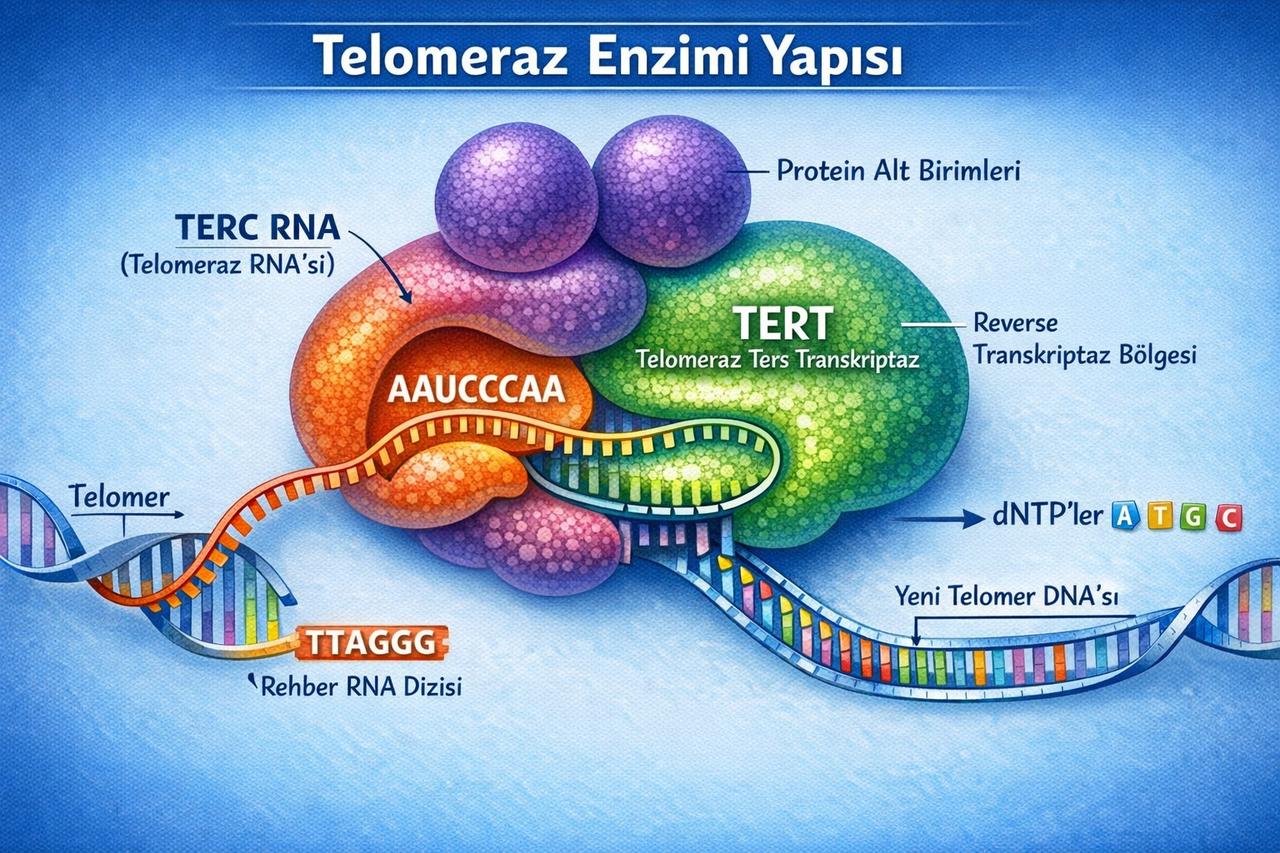
Telomerase Enzyme Structure
(Generated by Artificial Intelligence)
The telomere ends extended by telomerase are subsequently stabilized by other cellular DNA polymerases that synthesize the complementary strand. At this stage, telomere-binding proteins intervene to maintain telomere structure and prevent chromosome ends from being recognized as DNA damage. Thus, telomerase activity contributes not only to telomere elongation but also to the preservation of chromosomal end integrity. Through this mechanism, telomerase plays a central role in cellular aging, renewal, and pathological processes by determining a fundamental factor of cellular division capacity.
The primary cellular function of telomerase is to maintain the integrity of telomeres at chromosome ends, ensuring the continuity of genetic information. Telomere shortening during cell division can trigger cell cycle arrest, cellular senescence, or programmed cell death when telomeres fall below a critical threshold. Telomerase counteracts this process by elongating telomeres and thereby sustaining the cell’s ability to divide.
Telomerase activity is particularly prominent in cells with long-term proliferative potential. Active telomerase in germ line cells and certain stem cell populations enables these cells to maintain telomere length despite numerous divisions. This demonstrates the indirect but critical role of telomerase in tissue renewal and developmental processes.
In contrast, the suppression of telomerase activity in most somatic cells limits their number of divisions. This restriction is essential for maintaining tissue organization and preventing uncontrolled cell proliferation. The regulation of telomerase in this manner is viewed as a balancing mechanism between cellular homeostasis and tumor suppression.
The cellular functions of telomerase are not limited to telomere elongation. Some studies suggest that telomerase components may be involved in intracellular signaling pathways, stress responses, and reactions to DNA damage. These findings imply that telomerase may play indirect roles beyond its classical telomere maintenance function, influencing various aspects of cellular physiology. In this context, telomerase is recognized as one of the fundamental biological factors determining cell lifespan, division capacity, and cellular homeostasis.
Telomere length is one of the key biological indicators of a cell’s division capacity and lifespan. Progressive shortening of telomeres with each cell division eventually compromises the function of chromosome ends. Telomerase plays a central role in preserving telomere length and extending it in specific cell types by counteracting this shortening.
There is a direct relationship between telomerase activity and telomere length. In cells with active telomerase, telomere shortening is either slowed or completely prevented. This is particularly evident in germ line cells, stem cells, and cells with high proliferative potential. Active telomerase in these cells ensures the preservation of telomere length across generations.
Conversely, in somatic cells with low or absent telomerase activity, telomere length progressively decreases with each cell cycle. When telomeres fall below a critical length, the cell cycle halts and the cell enters senescence. This process is associated with tissue aging and functional decline at the organismal level.
The relationship between telomere length and telomerase is also influenced by environmental and cellular factors. Oxidative stress, inflammation, and metabolic processes can accelerate telomere shortening, while telomerase activity can partially counteract these negative effects. In this context, telomere length is regarded not only as an indicator of cellular aging but also as a marker of overall biological status. Therefore, the telomerase–telomere length relationship is considered a fundamental area of research in aging biology, disease processes, and cellular renewal mechanisms.
The shortening of telomeres during each replication cycle limits the number of times a cell can divide. When telomere length falls below a critical threshold, cell cycle control mechanisms are activated, halting cell proliferation. This phenomenon constitutes one of the fundamental biological bases of cellular aging, known as replicative senescence.
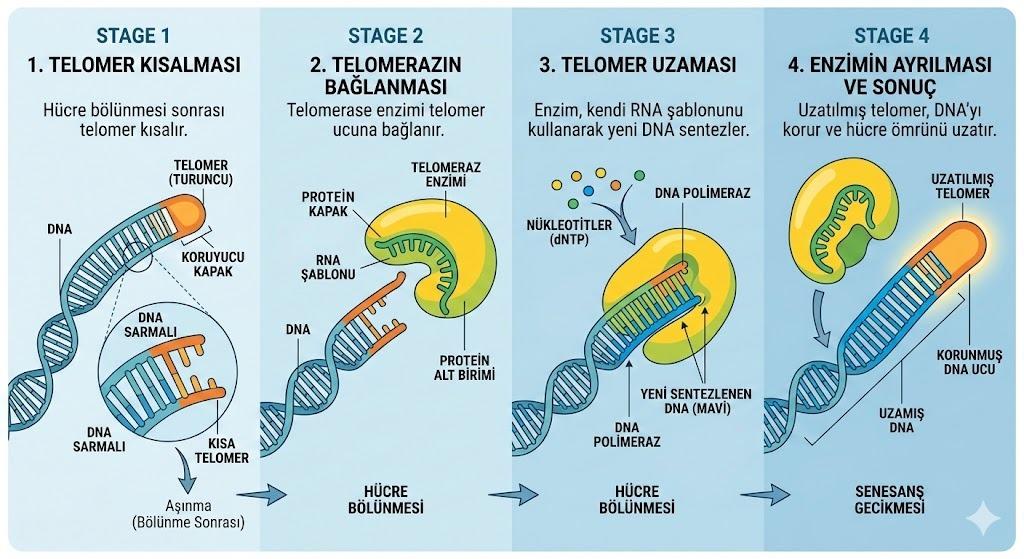
Telomerase in Replication Stages
(Generated by Artificial Intelligence)
Telomerase extends the replicative lifespan of cells by counteracting telomere shortening. In cells with active telomerase, telomere length is maintained, allowing the cell cycle to continue for a longer period. This feature is particularly important for sustaining cellular continuity during embryonic development and in tissues requiring lifelong renewal.
In most somatic cells, low telomerase activity during aging leads to progressive telomere shortening and the emergence of aging signs at the cellular level. Telomere shortening-induced recognition of chromosome end damage can trigger cellular repair mechanisms and lead to permanent cell cycle arrest. This process is linked to reduced tissue renewal capacity.
The telomerase–aging relationship extends beyond the number of cell divisions. Preserving telomere length helps maintain genomic stability and reduces the likelihood of genetic abnormalities associated with aging. Therefore, telomerase is regarded as a fundamental factor in aging biology, influencing both cellular lifespan and functional integrity. In this context, the role of telomerase in cell division and aging is central to understanding organismal aging mechanisms.
A defining feature of cancer cells is their acquired ability to divide indefinitely. This results from overcoming the proliferation limit imposed by telomere shortening with each cell division. Reactivation of telomerase in cancer cells is considered a fundamental mechanism enabling this escape from proliferative constraints.
High levels of telomerase activity have been demonstrated in most cancer types. In tumor cells, telomerase, which is suppressed in normal somatic cells, is re-expressed, preserving telomere length and enabling unlimited proliferation. This characteristic has established telomerase as one of the central elements in cancer biology.
Increased telomerase activity not only sustains cell division but also contributes to genomic stability. Short and dysfunctional telomeres can be recognized as DNA damage, leading to increased genetic instability. Active telomerase in cancer cells helps mitigate some of these chromosomal instabilities.
However, telomerase activity is not an absolute hallmark of all cancer cells. Some tumors maintain telomere length through telomerase-independent alternative mechanisms. Nevertheless, the high prevalence of telomerase activity in cancer types has made this enzyme a major target for diagnostic and therapeutic research. In this context, telomerase plays a critical role in understanding the biological properties of cancer cells and uncovering the molecular foundations of tumor development.
Telomerase activity varies in normal tissues according to cell type and physiological function. In most mature somatic tissues, telomerase activity is either very low or completely suppressed. This restriction ensures limited cell divisions, contributing to tissue organization and preventing uncontrolled cell proliferation.
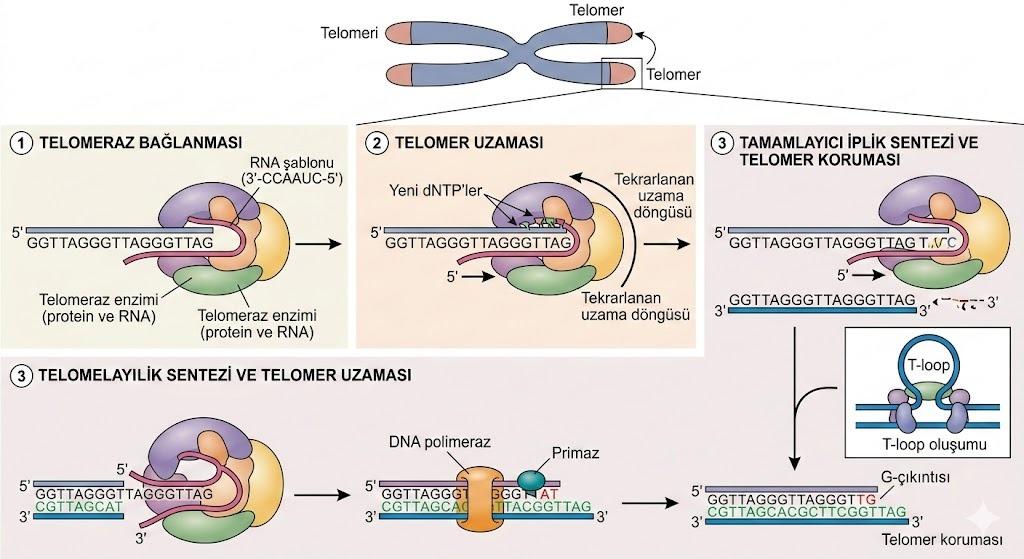
Telomerase Replication
(Generated by Artificial Intelligence)
In contrast, germ line cells and certain stem cell populations are normal cells that maintain telomerase activity. Active telomerase in these cells preserves telomere length, enabling long-term and repeated cell divisions. This function is particularly evident during embryonic development and in tissues with high regenerative capacity throughout life.
The restricted expression of telomerase in normal tissues is considered a protective mechanism. Widespread and uncontrolled telomerase activity could allow cells to bypass proliferation limits and increase the risk of tumorigenesis. Therefore, the expression level and activity of telomerase are tightly regulated by cell cycle control mechanisms.
In some tissues with high regenerative capacity, low but measurable telomerase activity is important for maintaining tissue integrity. This indicates that telomerase is not merely a passive component in normal physiology; rather, it plays an active role in supporting cellular homeostasis under specific conditions. In this sense, telomerase is regarded as a fundamental biological factor that maintains the delicate balance between cellular continuity and genetic safety in normal tissues.
Due to its close association with cell division, aging, and cancer, telomerase has become a major focus of clinical and biomedical research. The identification of changes in telomerase activity linked to disease processes has provided a foundation for its evaluation in diagnostic and therapeutic studies.
In cancer research, telomerase is considered both a diagnostic biomarker and a potential therapeutic target. The significantly higher telomerase activity observed in many tumor types compared to normal tissues demonstrates its potential for distinguishing cancer cells. Methods based on measuring telomerase activity have been investigated for detecting tumor cells and monitoring disease progression.
In therapeutic research, strategies targeting telomerase inhibition are gaining prominence. Inhibiting telomerase activity can accelerate telomere shortening in cancer cells and halt cell division. This suggests that therapies targeting telomerase may be particularly effective against rapidly proliferating tumor cells. However, such approaches must be carefully evaluated, as they may also affect the limited telomerase activity present in normal cells.
Telomerase is also an important research tool in the study of aging and age-related diseases. Clarifying the relationship between telomere length and telomerase activity contributes to understanding the biological basis of cellular aging. In this context, telomerase is regarded as a key biological marker not only for pathological processes but also for normal aging mechanisms. In clinical and biomedical research, it serves as a critical biological target for uncovering the molecular foundations of diseases, developing diagnostic approaches, and evaluating novel therapeutic strategies.
Warning: The content in this article is provided solely for general encyclopedic informational purposes. The information here should not be used for diagnosis, treatment, or medical advice. Always consult a physician or qualified healthcare professional before making decisions related to health. The author and KÜRE Encyclopedia assume no responsibility for any consequences arising from the use of this information for diagnostic or therapeutic purposes.
Arslan, Neslihan, and Eda Köksal. "Telomer Uzunluğu ve Beslenme İlişkisi: Potansiyel Mekanizmalar." *Gazi Sağlık Bilimleri Dergisi* 8, no. 2 (2023): 69-78. Accessed March 4, 2026. https://dergipark.org.tr/en/download/article-file/2836382
Bolat, İlker, Nurullah Keklikoğlu, and Sevtap İnce Akıncı. "Telomerlerin Hücresel Rolü." İstanbul Tıp Fakültesi Dergisi (2005): 37-43. Accessed March 4, 2026.
Güzelgül, Figen, and Kıymet Aksoy. "Telomeraz Enziminin Tanı ve Tedavide Kullanım Alanı." Arşiv 16 (2010): 69-75. Accessed March 4, 2026.
Küpeli, Serhan. "Nörofibromatozis Tip1 Hastalarında Telomeraz Aktivitesi." Arşiv Kaynak Tarama Dergisi 22, no. 4 (2013): 550-62. Accessed March 4, 2026.
Tiryakioglu, Ali Efe, Mustafa Nuri Özkan, Seda Kayım, Özkan Bağcı, Kadir Çeviker, Burak Tatar, Rasih Yazkan, and Evrim Erdemoğlu. "Kanser Tanı ve Tedavisinde DNA'ya Yönelik Güncel Yaklaşımlar: Telomeraz / TERT." *Mühendislik Bilimleri ve Tasarım Dergisi* 4, no. 2 (2016): 125-31. Accessed March 4, 2026. https://dergipark.org.tr/en/download/article-file/227718
Yılmaz Miroğlu, Yeliz, Emine Diraman, and Zafer Eren. "Telomer ve Telomeraz." *Türk Bilimsel Derlemeler Dergisi* 4, no. 2 (2011): 41–48. Accessed March 4, 2026. https://dergipark.org.tr/tr/download/article-file/417691
https://dergipark.org.tr/en/download/article-file/443896
https://dergipark.org.tr/en/download/article-file/93611
https://dergipark.org.tr/tr/download/article-file/25374
https://tez.yok.gov.tr/UlusalTezMerkezi/tezDetay.jsp?id=AmXylNdt27tQFtPmbbmPpw&no=uRxpDd0IY11Fpb3n2NADaQ
Çetin, Aslı. "Farklı Konsantrasyonlardaki Asidik ve Alkali Suların Daphnia magna'da Telomeraz Enzimi Üzerine Transkriptomik ve Proteomik Seviyedeki Etkileri." Master's thesis, Akdeniz Üniversitesi, 2025. Accessed March 4, 2026.


Telomeraz Enzimi
(Yapay Zeka ile Oluşturulmuştur)
Primary Function
Discovery and History
Structural Features
Protein Component (TERT)
RNA Component (TERC)
Mechanism of Action
Cellular Functions
Relationship with Telomere Length
Role in Cell Division and Aging
Telomerase Activity in Cancer Cells
Telomerase in Normal Tissues
Importance in Clinical and Biomedical Research