


This article was automatically translated from the original Turkish version.
+2 More
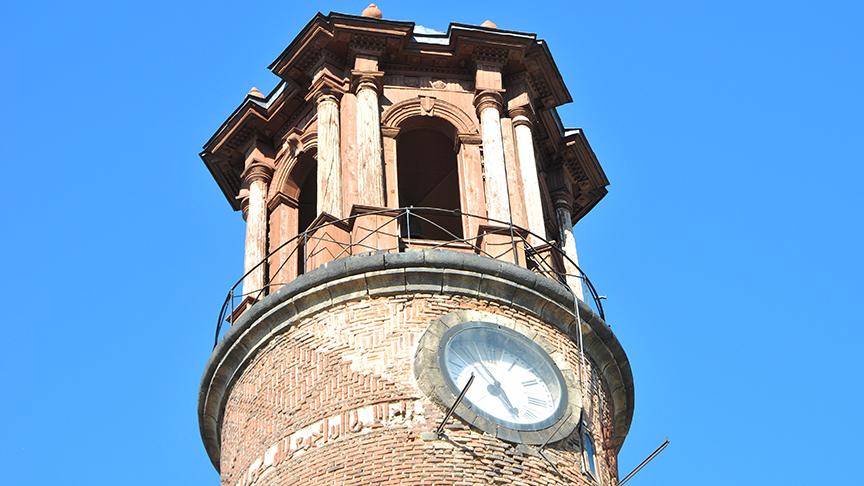
Tepsi Minaret
Location | Erzurum Kale Neighborhood | ||||||||
|---|---|---|---|---|---|---|---|---|---|
Construction Date(s) | 1124–1132 | ||||||||
Patron | Saltuklu Bey, Abu'l-Muzaffar Gazi Inanç Bey | ||||||||
Original Function | Kale Mosque Minaret | ||||||||
Subsequent Functions | Observation and Clock Tower | ||||||||
Material(s) | Cut stone and brick | ||||||||
Constructed in the 12th century within the interior of Erzurum Castle, the Tepsi Minare is a historically significant structure from the Saltuklu Beylik period, notable for both its functionality and architectural design. Originally built as the minaret of the Kale Mescidi, it was later used as a watchtower and clock tower. The Tepsi Minare attracts attention as one of the oldest monumental structures in the region, distinguished by its layered historical legacy.
The Tepsi Minare is built on a base of three-colored cut stone. Its cylindrical body, constructed of brick, tapers upward in form. The entrance door is framed with plain lintel stones and features a pointed arch above it. The balcony located at the upper section of the body was historically used both for the call to prayer and for surveillance purposes.

View of Tepsi Minare in Winter - Culture Portal
The construction of the minaret combines cut stone and brick. This mixed technique reflects the architectural understanding and construction capabilities of the period. It is believed that the height and slender cylindrical form of the structure also served defensive purposes.
The Tepsi Minare was commissioned between 1124 and 1132 by Saltuklu Bey Ebu’l Muzaffer Gazi İnanç Biygu Alp Tuğrul Bey. Initially serving as the minaret of the Kale Mescidi, it later acquired functions as a watchtower and clock tower. In the early 19th century, a clock was installed at the upper part of the minaret, leading the local population to begin referring to it as the “Clock Tower.” However, the original name “Tepsi Minare” remains the scientifically and historically accurate designation.
Over time, the structure underwent various repairs. In 2018, technical inspections analyzed the causes of cracks in the body using seismic equipment. Based on these investigations conducted by the Ministry of Culture and Tourism, a restoration project was developed to intervene without damaging the building’s original fabric. The goal is to ensure structural safety while enabling the transmission of this cultural heritage to future generations.

A photograph taken during restoration works - AA
The Tepsi Minare stands out as a key symbolic structure within Erzurum’s historic urban fabric. Its origin in the Saltuklu period qualifies it as one of the earliest examples of Turkish-Islamic architecture in Anatolia. The structure attracts considerable interest from both domestic and international tourists and forms an important stop on historical tour routes around Erzurum Castle. Additionally, lighting enhancements have further increased its visual appeal.
Accessed November 26, 2025.
Anadolu Ajansı. 844 yıllık 'Tepsi Minare' restore edilecek. Accessed June 1, 2025.
Erzurum İl Kültür ve Turizm Müdürlüğü. Saat Kulesi Değil, Tepsi Minare…. Accessed June 1, 2025.
Kültür ve Turizm Bakanlığı - Türkiye Kültür Portalı. Erzurum Saat Kulesi (Tepsi Minare). Accessed June 1, 2025.

Tepsi Minaret
Location | Erzurum Kale Neighborhood | ||||||||
|---|---|---|---|---|---|---|---|---|---|
Construction Date(s) | 1124–1132 | ||||||||
Patron | Saltuklu Bey, Abu'l-Muzaffar Gazi Inanç Bey | ||||||||
Original Function | Kale Mosque Minaret | ||||||||
Subsequent Functions | Observation and Clock Tower | ||||||||
Material(s) | Cut stone and brick | ||||||||
Architectural Structure
Materials and Technical Features
Historical Development and Functional Changes
Restoration Efforts
Cultural and Touristic Significance