

This article was automatically translated from the original Turkish version.
+2 More
Founding Date | 10 April 1883 | ||||||||
|---|---|---|---|---|---|---|---|---|---|
Place of Establishment | Bahçesaray, Crimea | ||||||||
Founder(s) | İsmail Gaspıralı | ||||||||
Language(s) | Bilingual in Turkish and Russian | ||||||||
Publication Period | Twice weekly between 1883 and 1904, three times weekly between 1904 and 1906, once weekly between 1906 and 1912, and daily from 1912 onward | ||||||||
Newspaper Publication | Russia, Ottoman Empire, Iran, Balkans, Eastern Turkestan | ||||||||
Closure | End of 1917 | ||||||||
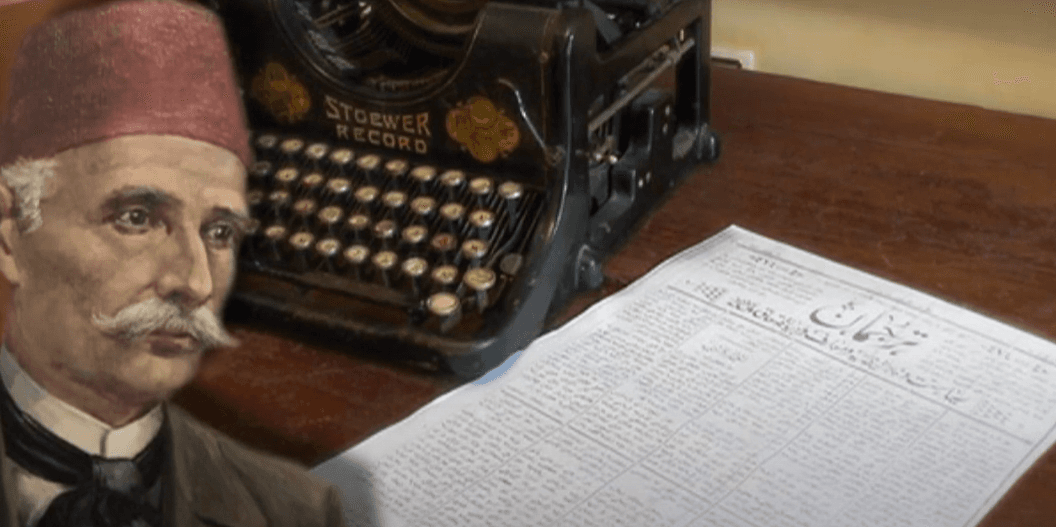
Tercüman Gazetesi is a long-running newspaper that began publication on 10 April 1883 in Bakhchisaray, Crimea, by İsmail Gaspıralı. Initially published weekly with parallel columns in Turkish and Russian, it became a daily newspaper from 1912 onward. After Gaspıralı’s death, it continued for a time under the editorship of Hasan Sabri Ayvazof and Rıfat Gasprinski.
The newspaper emerged as one of the principal platforms for modernization in the Turkish world, aiming to enlighten public opinion around education—particularly the education of girls—social progress, and the idea of a “common Turkish” language. It promoted the ideal of “unity in language, thought, and action” through the press.
Its significance for the Turkish world lies in its role in transmitting innovative ideas from Istanbul to the Caucasus and Central Asia, enabling Turkish communities to become aware of each other and unite around shared feelings and ideas. It developed one of the earliest forms of “public diplomacy” and communication models capable of transcending borders. In this regard, Tercüman accelerated national consciousness and the Ceditçilik movement and is today regarded as a historic press experience that serves as a model for cooperation among Turkish states and communities.
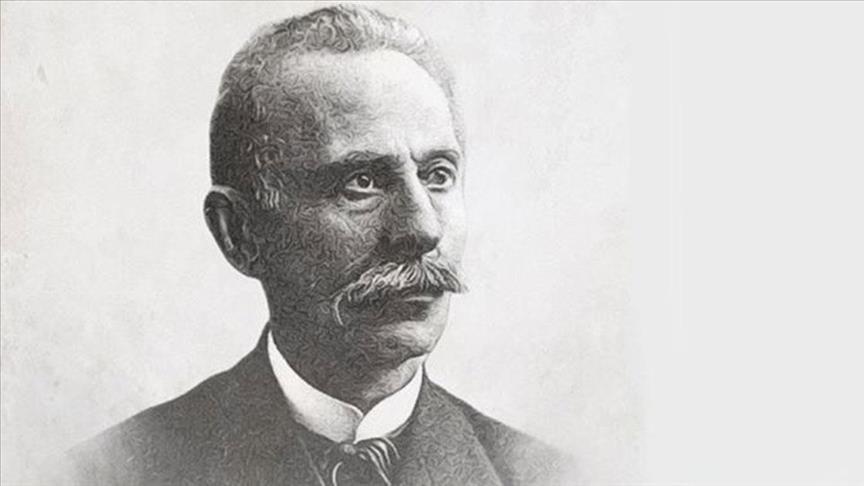
Founder of Tercüman Gazetesi, İsmail Gaspıralı (AA)
After obtaining the necessary permissions from Russian authorities—with his education in Russian schools and his friendly relations with local administration playing key roles—Ismail Gaspıralı established a printing press in Bakhchisaray and began publishing Tercüman on 10 April 1883.
In its early years, the newspaper was printed in four pages: two in Turkish and two in Russian. Although the columns were generally parallel, the texts were not identical. During this period, Tercüman rapidly gained recognition among Muslim Turkish communities in Russia as the “newspaper of all Turks.”
Initially, finding subscribers was difficult, so Gaspıralı personally traveled across the Caucasus and the Volga-Ural region to promote the newspaper. As a result, over time, Tercüman reached a wide readership not only in Russia but also in Türkiye, Iran, the Balkans, and Eastern Turkestan. From 1883 to 1904, it was published twice a week.
Between 1904 and 1906, it increased to three issues per week; then, from 1906 to 1912, it reverted to weekly publication.
Following the Russo-Japanese War (1904–1905), the relative liberalization in Russia allowed Tercüman to discontinue its Russian-language section, although some articles continued to appear in Russian. During this period, the newspaper sharpened its emphasis on pure Turkish and brought its readers into debates over the “language question.”
From 1912 onward, Tercüman began daily publication and maintained this status until its closure.
After Gaspıralı’s death on 25 September 1914, the newspaper continued under the ownership of Rıfat Gaspıralı and the editorship of Hasan Sabri Ayvazof. During the war years, it focused largely on war news and educational issues.
Thanks to its cautious and balanced editorial line, which avoided open confrontation with the regime, Tercüman became one of the longest-running Turkish newspapers of its era. This approach was based on a deliberate choice of language and content designed to inform without alarming readers.
According to archival records, Tercüman was published until 1917 (the last known issue is number 230), making it the longest-running Turkish-language newspaper published in Russia. Although some sources claim it was published in 1918, no copies from that year have been found in libraries.
Documentary on the Life of İsmail Gaspıralı and Tercüman Gazetesi (TRT AVAZ)
Tercüman’s language policy was grounded in İsmail Gaspıralı’s vision of realizing the ideal of “unity in language, thought, and action” by creating a simple written language comprehensible to all Turkish communities. The newspaper’s language was described as a “highly simplified Ottoman dialect,” with the aim of establishing a shared literary language to foster cultural and intellectual unity.
Gaspıralı favored clear, straightforward Turkish, avoiding heavy Arabic and Persian constructions. This language drew vocabulary from the dialects of both northwestern and southeastern Turks to appeal to a broad audience, thereby creating an inclusive language that reduced differences among regional dialects.
Gaspıralı’s vision of a common language went beyond stylistic choices; it was a programmatic commitment. Tercüman’s pages repeatedly emphasized the goal of establishing a “common literary language.” Gaspıralı noted that the simple language understood by Turkish people was being put into practice in Tercüman itself, and he explicitly declared the idea of “linguistic unity” with the phrase: “The Turkish lexicon from Kashgar to Khwarazm, from Siberia to Merv and Konya, is one and the same.”
This approach also included consistent criticism of regional dialectal tendencies. After the relaxation of censorship following 1904–1905, many publications began writing in local dialects. Gaspıralı repeatedly argued in Tercüman that such fragmentation distanced communities from a common language and advocated for unification under a single literary language.
Tercüman treated the language issue as a systematic debate: In 1905, a series of articles titled “Lisan Meselesi” explicitly stated that the newspaper’s language was “not Ottoman Turkish, but simple and clear Turkish.” That same year, it called on newspapers in different dialects to simplify their languages. Moreover, starting with issue 28, Gaspıralı repeatedly reinforced the idea of a common language through short notes titled “Umumî Lisan-ı Edebî.”
On the other hand, Gaspıralı particularly emphasized that the common language was a means, not an end. The ultimate goal was to build a modern Turkish society and a shared public sphere. Thus, Tercüman used examples from other newspapers in its language articles to visibly demonstrate the link between “unity in language, thought, and action.”
In practice, occasional problems of comprehension arose. Gaspıralı’s simplified Ottoman-based style was sometimes difficult for readers belonging to the Kipchak branch—such as Tatars of Kazan, Bashkirs, Nogais, Kazakhs, and Kyrgyzs. This situation encouraged local dialect publications in some regions after 1905. Gaspıralı viewed this trend as a deviation from the common language and continued to defend the idea of a centralized literary language through regular declarations in Tercüman.
Regular sections on the first pages of Tercüman included “From the Administration,” “The Century,” and “Islamic Press in Russia.” News flow was structured through columns such as “Local News,” “Appeals (Letters to the Administration),” “Internal News,” and “Foreign News.” The newspaper’s masthead clearly stated that submissions had to be signed and addressed, and that they might be shortened or not returned by post if unpublished.
In the “From the Administration” section, Gaspıralı voiced the needs and demands of Russian Muslims while adopting a cautious tone to avoid direct conflict with the Tsarist regime. This style contributed to Tercüman’s longevity.
The first article on the first issue, titled “Islamic Press in Russia,” recalled Turkish-language newspapers and periodicals published before Tercüman in a chronological framework, highlighting the demand for Turkish-language press in Russia and positioning Tercüman within a tradition of continuity.
A wide range of topics—from local events to state protocol—appeared in these columns. For example, news of the Crimean mufti attending the coronation ceremony in Moscow demonstrated the newspaper’s engagement with contemporary and political issues. The “Internal News” and “Foreign News” columns aimed to present developments within and beyond the empire in a comprehensive and organized manner.
These reader-contributed sections allowed anonymity or the use of initials only. Tercüman created an interactive network by paying readers per word to become correspondents. The “Letters” section enabled firsthand reporting of events from every location the newspaper reached, establishing a model of two-way communication rather than one-way dissemination.
The newspaper systematically addressed topics such as education, women’s education, health, and local development. For instance, in 1892, a letter by Emine Batırşina, a graduate of the Tashkent High School, titled “Two Words on Smallpox,” was published; the introductory note expressed approval of her desire to share knowledge for public benefit.
Tercüman sustained cultural life through biographies and literary texts. Under the title “Ak Gül Destesi,” it published articles introducing the lives and activities of figures such as Sultan Mecit Ganizade, Kayyum Nasirî, Şihabeddin Mercanî, Hasan Melikzade Zerdabî, and Rızaeddin Fahrettin. Death notices and necrologies formed a second genre of biography. Theater was primarily covered as news, especially the performances of works by Mirza Fethali Ahundzade in various cities. Literary selections included poetry, such as two poems by Vladikafkazlı İmam Muhammed Sadık Efendi, published under the heading “Literature.”
Tercüman closely monitored press activities both within Russia and abroad, regularly reporting on new newspapers, periodicals, and censorship policies.
Tercüman deliberately avoided “simple, trivial news” and “entertaining novels.” It adopted an approach that valued even the smallest local developments—a new usûl-i cedit school opening, a small celebration, a student’s graduation—as contributions to the national cultural agenda. Thus, its columns were framed around Turkic and Islamic issues from editorials to advertisements.
In its early years, finding subscribers was difficult. Gaspıralı personally traveled across the Caucasus and the Volga-Ural region to promote the newspaper and establish a subscription network. Over time, Tercüman developed a regular readership not only in Tsarist Russia but also in Türkiye, Iran, Balkan countries, and Eastern Turkestan.
An early circulation and distribution table based on the newspaper’s own data clarified its reader profile. At launch, it had 320 subscribers; by 1884, this rose to 406; by 1885, it exceeded 1,000. Of these, 300 were Crimean, 300 were Muslim residents of Astrakhan, Samara, Saratov, Orenburg, Ufa, Kazan, and Perm; 150 were Dagestani, 50 were Siberian Muslims, and 200 were from Central Asia and Turkestan. The readership encompassed a broad social spectrum including scholars, merchants, mirzas, and peasants.
By 1910, Tercüman’s circulation reached 1,500, demonstrating its transformation from a regional initiative into a stable channel reaching the entire Turkish world.
Tercüman’s reach extended across a vast area from Cairo to Kashgar and from Kazan to India, and it was regularly followed in the Ottoman Empire. It was read in Turkestan cities such as Tashkent, Samarkand, and Bukhara, as well as in Ottoman Türkiye, Iran, Afghanistan, Syria, Egypt, India, and Romania. Such extensive circulation was rare in the Turkish press of the era.
Gaspıralı’s travels strengthened the distribution network. His personal contacts established from Kazan to Lithuania and from various cities in Turkestan to the Batumi-Tiflis-Ganja-Baku corridor expanded the reader base and facilitated the flow of local news to the center.
Tercüman transformed its distribution network into a flow of information by turning readers into correspondents. The “Letters” section was dedicated to reader-submitted reports; names were often concealed or replaced with initials. A sustainable network of correspondents was maintained by paying per word. As a result, every region reached by the newspaper became a local source of news.
From its earliest years, Tercüman was regularly followed in the Ottoman Empire, making the voice of Russian Turks audible in Istanbul and other Ottoman centers.
Tercüman adopted a publishing line that closely monitored Ottoman newspapers and regularly referenced them. In particular, the content of many Ottoman newspapers and periodicals, especially Tercüman-ı Hakikat, was followed in Tercüman. In its early years, it published a series titled “Maişet ve Edebiyat-ı Osmanî,” introducing Ottoman publications to its readers. These articles systematically summarized translations of European literature, historical and literary books, newspapers, and travelogues published in the Ottoman Empire. Figures such as Şemsettin Sami, Namık Kemal, and Ahmed Midhat Efendi were presented in Tercüman as representatives of Ottoman literature. In fact, Gaspıralı’s story “Bahadır,” about Ahmed Midhat, was serialized in Tercüman in 1886.
Concrete evidence of this mutual monitoring appears in Tercüman’s own index. In the 1884 issues (Nos. 41 and 44) of the “Maişet ve Edebiyat-ı Osmanî” series, Ottoman newspapers and literary publications were individually reviewed.
Tercüman did not merely observe the Ottoman press; it also published news and commentary from Istanbul. In 1892, a text signed “Seyyah” discussed European press-politics relations through the case of German politician August Bebel and reported the closure of an Istanbul newspaper due to diplomatic pressure. Such reports illustrate how the Ottoman press climate was indirectly and comparatively analyzed in Tercüman.
Its readership in the Ottoman Empire strengthened Tercüman’s function of conveying the concerns of Russian Turks to Ottoman public opinion. In this sense, the newspaper served as a bridge for the flow of information and ideas between the two imperial regions. However, the repressive conditions in Russia sometimes limited Tercüman’s ability to fully disclose certain realities. Even within these constraints, its presence and readership in the Ottoman Empire contributed to the formation of a transnational public sphere.
İsmail Gaspıralı’s connections with the Caucasus, particularly Azerbaijan, predated Tercüman. His earliest press activities were supported by the brothers Celal and Sait Ünsizade in Tiflis. After Tercüman’s launch, these ties continued. Many intellectuals from the Caucasus wrote for the newspaper, and some served as correspondents. Thus, Tercüman serves as a primary source for understanding early modernization efforts in the Caucasus—including Azerbaijan.
Gaspıralı’s field-based working style strengthened these relationships. He visited cities along the Batumi–Tiflis–Ganja–Baku route, deepening his intellectual contacts and documenting his impressions in Tercüman.
By 1912, Tercüman had regular readers in southern Caucasus cities such as Baku, Nukha (Sheki), Erivan, and Tiflis. This network integrated Azerbaijan into Tercüman’s natural circulation map alongside the Ottoman Empire and Iran.
Azerbaijani literary life was systematically covered in Tercüman. Under the heading “Azerbaijani Literature in Tercüman,” sections on theater, poetry, and biography highlighted the performance and influence of Mirza Fethali Ahundzade’s works, emerging literary ideas, and an extensive biographical series. Figures such as Hasan Melikzade Zerdabî, Abbasgulu Ağa Bakıhanlı, Ahmed Ağaoğlu, Hüseyinzade Ali, Ali Merdan Bey Topçubaşı, Neriman Nerimanov, Necef Bey Vezirof, Hacı Zeynelabidin Tağıyev, and Molla Abdürrahim Talıbov appeared in biographies and news reports.
Tercüman’s connection with Iranian Azerbaijan is also documented. It had subscribers in Tabriz, and the works and activities of intellectuals such as Molla Abdürrahim Talıbov were introduced in its pages.
A lively dialogue, and at times polemics, existed between Tercüman and the Azerbaijani press. In 1903, a series of mutual articles were published with the Baku-based newspaper Şark-ı Rus on alphabet reform and other issues. Records titled “The Tercüman and Şark-ı Rus Controversy” document this debate in detail.
As one of the first periodicals aiming to give voice to Turkish communities, Tercüman carried innovative ideas from Istanbul to the Caucasus and Central Asia. It directly contributed to Turkish communities becoming aware of each other and uniting around shared feelings and ideas. In this sense, it is regarded as an early example of public diplomacy and a strategic communication model in the Turkish world.
İsmail Gaspıralı realized his vision of “unity in language, thought, and action” across the Turkish world. His emphasis on a common Turkish was embodied in Tercüman’s simple, universally understandable language, establishing a communication framework that transcended dialectal differences.
Tercüman served as a vehicle for modernization and Ceditçilik. The newspaper persistently promoted new educational methods (usûl-i cedit), systematic enlightenment, women’s education, and social progress, playing a central role in spreading the Cedit movement. The visible impact of Tercüman included the “sparking” of educational initiatives in different regions, inspired by the model school and teacher-training practices in Bakhchisaray.
Tercüman built an educational public opinion grounded in the shared values of Turkic identity and Islam. It pursued a publishing policy that rejected “simple entertainment,” prioritizing national and cultural issues from editorials to advertisements. This selective and instructive approach established a lasting reference role for the press in the Turkish world.
Tercüman produced an encyclopedic memory. Its pages contain firsthand information not only on the literary, intellectual, and social life of Caucasian Turks but also of Ottoman Turks, and it remains a vital source for scholars today.
Tercüman is a central press institution that implemented the ideal of a common language, advanced Ceditist modernization, established a transnational public network through a reader-correspondent system, and provided the pioneering example of public diplomacy in the Turkish world.
Anadolu Ajansı. "Türk düşünce dünyasında milli birliğin kilometre taşlarından: Gaspıralı İsmail." Accessed September 24, 2025. https://www.aa.com.tr/tr/kultur/turk-dusunce-dunyasinda-milli-birligin-kilometre-taslarindan-gaspirali-ismail/3695870
TRT Avaz YouTube Channel. "İsmail Gaspıralı ve Hayatı - Türk Dünyasının Enleri." Accessed September 24, 2025. https://www.youtube.com/watch?v=oxqSnrdrRfs
Topsakal, Taybe. “Rusya Türklerinin ve Müslümanlarının Millî ve Medenî Bilinçlenmelerinde Tercüman Gazetesinin Rolü.” *Karabük Üniversitesi Sosyal Bilimler Enstitüsü Dergisi* 8, no. 2 (2018): 398–413. https://dergipark.org.tr/en/download/article-file/773284
Ölçekçi, Haluk. “Gaspıralı İsmail’in Tercüman Gazetesi’ndeki İletişim Modeli ve Türk Dünyasında İşbirliğinin Geliştirilmesinde Medyanın Rolü.” *Social Science Studies* 6, no. 1 (2018): 224–235. https://www.researchgate.net/publication/324150065_Gaspirali_Ismail'in_Tercuman_Gazetesi'ndeki_Iletisim_Modeli_ve_Turk_Dunyasinda_Isbirliginin_Gelistirilmesinde_Medyanin_Rolu
Özkaya, Yılmaz. *Tercüman Gazetesinde Azerbaycan Edebî ve Fikrî Muhiti.* PhD thesis, Ege University Institute of Social Sciences, Department of Turkish Language and Literature, İzmir, 2013. https://tez.yok.gov.tr/UlusalTezMerkezi/TezGoster?key=iTkOhwevEenJZ3onUvs52vW73BhrIdkCywQjnfrSrSLmEZCp-b5d31OjDJ5sI206
Özkaya, Yılmaz. “Tercüman Gazetesinin Azerbaycan Türk Edebiyat Tarihine Katkıları.” Modern Türklük Araştırmaları Dergisi 11, no. 4 (December 2014): 135–169. http://mtad.humanity.ankara.edu.tr/48-1142014-704.php

Founding Date | 10 April 1883 | ||||||||
|---|---|---|---|---|---|---|---|---|---|
Place of Establishment | Bahçesaray, Crimea | ||||||||
Founder(s) | İsmail Gaspıralı | ||||||||
Language(s) | Bilingual in Turkish and Russian | ||||||||
Publication Period | Twice weekly between 1883 and 1904, three times weekly between 1904 and 1906, once weekly between 1906 and 1912, and daily from 1912 onward | ||||||||
Newspaper Publication | Russia, Ottoman Empire, Iran, Balkans, Eastern Turkestan | ||||||||
Closure | End of 1917 | ||||||||
History of Tercüman Gazetesi
The Newspaper’s Language Policy
Content and Sections of the Newspaper
Readership, Circulation, and Geographic Reach
Tercüman Gazetesi in the Ottoman Empire
Tercüman Gazetesi in the Caucasus
Significance of Tercüman Gazetesi for the Turkish World