


This article was automatically translated from the original Turkish version.
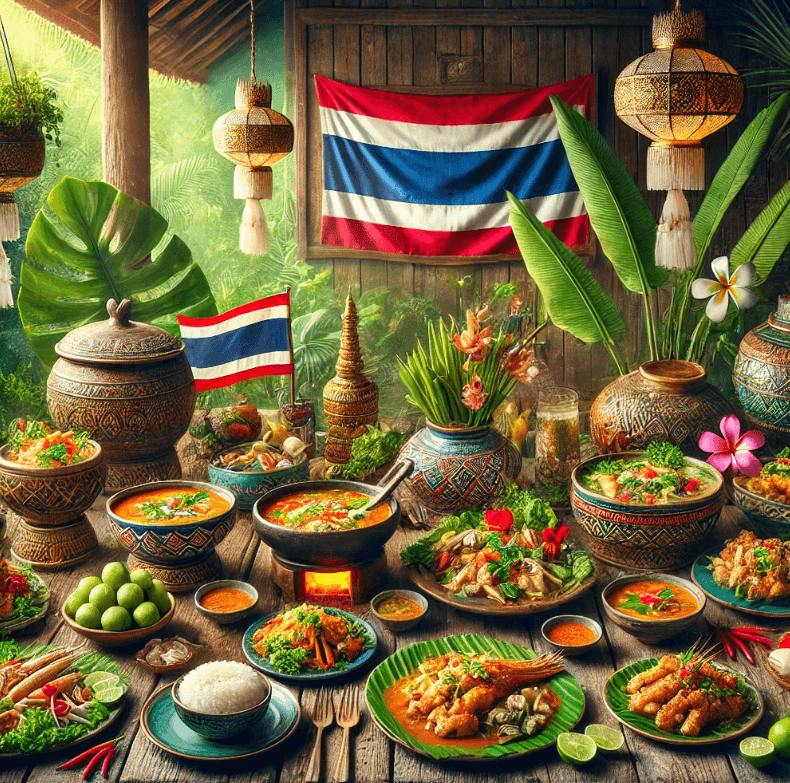
Thai Cuisine
Country | Thailand | ||||||||
|---|---|---|---|---|---|---|---|---|---|
Featured Dishes | Kaeng Phanaeng Kai Phat Met Mamuang Himmaphan Mu/Kai Sa-te Yam Nua Tom Kha Kai Kaeng Phet Pet Yang Phat Kaphrao Phat Thai Kaeng Khiao Wan Kai Tom Yam Kung | ||||||||
Thai cuisine is not merely a practice of nutrition but a multifaceted culinary tradition shaped by historical processes ecological conditions and cultural exchanges. This culinary tradition has functioned as a defining element in both the daily lives of the local population and the construction of national identity. The culinary repertoire exhibits diversity in regional variations taste balances and cooking techniques.
Thailand’s historical trajectory has generated both internal and external influences on its gastronomy. Particularly from the Ayutthaya period onward increasing trade relations led Thailand to adapt curry from India wok cooking techniques from China sweet-making methods from Portugal and various spices from Arab cuisines. During this process external influences were not directly imported but reinterpreted through local ingredients and palates resulting in the formation of a distinct Thai culinary identity.

Thai Cuisine (Generated by Artificial Intelligence)
Thailand’s northern mountainous regions central fertile valleys and southern tropical coastline have determined the country’s agricultural diversity and dietary patterns. In the northern regions meat and fermented products dominate while in the central areas rice and tropical produce prevail and in the south coconut milk and seafood are the primary food sources. These distinct ecological zones have directly contributed to the development of regional flavor profiles in Thai cuisine.
Northern Thai cuisine is characterized by mild spices and a reliance on fermented foods due to its cooler climate and limited agricultural variety. Sour and spicy flavors fermented fish sauces and fresh herbs take center stage. Dishes such as Khao Soi reflect both local ingredient use and influences from Burmese cuisine.

Pad Thai (Generated by Artificial Intelligence)
The Isan region is defined by high levels of chili peppers fermented fish sauce (pla ra) and strong sour aromas. Dietary practices developed in response to preservation techniques required by its arid climate with durability of dishes taking precedence. Dishes such as Som Tam and Larb exemplify this culinary structure.
Central Thai cuisine has produced complex and balanced dishes thanks to the region’s wide variety of produce enabled by its climate and water resources. The delicate balance between sour sweet salty and spicy flavors is paramount in this region’s culinary tradition. Pad Thai and Tom Yam Kung are concrete examples of this gastronomic equilibrium.

Phat Kaphrao (Generated by Artificial Intelligence)
Southern Thai cuisine is renowned for its intensive use of coconut milk and aromatic spices. Sweet spicy and aromatic profiles have been interwoven through influences from Malaysian and Indonesian cuisines. Seafood occupies a central position in this regional culinary tradition.
Chinese immigrant communities integrated noodle dishes and wok cooking techniques into Thai cuisine. The Indian concept of curry became indigenized in Thailand through the use of local spices and coconut milk. Trade relations with the Malay Peninsula nurtured the sweet-spicy culinary sensibility especially in the south. Portuguese traders introduced sugar and egg-based techniques that enriched the culture of sweets.
The foundational components of Thai cuisine are rice lemongrass galangal kaffir lime leaves fish sauce palm sugar and coconut milk. These ingredients form the basis of flavor balance and aromatic intensity in dishes. The flavor profile often aims to skillfully combine multiple fundamental tastes—sweet salty sour and spicy—in a single dish.

Pad Woo Sen (Generated by Artificial Intelligence)
Tom Yam Kung is one of the most prominent representatives of Thai cuisine. Prepared with lemongrass kaffir lime leaves galangal chili peppers and shrimp this soup exemplifies the effective use of fresh tropical ingredients through its intense combination of sour spicy and salty flavors. It is also a key element of Thailand’s fast-consumption culture.
Kaeng Khiao Wan Kai (green curry) reflects Thailand’s intensive use of aromatic ingredients and its balance of spicy and creamy flavors. The curry paste made from fresh green chilies lemongrass and basil is blended with coconut milk and cooked with chicken. It showcases Thai cuisine’s aesthetic appreciation for color and aromatic density.

Thai Green Curry (Generated by Artificial Intelligence)
Phat Thai is a dish developed during Thailand’s postwar economic modernization. Rice noodles are quickly stir-fried with shrimp tofu peanuts and lime juice demonstrating the pragmatic side of Thai cuisine. It carries a balanced profile of salty sweet and sour notes.
Phat Kaphrao can be defined as a product of street food culture. Minced meat or chopped chicken is rapidly stir-fried with garlic and chili peppers then finished with Thai basil. This dish represents Thailand’s everyday approach to producing quick affordable and satisfying meals.

Khao Niao Mamuang (Generated by Artificial Intelligence)
Kaeng Phet Pet Yang is a dish made by cooking roasted duck in red curry paste and coconut milk. The aromatic intensity of the red curry paste harmonizes with the fatty texture of the duck to create a balanced flavor profile.
Tom Kha Kai is a mild chicken soup based on galangal-infused coconut milk. It has a less acidic and creamier flavor profile than Tom Yam. It is particularly popular in the northern and central regions due to local consumption habits.
Yam Nua is a beef salad that balances sour salty and spicy flavors. It is seasoned with lime juice fish sauce chili peppers and fresh herbs. It is especially consumed as a light refreshing meal option in hot climates.

Yam Nua (Generated by Artificial Intelligence)
Mu Sa-te and Kai Sa-te are made by marinating meat in turmeric and aromatic spices then grilling it on skewers. This dish is the most prominent expression of Malay influence and is typically served with sauces particularly peanut-based sauces.
Kai Phat Met Mamuang Himmaphan is a lightly sweet and savory dish made with cashew nuts and chicken. The wok technique allows for rapid cooking preserving the natural qualities of the ingredients.
Kaeng Phanaeng is a mildly sweet red curry based on coconut cream. It is characterized by controlled use of aromatic intensity sweetness and spice balance. It is typically prepared with beef or chicken and has a low-moisture consistency.

Mu/Kai Sa-te (Generated by Artificial Intelligence)
BBC Food. "The Basics of Making Great Thai Food." Accessed May 3, 2025. https://www.bbc.co.uk/food/articles/great_thai_food.
BBC StoryWorks. "The Scintillating, Diverse and Legendary Cuisine of Thailand." Accessed May 3, 2025. https://www.bbc.com/storyworks/advertiser-content/amazing-thailand/the-scintillating-diverse-and-legendary-cuisine-of-thailand.
CNN Travel. “Southern Thai Food: Exploring the Flavors of the Country’s ‘Spiciest Cuisine’.” Accessed May 3, 2025. https://edition.cnn.com/travel/article/southern-thailand-food-cmd/index.html.
Clark, John. “Food Stories.” *Gastronomica* 4, no. 2 (2004): 43–50. Published by University of California Press. Accessed May 3, 2025. https://www.jstor.org/stable/10.1525/gfc.2004.4.2.43.

Thai Cuisine
Country | Thailand | ||||||||
|---|---|---|---|---|---|---|---|---|---|
Featured Dishes | Kaeng Phanaeng Kai Phat Met Mamuang Himmaphan Mu/Kai Sa-te Yam Nua Tom Kha Kai Kaeng Phet Pet Yang Phat Kaphrao Phat Thai Kaeng Khiao Wan Kai Tom Yam Kung | ||||||||
Historical Background
Geography and Climate Influence
Regional Diversity
Northern Thai Cuisine
Northeastern (Isan) Cuisine
Central Thai Cuisine
Southern Thai Cuisine
Cultural Interactions and External Influences
Core Ingredients and Flavor Profile
Iconic Dishes
Tom Yam Kung
Kaeng Khiao Wan Kai
Phat Thai
Phat Kaphrao
Kaeng Phet Pet Yang
Tom Kha Kai
Yam Nua
Mu/Kai Sa-te
Kai Phat Met Mamuang Himmaphan
Kaeng Phanaeng