+1 More

Province(s) | Erzincan | ||||||||
|---|---|---|---|---|---|---|---|---|---|
Type of Art | Traditional Handicraft | ||||||||
Type of Geographical Indication | Indication of Origin | ||||||||
Registration Number | 38 | ||||||||
File Number | C2001/009 | ||||||||
Application Date | June 25, 2001 | ||||||||
Registration Date | August 29, 2002 | ||||||||
Applicant/Registrant(s) | Erzincan Chamber of Commerce and Industry | ||||||||
Application Techniques | Stamping (Punching) Filigree (Ajur) Engraving Embossing Tin Plating Casting | ||||||||
Product / Product Group(s) | Handicraft Products Excluding Carpets Textiles Rugs | ||||||||
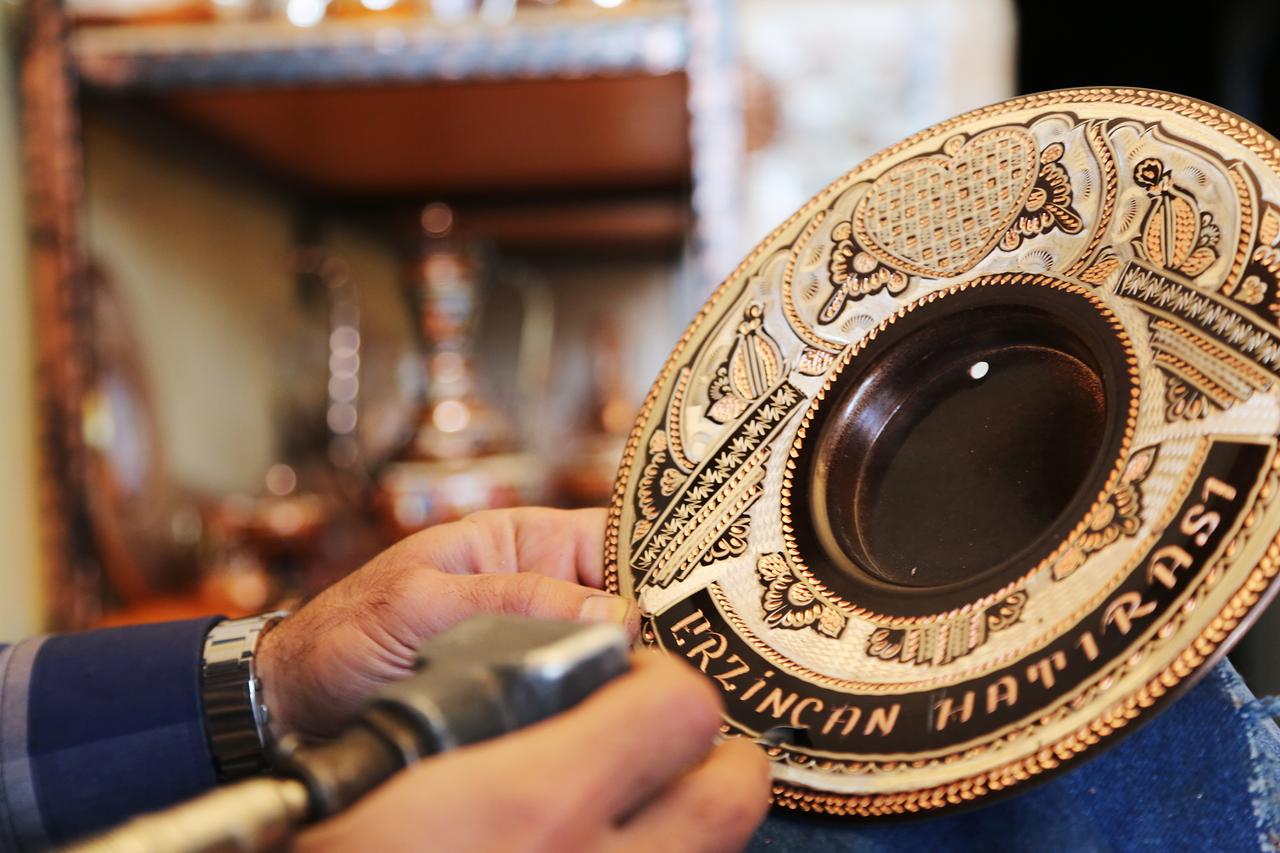
The craft of copper manufacturing and hand-embellishment in Erzincan is recognized as an integral traditional art form deeply embedded within the historical, cultural, and economic dynamics of the region. As a distinctive branch within the Anatolian metalworking heritage, this craft embodies unique technical and aesthetic characteristics, acquiring a singular identity through its localized production techniques and characteristic motif repertoire. In Erzincan, coppersmithing represents a multidisciplinary production process, yielding artifacts that fulfill both functional requirements and aesthetic values.
The copper craftsmanship of Erzincan has been documented since the Ottoman period. During the 19th century, it is observed that coppersmith workshops were widespread in Erzincan, and copper products not only met local needs but were also commercially valued. The knowledge and skills transmitted through the master-apprentice relationship contributed significantly to the technical and aesthetic advancement of coppersmithing. This craft holds an important position in the social and economic life of Erzincan.
The production of Erzincan copper artifacts involves a multi-stage process. The procedure typically begins with the hammering of copper sheets. The hammered copper is shaped using various hammers and anvils until it attains the desired thickness and form. The decorative patterns on the surface are applied using steel-tipped styluses through engraving or embossing techniques. This process requires both expertise and patience. The use of steel-tipped tools enables the creation of detailed and fine motifs. In the final stage, the products are polished, enhancing both their durability and visual aesthetics.
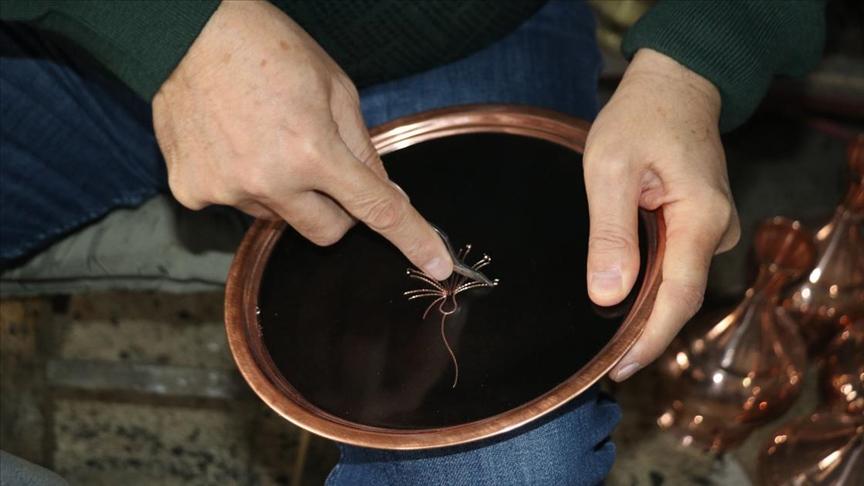
Copper Embellishment Using Steel-Tipped Stylus (AA)
The motifs employed in Erzincan copper craftsmanship are influenced by traditional Turkish decorative arts. Commonly preferred motifs include curling branches, rumi patterns, hatayi designs, stylized floral elements, and geometric figures. These motifs are generally applied in symmetrical arrangements, ensuring the uniqueness of each piece. The selection and execution of motifs represent a synthesis of the artisan’s individual style and cultural codes. In this context, motifs serve not only decorative purposes but also carry cultural meanings and symbolic values.
The coppersmith profession in Erzincan has been perpetuated for centuries through the master-apprentice system. Apprentices acquire technical knowledge and work discipline from their masters, while also becoming part of a social network. This relationship facilitates the transmission of technical details, motif repertoires, and the subtle nuances of the craft from generation to generation. In recent years, state-supported courses and vocational training centers have further reinforced this tradition, contributing to the enhancement of production capacity.
Erzincan coppersmithing boasts a rich variety of products. The main items produced include plates, ewers, coffee pots (cezves), trays, cauldrons, and vases. These products serve functional purposes for daily use while also being appreciated for their aesthetic qualities. They are utilized by the local population and are also in demand commercially as gifts and collectible items.
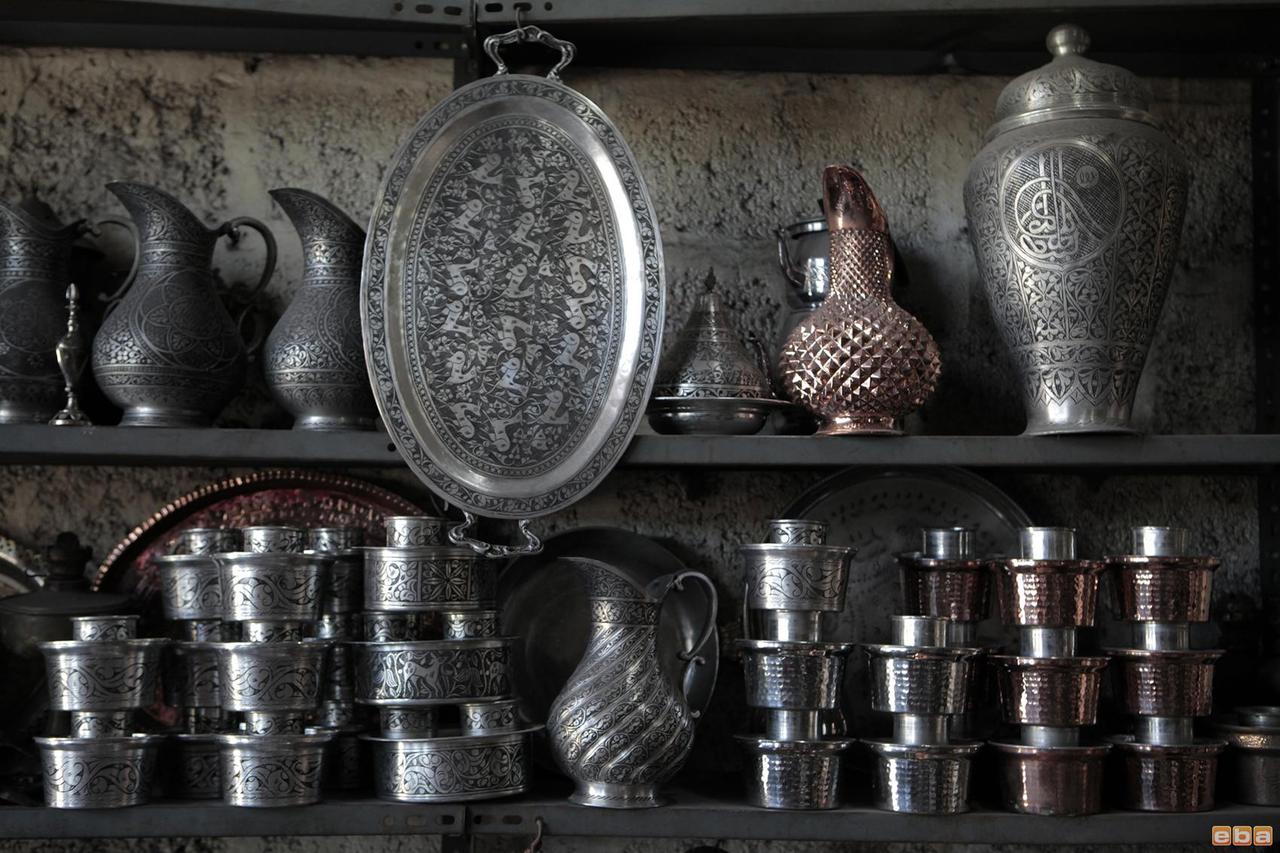
Copper Embellishment Products (Erzincan Provincial Special Administration)
The craft of copper manufacturing and hand-embellishment in Erzincan was registered as a geographical indication of origin by the Turkish Patent and Trademark Office on August 29, 2002. The registration file number is C2001/009, and the registration number is 38. The application was submitted by the Erzincan Chamber of Commerce and Industry on June 25, 2001. This registration falls under the category of handicraft products excluding carpets, rugs, and textiles, and protects production uniquely associated with the boundaries of Erzincan province. The geographical indication registration aims to legally safeguard the regional authenticity of the products and to contribute to the regional economy.
Erzincan copper craftsmanship serves as both a cultural identity element and a source of economic income for the local population. Various support programs are implemented by local administrations and regional development agencies to ensure the sustainability of coppersmithing. These initiatives aim to transmit the craft to younger generations and to increase production capacity. Furthermore, the geographical indication registration enhances the brand value of Erzincan copper, boosting its competitiveness in national and international markets.
In the modern era, Erzincan copper craftsmanship is evolving through the preservation of traditional techniques complemented by innovative designs. Workshops and small enterprises produce goods to meet both touristic and local demands. Thanks to the mastery tradition and geographical indication protection, Erzincan copper art continues to exist as both a cultural heritage and an economic activity.
Alagöz, Gürkan, İsmail Çalık, and Erkan Güneş. “Traditional Handicrafts in the Context of Cultural Heritage Tourism: Erzincan Copper Embellishment.” Dumlupınar University Journal of Social Sciences 55 (2018): 174–191. Accessed July 17, 2025. https://dergipark.org.tr/tr/pub/dpusbe/issue/35683/312892.
Anadolu Agency. “Shaping Copper with Steel-Tipped Styluses.” Anadolu Agency, December 13, 2022. Accessed July 17, 2025. https://www.aa.com.tr/tr/insana-dair/celik-uclu-kalemlerle-bakira-sekil-veriyorlar/2768975.
Erzincan Provincial Special Administration. “Erzincan Copper Art.” Erzincan Provincial Special Administration. Accessed July 17, 2025. http://www.erzincanilozelidaresi.gov.tr/erzincan-bakir-sanati.
Ministry of Culture and Tourism. “Coppersmithing – Erzincan.” Turkey Culture Portal. Accessed July 17, 2025. https://www.kulturportali.gov.tr/turkiye/erzincan/kulturatlasi/bakircilik458556.
Northeast Anatolia Development Agency (KUDAKA). “Erzincan Copper Manufacturing and Hand-Embellishment Art.” KUDAKA. Accessed July 17, 2025. https://kudaka.gov.tr/bolgemiz/erzincan/erzincan-yoresel-urunler/erzincan-bakir-imalat-ve-el-islemeciligi-sanati.
Turkish Patent and Trademark Office. “Erzincan Copper Manufacturing and Hand-Embellishment Art.” Geographical Indications. Accessed July 17, 2025. https://ci.turkpatent.gov.tr/cografi-isaretler/detay/37905.

Province(s) | Erzincan | ||||||||
|---|---|---|---|---|---|---|---|---|---|
Type of Art | Traditional Handicraft | ||||||||
Type of Geographical Indication | Indication of Origin | ||||||||
Registration Number | 38 | ||||||||
File Number | C2001/009 | ||||||||
Application Date | June 25, 2001 | ||||||||
Registration Date | August 29, 2002 | ||||||||
Applicant/Registrant(s) | Erzincan Chamber of Commerce and Industry | ||||||||
Application Techniques | Stamping (Punching) Filigree (Ajur) Engraving Embossing Tin Plating Casting | ||||||||
Product / Product Group(s) | Handicraft Products Excluding Carpets Textiles Rugs | ||||||||
No Discussion Added Yet
Start discussion for "The Art of Copper Manufacturing and Hand-Embellishment in Erzincan" article
Historical Development
Technical Processes and Production Stages
Motifs and Decoration Traditions
Master-Apprentice Tradition and Education
Product Variety and Usage Areas
Geographical Indication Registration and Its Significance
Socioeconomic Impacts and Regional Development
Contemporary Erzincan Coppersmithing
This article was created with the support of artificial intelligence.