


This article was automatically translated from the original Turkish version.
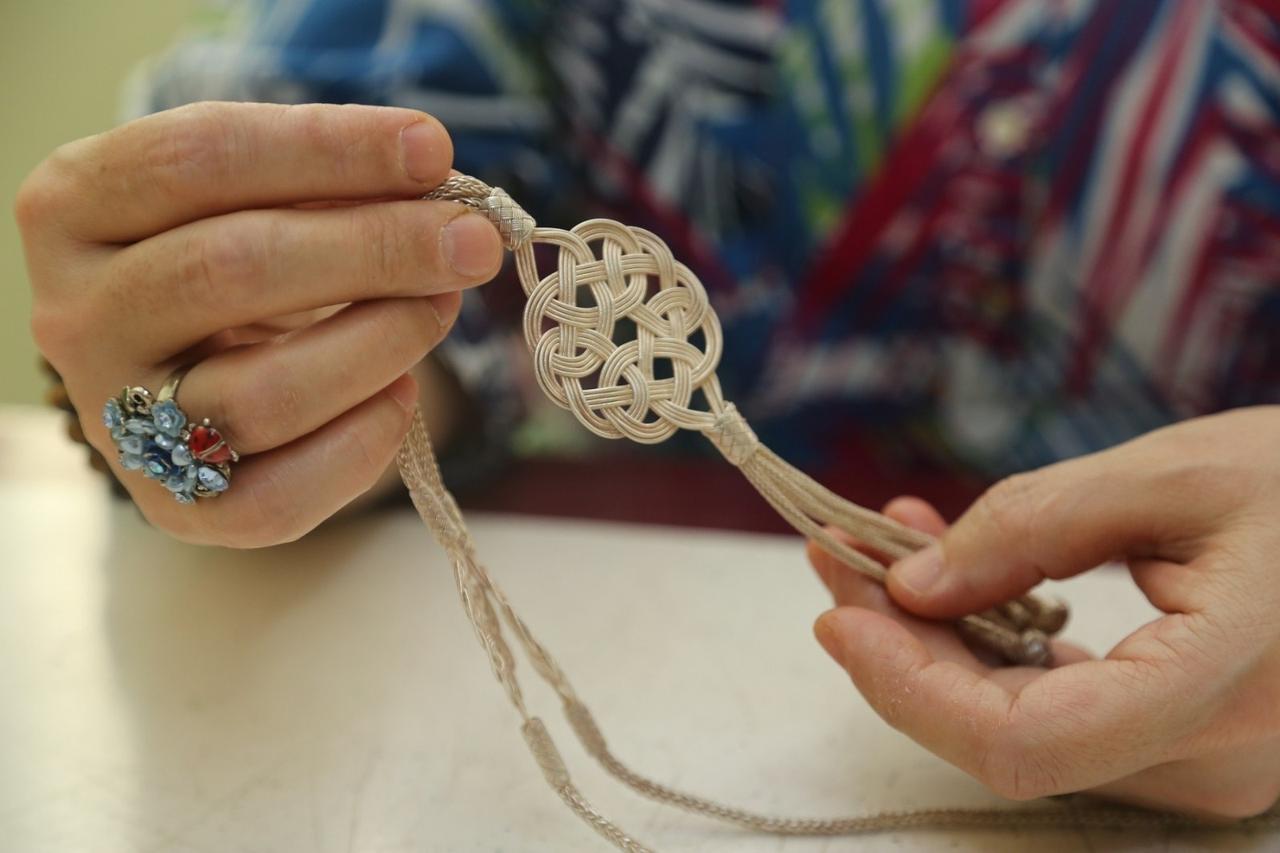
Kazaziye is a traditional Turkish craft based on wire weaving. Today, this art is primarily practiced in the Trabzon region and involves the manipulation of special wires made by winding silver or gold threads, 0.08–0.18 mm in thickness, around nylon or ibrişim yarn using various knotting and weaving techniques. Products created through this technique include jewelry and ornamental items such as necklaces bracelets rings earrings and prayer bead whips.
The fundamental techniques used in kazaziye include fishbone weave sargı top weave and ajur. Fishbone weave is a chain-like weaving pattern; sargı is used to join two components. Top weave is a method of wrapping material around beads or similar objects. Ajur serves to combine other techniques while also providing a flexible structure to the piece.

Kazaziye Weaves (AA)
The exact origins of kazaziye have not been definitively established. However scientific data and oral history collections suggest that its history may extend back to antiquity and even to the Lydian period. Artifacts resembling kazaziye work have been identified among treasures attributed to King Croesus of Lydia. In this context kazaziye is associated with the earliest periods in which gold and silver were used as ornamental materials.
During the Ottoman period kazazlik was a widespread profession in cities such as Trabzon Erzincan Sivas and Van. Evliya Çelebi praised the jewelers of Trabzon highlighting the city’s mastery in the art of jewelry making. It is known that many master kazaz artisans working in the Ottoman palace workshops were trained in these cities.
Ethnographic research in the region has shown that the kazaziye art was introduced to Trabzon by Turkish migrants from the Caucasus and Dagestan. However some sources also indicate that the technique spread in the region through Rum artisans.
The foundation of kazaziye art lies in the creation of wire-yarn by winding fine silver or gold threads around nylon or ibrişim yarn. This material is then shaped into jewelry using needles hooks and various tools. The production process occurs in several stages each requiring meticulous handwork.
The first step in kazaziye production is preparing the wire. The wires used are typically made of pure silver or gold with a thickness of 0.08 to 0.18 microns. These wires are wound onto nylon or ibrişim yarn using a traditional tool called a çıkrık. This process results in a coiled wire-yarn that is both flexible enough to be woven with a needle and sufficiently durable.
The length of the çıkrık used in wire preparation is generally 120 cm. To ensure even and taut winding the yarn is fixed to the çıkrık and the wire is wound around it in a uniform spiral. The thickness of the nylon yarn single double or triple ply directly affects the volume and form of the final weave.
After the wire-yarn is prepared weaving operations begin. The techniques employed include:
During weaving small hand tools such as hooks sock needles kazaz needles hammers scissors and pliers are employed. The shape of the wire must remain intact throughout the process and smooth transitions between coils must be maintained.

Fishbone Weave Pattern (Generated by Artificial Intelligence)
The woven components are typically used in different parts such as necklaces bracelets rings and prayer bead ends. These parts are assembled according to the design and secured with adhesive or beeswax when necessary. For example adhesive or beeswax is used to fix top weave beads or to join sections with sargı.
After assembly the wire ends are trimmed and connection points are carefully finished to achieve the final form. Excess yarn is removed using a lighter. Additional decorative details using ajur and sargı techniques may be added to enhance the aesthetic unity of the piece.

Some Hand Tools Used in Kazaziye Production (AA)
Kazaziye art holds a unique position among Anatolian crafts due to its historical origins and technical diversity. The shaping of metal threads at the micron level using hand tools reflects the intricate craftsmanship and patience required by this art. Art historians regard kazaziye as an important field of study particularly in the context of decorative arts and craft history.
In 2017 the art of kazaziye was officially registered as a geographical indication under the name “Trabzon Kazaziyesi” thereby placing it under cultural heritage protection.
The techniques used in kazaziye weaving share structural similarities with traditional textile weaving methods particularly in terms of weaving logic. There are clear structural parallels between kazaziye and card weaving techniques such as çarpana. In both methods the direction of rotation tension and design of the textile surface are fundamental determinants. In this context the adaptation of the çarpana technique into jewelry making serves as an example of technical evolution in arts such as kazaziye.

Çarpana Weaving Technique (Academic Source)
Anadolu Ajansı. “Trabzon’da Hasır, Kazaziye ve Telkari Ürünleri Sergiyle Beğeniye Sunuldu.” Accessed April 25, 2025. https://www.aa.com.tr/tr/pg/foto-galeri/trabzonda-hasir-kazaziye-ve-telkari-urunleri-sergiyle-begeniye-sunuldu-#.
Begiç, Hacer Nurgül, and Hamdiye Önal Çapık. “Trabzon’da Geleneksel Kazaziye Sanatı.” *Karadeniz Araştırmaları Enstitüsü Dergisi* 5, no. 8 (2019): 175–190. https://doi.org/10.31765/karen.668122.
Göker, Cesur Yusuf, and Hacer Nurgül Begiç. “Çarpana Dokuma Tekniğinin Kuyumculuk Sanatında Uygulanması.” *Erciyes Akademi* 35, no. 1 (2021): 191–205. https://dergipark.org.tr/tr/pub/erciyesakademi/issue/61108/908577.

No Discussion Added Yet
Start discussion for "The Art of Kazaziye" article
Historical Development
Production Process and Materials
Wire Preparation
Application of Weaving Techniques
Shaping and Assembly
Main Materials and Tools Used
Scientific Evaluation
Relationship Between Kazaziye and Çarpana Weaving