

This article was automatically translated from the original Turkish version.
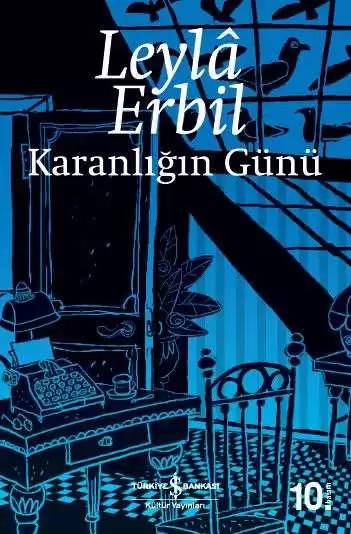
Book Title | The Day of Darkness | ||||||||
|---|---|---|---|---|---|---|---|---|---|
Author(s) | Leyla Erbil | ||||||||
Type(s) | Novel | ||||||||
Publisher(s) | İş Bankası Kültür Yayınları | ||||||||
First Publication Year | 2009 | ||||||||
ISBN | 9789754583502 | ||||||||
Number of Pages | 338 pages | ||||||||
Language(s) | Turkish | ||||||||
Leylâ Erbil’s 2009 novel Karanlığın Günü confronts the inner darkness of the individual and explores its reflections within the social context. The novel draws attention through modernist narrative techniques and experimental language use. In the work, psychological analysis intertwines with social critique; personal existential struggles, identity quests, and social pressures are examined in depth from a literary perspective. Karanlığın Günü is regarded as one of the significant examples of contemporary narrative forms in Turkish literature.
Karanlığın Günü is a novel that examines the existential anguish of the individual within the framework of social relationships and historical background. The narrative centers on the individual’s confrontation with inner darkness and its interaction with social life. Themes of loneliness, identity search, social pressures, and personal freedom are explored. The narrative oscillates between reality and stream of consciousness, emphasizing the psychological depth of the characters.
The novel, constructed by Leylâ Erbil using experimental narrative techniques, features a fragmented and multi-layered structure. The language is enriched by irregular temporal flow, interior monologues, stream of consciousness, and intense descriptions, immersing the reader deeply into the characters’ inner worlds. The use of uninterrupted sentences and occasional minimal punctuation supports the novel’s atmosphere and mood. Linguistic experimentation and psychological analysis are central to the work.
The protagonist is a figure struggling with inner darkness, confronting social pressures, and engaged in an identity quest. Other characters appear as family members, close associates, and social figures surrounding the protagonist. The characters’ inner lives and external relationships are developed in complex and multi-layered ways throughout the novel. Personal conflicts and social dynamics are decisive in shaping character development.
Karanlığın Günü investigates the impact of Türkiye’s social and cultural transformations on the individual. The novel foregrounds the tense relationship between the individual and historical conditions and social structures. Mechanisms of social pressure, the restriction of personal freedom, and the psychological consequences of these constraints are thematically addressed. The novel questions Türkiye’s modern transformation and the individual’s place within it.
Leylâ Erbil’s Karanlığın Günü is one of the important works in Turkish literature that employs modernist narrative techniques to explore the inner world of the individual in depth. The novel marks the maturity phase of Erbil’s literary production, both formally and thematically. It stands out in the Turkish novel for its experimental use of language and its focus on existential concerns of the individual. Moreover, its structure, which integrates social critique with individual psychological analysis, occupies a unique position in contemporary Turkish literature.
Karanlığın Günü is a novel in which Leylâ Erbil, through her literary language and narrative style, deeply explores the inner world of the individual and brings together social and existential issues on a literary plane. The work offers the reader a psychologically intense narrative while also questioning Türkiye’s modern transformation from multiple perspectives.
Erbil, Leylâ. Karanlığın Günü. İstanbul: Türkiye İş Bankası Kültür Yayınları, 2021.
Tarhan, Belgin. 2023. “Leyla Erbil’in Politik Poetikası Üzerine Bir İnceleme.” FE Dergi 4, no. 2 (Spring 2023): 302–322. Accessed July 19, 2025. https://dergipark.org.tr/tr/download/article-file/2974534
Şahin, Burcu, and Yakup Çelik. 2020. “Leylâ Erbil’in ‘Aitsiz Kimlik’i Neslihan: Karanlığın Günü’nde Kendilik Bilinci.” Akademik Dil ve Edebiyat Dergisi 4, no. 4 (December 2020): 1038–1050. Accessed July 19, 2025. https://doi.org/10.34083/akaded.823590

Book Title | The Day of Darkness | ||||||||
|---|---|---|---|---|---|---|---|---|---|
Author(s) | Leyla Erbil | ||||||||
Type(s) | Novel | ||||||||
Publisher(s) | İş Bankası Kültür Yayınları | ||||||||
First Publication Year | 2009 | ||||||||
ISBN | 9789754583502 | ||||||||
Number of Pages | 338 pages | ||||||||
Language(s) | Turkish | ||||||||
No Discussion Added Yet
Start discussion for "The Day of Darkness (Book)" article
Content and Theme
Narrative and Style
Characters
Intellectual and Social Context
Literary Significance
Thematic Layers