

This article was automatically translated from the original Turkish version.
+1 More
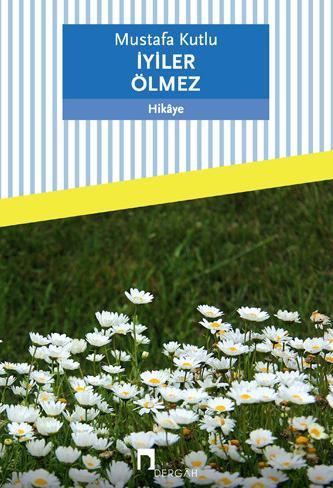
Author(s) | Mustafa Kutlu | ||||||||
|---|---|---|---|---|---|---|---|---|---|
Number of Pages | 152 | ||||||||
Publisher(s) | Dergah Yayınları | ||||||||
Type(s) | Hikâye | ||||||||
First Publication Date(s) | October 2016 | ||||||||
“The Good Do Not Die” is a lengthy narrative by Mustafa Kutlu, centered around the friendships and shared pursuit of goodness among four distinct individuals. Set in any city in Anatolia, the story portrays people who, despite harsh living conditions, loneliness, and poverty, continue to hold on to hope, generosity, and their humanity. The work is crafted in Kutlu’s distinctive narrative style.
The story begins with the intersecting paths of four characters who have each endured different forms of suffering.
Sıtkı’s Story: Sıtkı is the child of a poor family that migrated from Anatolia to Istanbul. His father works as a building caretaker, and his mother is employed in a cobbler’s shop. Sıtkı, the family’s only child, possesses an innate, extraordinary talent for drawing. This gift reflects the richness of his inner world and his vivid imagination. Yet, within the constraints of poverty, his opportunities to realize this talent are severely limited. Nevertheless, Sıtkı inspires hope in others through his drawings. His life embodies the tragic tension between talent and deprivation. Sıtkı’s story demonstrates how art can serve as a path to redemption.
Civan’s Story: Although Civan appeared to have been born into a happy family, his life is filled with tragedies. His father is an alcoholic, and his mother, unable to endure this situation, leaves for Germany with another man. After being abandoned, Civan is raised by Kör Makbule, a blind woman in the neighborhood. Forced to enter adulthood at a young age, Civan takes on various jobs. He falls in love with Destegül, a woman from his neighborhood, but cannot marry her due to differences in social status. Undeterred, he perseveres, works hard, and eventually establishes his own business. Civan’s life illustrates how determination and goodness can flourish even amid repeated disappointments. He meets Sıtkı at Hacı Kadir’s café, marking the beginning of their friendship.
Kör Mustafa’s Story: Mustafa’s father, İhsan Bey, taught him photography after retiring from the judiciary. However, Mustafa’s mother died at an early age. His father remarried, but his new wife continued to meet her former husband. As rumors about this arrangement spread through the neighborhood, İhsan Bey learned the truth and killed the man, leading to his imprisonment. Orphaned at a young age—having lost both his mother and father—Mustafa stays with his master. His eyesight gradually deteriorates until he can barely see at all. He withdraws into himself and turns to alcohol for solace, earning him the nickname “Kör Mustafa.” No one wishes to marry him. During a fragile phase of his life, he meets Sıtkı, and a warm friendship develops between them.
The Doctor’s Story: The last character introduced in the narrative is the Doctor. He is kind-hearted, compassionate, and generous. At his mother’s request in Istanbul, he never charges any of his patients on Fridays. This act earns him the affection of the city’s people. The Doctor, too, has endured pain in his past. He left a failed marriage at the last moment and changed the course of his life. He came to this Anatolian town to build a new life for himself. His path leads him to Hacı Kadir’s café, where he meets Sıtkı, Civan, and Kör Mustafa. The four form a close bond. The Doctor offers not only medical knowledge and treatment, but also hope and joy in living.
The Doctor wishes to plant fruit trees in the hospital garden. One day, he takes Sıtkı, Civan, and Mustafa with him to buy saplings. On their way back, they are killed in a tragic accident when a truck strikes them. The townspeople name their graves “Dörtlü Koltuk” in memory of these four good people. Over time, a tomb is built for them, inspired by a visitor’s dream of the four men.

Representative Image of Sıtkı, Civan, Kör Mustafa, and the Doctor. (Generated by Artificial Intelligence.)
Goodness and Human Values: The most prominent theme in the work is the concept of goodness. The central axis of the narrative is the characters’ persistent effort to live with friendship, compassion, and simplicity despite life’s hardships. The life stories of Sıtkı, Civan, Kör Mustafa, and the Doctor symbolize individuals who, despite enduring pain, loneliness, and poverty, never lose the goodness and love for humanity within them. Through these characters, Kutlu explores the idea that “the good do not die,” emphasizing the immortality of goodness.
Mutual Aid and Brotherhood: The characters’ support for one another and their gatherings at Hacı Kadir’s café highlight the importance of social solidarity. The friendship between individuals with vastly different pasts strengthens the theme of brotherhood as an integral part of neighborhood culture.
Living with Dignity in Poverty: Although all the characters face economic hardship, they maintain their lives with dignity. In this way, the work presents poverty not merely as a backdrop, but as a testing ground for values. The refusal to compromise honesty or mutual aid even in destitution reinforces the moral message of the novel.
Social Awareness and Social Justice: Elements such as the Doctor’s refusal to charge patients and his desire to beautify the community with fruit trees reflect an individual’s responsibility toward society. Here, Kutlu draws attention to social awareness—a quality increasingly lost in modern society.
Death, Memory, and Spiritual Continuity: The story ends with the deaths of the characters, revealing that death is not a physical separation but rather a transformation: good people continue to live as spiritual beings. This perspective is conveyed through the concepts of spiritual continuity and saintly presence. The “Dörtlü Koltuk” grave symbolizes the enduring memory of goodness within the collective consciousness of society.
Hope and Resilience: Each character endures various traumas, yet none sever their connection to life. This resilience is directly tied to the goodness they carry within themselves. Through his characters, Kutlu places hope and resignation in opposition to despair.
Kutlu, Mustafa. İyiler Ölmez. 25. baskı. Dergâh Yayınları, 2024.

Author(s) | Mustafa Kutlu | ||||||||
|---|---|---|---|---|---|---|---|---|---|
Number of Pages | 152 | ||||||||
Publisher(s) | Dergah Yayınları | ||||||||
Type(s) | Hikâye | ||||||||
First Publication Date(s) | October 2016 | ||||||||
No Discussion Added Yet
Start discussion for "The Good Do Not Die (Book)" article
Subject
Theme