This article was automatically translated from the original Turkish version.
Final Decision | Aggravated life imprisonment | ||||||||
|---|---|---|---|---|---|---|---|---|---|
Judicial Authority | Tarsus 1st Heavy Criminal Court | ||||||||
Accomplices | Necmettin Altındöken, Fatih Gökçe | ||||||||
Primary Perpetrator | Ahmet Suphi Altındöken | ||||||||
Victim | Özgecan Aslan | ||||||||
Incident Date | 11 February 2015 | ||||||||
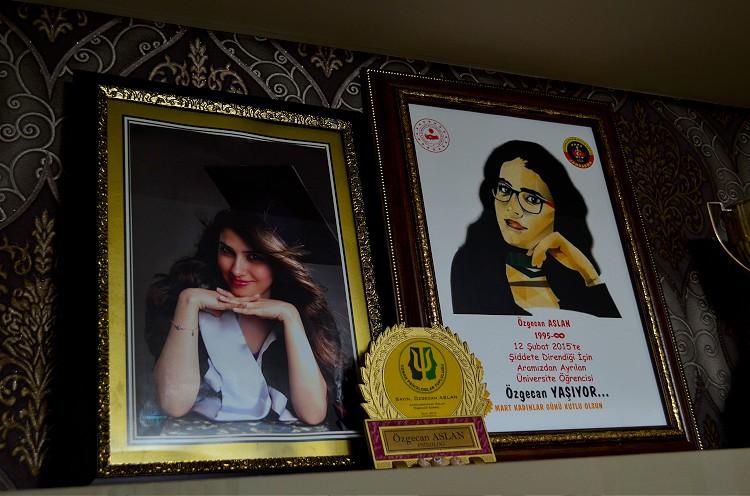
The Özgecan Aslan Murder, a grave crime and a shocking act of violence against a woman, occurred on 11 February 2015 in the Tarsus district of Mersin, Türkiye. The victim, a university student, was abducted from a public transport vehicle, resisted a sexual assault, and was subsequently murdered. Her body was then burned in an attempt to destroy evidence.
On 11 February 2015, 19-year-old Özgecan Aslan, a psychology student at Çağ University in Mersin, boarded a city minibus driven by Ahmet Suphi Altındöken after her evening class, intending to travel from Tarsus to Mersin. During the journey, as other passengers disembarked, Aslan became the only remaining passenger. The driver, Altındöken, deviated from the regular route along the D-400 highway and steered the vehicle toward the Tarsus-Mersin motorway, heading into a wooded area. When Aslan objected to the deviation and sensed danger, the suspect stopped the vehicle in a remote location and attempted a sexual assault.
Özgecan Aslan attempted to fend off the attacker by spraying pepper spray and fighting back with her nails. In response to this resistance, suspect Ahmet Suphi Altındöken stabbed her, beat her, and inflicted severe injuries by striking her head with an iron pipe.【1】It was determined that Aslan died as a result of this attack.
After the murder, the perpetrator, in a panic, contacted his father Necmettin Altındöken and friend Fatih Gökçe for help. The three suspects devised a plan to eliminate evidence of the crime. To destroy DNA samples left under Aslan’s fingernails—evidence of the attacker’s skin—they severed both of her wrists. They then transported her lifeless body to a wooded area near Çamalan village in Tarsus and set it on fire.
Following Aslan’s family’s missing person report, all law enforcement units in the region were put on alert. While the suspects were returning from burning the body, they were stopped by a gendarmerie checkpoint, but initially escaped after Fatih Gökçe misled the officers by claiming he was giving directions.【2】The suspects explained bloodstains in the vehicle by claiming that “customers had fought,” and after being released, they continued efforts to obscure evidence.
In his statement to the gendarmerie, suspect Ahmet Suphi Altındöken claimed that on the day of the incident, after completing his final run around 8:00 PM, he picked up Özgecan Aslan after she raised her hand to signal for a ride. According to his account, they agreed on a fare of 100 Turkish liras to take her to Mersin, but when he turned off the main road toward the motorway, Aslan reacted with alarm. The suspect asserted that she sprayed him with pepper spray and that a struggle ensued, attempting to justify his actions.【3】Although the suspect admitted to stabbing and striking Aslan during the struggle, he denied any intent of sexual assault. However, forensic findings and court proceedings disproved this claim.
According to Suphi Altındöken’s statement, his father Necmettin Altındöken attempted to destroy evidence by burning books belonging to Özgecan in a stove. Fatih Gökçe, in contrast to Suphi Altındöken, claimed he advised him to leave the girl at a hospital and flee, thereby denying involvement.【4】However, the court proceedings revealed that all three suspects played active roles in committing the crime and in destroying evidence, and acted with “bestial intent.”
Özgecan Aslan'ın Babası Mehmet Aslan, Taziyeleri Kabul Ederken Metanetini Koruyarak Türkiye'nin Paylaştığı Ortak Acıyı Dile Getiriyor. (Anadolu Ajansı)
The judicial process initiated after the murder on 11 February 2015 became one of the most socially engaged trials in the history of the Republic of Türkiye. During the preparatory phase of the trial at the Tarsus 1st Heavy Criminal Court, all 1,600 lawyers registered with the Mersin Bar Association declared they would not defend the accused.【5】However, to prevent any violation of rights under the Criminal Procedure Code (CMK) and the sanctity of the right to defense, the court ordered the Mersin Bar Association to assign mandatory defense counsel to the accused. Extraordinary security measures were implemented at the Tarsus Courthouse for the first hearing on 12 June 2015, and no other hearings were conducted that day due to the case’s significance. Approximately 1,000 lawyers from across Türkiye, having obtained authorization, requested to intervene in the trial, and the court accepted the intervention requests from the Aslan family and the Ministry of Family and Social Policies.【6】While Özgecan Aslan’s parents did not attend the hearings, they were represented by her uncle Yaşasın Aslan and a large team of legal professionals.
On 3 December 2015, the court issued a landmark ruling in Turkish legal history by applying no mitigating circumstances—neither good conduct nor provocation. The principal perpetrator, Ahmet Suphi Altındöken, was sentenced to aggravated life imprisonment and an additional 27 years for the crimes of “murder with bestial intent or by inflicting suffering,” “murder to conceal a crime or hide evidence of another crime,” “attempted aggravated sexual assault,” and “deprivation of liberty with sexual motive.” Necmettin Altındöken, the father, was sentenced to aggravated life imprisonment for “murder with bestial intent or by inflicting suffering,” “murder to conceal a crime or hide evidence of another crime or to avoid apprehension,” and “murder stemming from despair due to inability to commit another crime.” Fatih Gökçe was convicted of “murder with bestial intent or by inflicting suffering,” “murder to conceal a crime or hide evidence of another crime or to avoid apprehension,” “aggravated sexual assault,” and “murder stemming from despair due to inability to commit another crime,” and received an additional 24 years in prison.【7】

Ahmet Suphi Altındöken, Necmettin Altındöken ve Fatih Gökçe'nin Çıkarıldıkları Nöbetçi Mahkemece Tutuklanarak Cezaevine Gönderilmesi (Anadolu Ajansı)
The Court of Cassation’s First Criminal Chamber upheld the aggravated life sentences imposed by the lower court for the charge of “intentional murder.” However, the Chamber annulled the 24-year prison sentence imposed on suspect Fatih Gökçe for “aggravated sexual assault,” citing insufficient concrete evidence to establish the crime. As a result of this annulment, Fatih Gökçe was retried on 12 September 2017 before the Tarsus 1st Heavy Criminal Court. Aslan family’s lawyer Sevim Küçük challenged the Court of Cassation’s decision, arguing that sufficient circumstantial evidence existed to confirm the crime and affirmed that legal efforts would continue until all judicial remedies were exhausted.【8】
One of the developments in the case occurred during the enforcement of the sentences. Ahmet Suphi Altındöken and his father Necmettin Altındöken, detained at the Adana F-Type High-Security Closed Prison, were attacked with weapons on 11 April 2016. Gültekin Alan, another inmate serving time for various crimes, opened fire during a ventilation or corridor passage, targeting both men. Ahmet Suphi Altındöken, shot in the chest, died in the hospital. Necmettin Altındöken, wounded in the abdominal cavity, received medical treatment. This incident sparked debate over prison security, and seven individuals were referred to court in connection with the investigation.【9】
Following Altındöken’s death, his body remained unburied for five full days. After the autopsy, his family transported the body by private vehicle to Tarsus, but encountered fierce resistance from local residents and authorities. The body, intended for burial at the Tarsus City Cemetery, was rejected based on municipal council decisions and a “nighttime burial ban.”【10】Residents of Kocaköy neighborhood in Tarsus locked the gates of their cemetery upon learning the body would be buried there. Neighborhood head Rifat Öcalan expressed his opposition, saying, “If they try to bury him by force, I will dig him up with a shovel; if they can’t find a place to bury him, let them make a corpse of him.”【11】
A similar tension occurred in Kumkuyu neighborhood of Erdemli district; the neighborhood head, Ramazan Kasap, suspected a secret burial and requested an excavation, but the site turned out to be empty. The suspect’s mother, Naciye Tan, suffered a nervous breakdown, crying, “No one will accept the body—should I throw it on the street?” and protested the refusal to provide a hearse.【12】During this period, the body was repeatedly transported between Adana and Mersin and kept for a time in a hospital morgue.
Mehmet Aslan, Özgecan Aslan’s father, commenting on the scale of the events, acknowledged the wounded conscience of society but appealed to state authorities for reason. His remarks became one of the most notable aspects of the process. His statement regarding the suspect’s body was as follows:
"Now, is he an animal? In my personal opinion, yes, he is an animal. A creature lower than an animal. But ultimately, while it is not absolutely necessary to bury him in a cemetery, his body must enter the earth. Or I don’t know what solution they will find or what they will do."【13】
"Because of the hatred and vengeance people carry in their hearts, perhaps if you handed his body over to them, they would tear it apart or burn it. But as long as they do that, the peace and love they desire will never come. State authorities must, as soon as possible, take him to a place—known or unknown, even without a gravestone—and bury him. Is it absolutely necessary to bury him in a cemetery? Ultimately, this is a matter for the state to handle. They do not need permission from anyone or to ask, ‘We will bury him in this cemetery.’ Two or three authorized imams should simply take him and bury him somewhere."【14】

Özgecan Aslan'ın katili Ahmet Suphi Altındöken'in Cenazesinin Defnedilmesi Düşünülen Tarsus'un Kocaköy Mahallesi'ndeki Vatandaşlar Mezarlığın Kapısını Kilitledi (Anadolu Ajansı)
The murder of Özgecan Aslan is recognized as a turning point in Türkiye’s struggle against violence against women. Following the revelation of the crime’s brutality, protests involving men and women from all segments of society were held in dozens of cities, including Istanbul, Ankara, Mersin, İzmir, Trabzon, and Diyarbakır. Slogans such as “We are in rebellion, not in silence,” “End femicides,” and “We demand true justice” became prominent. In some cities, funeral prayers were held in absentia, candles were lit, carnations were placed, and silent marches were organized. The “wear black” campaign launched on social media was supported by millions; universities, bar associations, trade unions, and sports clubs issued institutional declarations condemning violence against women.
The concrete political response to this social outrage was the demand for legal reform known as the “Özgecan Law.” Central to these demands was the complete abolition of the “unjust provocation” and “good conduct” mitigating mechanisms in the Turkish Penal Code as applied to cases of femicide. Bar associations and women’s rights platforms exerted pressure on parliament to classify femicides as “hate crimes” and to increase the deterrent effect of punishments.

"Seni Unutmayacağız Özgecan." (Anadolu Ajansı)
The murder of Özgecan Aslan became a focal point for academic and social responsibility initiatives at the institutional level. Çağ University, where the victim studied, decided by university senate resolution to name its newly established psychology laboratory the “Özgecan Aslan Psychology Laboratory” as a symbolic tribute to her professional ideals. University administration emphasized that scientific work must serve the construction of a society based on respect, love, and justice, and simultaneously intervened directly in the legal proceedings through its Faculty of Law. The university’s academic and administrative support played a crucial role in meticulously monitoring every stage of the legal process.
Efforts to preserve collective memory extended beyond university boundaries to local administrations and civil society organizations across Türkiye. Parks, women’s solidarity centers, and streets in numerous cities and districts, with Mersin at the forefront, have been named in honor of Özgecan Aslan. These naming initiatives are recorded as symbolic representations of institutional “zero tolerance” toward violence against women in public space. Civil society groups, particularly women’s rights advocates, placed Aslan’s name at the center of legal reform demands, transforming the case into a powerful example in the struggle for gender equality.
Additionally, professional associations and sports clubs provided institutional support for these commemorative efforts. For example, women’s handball teams such as Kastamonu Belediyespor and Yenimahalle Belediyespor appeared in matches wearing photographs of Aslan, while bar associations assumed legal responsibility for the case through their “Women’s Rights Commissions.”
Anadolu Ajansı. "'Özgecan Aslan davası' sanığı yeniden hakim karşısında." Accessed February 10, 2026. https://www.aa.com.tr/tr/turkiye/ozgecan-aslan-davasi-sanigi-yeniden-hakim-karsisinda/908472
Anadolu Ajansı. "Bize yüklenen acıyı milyonlarca insan paylaşıyor." YouTube, 2:42. Erişim 10 Şubat 2026. https://youtu.be/J6g_cypR6fw?si=iWpq3qCu_IaRxya7
Anadolu Ajansı. "Spor dünyası da Özgecana duyarsız kalmadı." Accessed February 10, 2026. https://www.aa.com.tr/tr/pg/foto-galeri/spor-dunyasi-da-ozgecana-duyarsiz-kalmadi/0
Anadolu Ajansı. "Türkiye Özgecan için ayakta." Anadolu Ajansı. Accessed February 10, 2026. https://www.aa.com.tr/tr/turkiye/turkiye-ozgecan-icin-ayakta/74704
Anadolu Ajansı. "Türkiye Özgecan'ın acısını unutmadı." Accessed February 10, 2026. https://www.aa.com.tr/tr/yasam/-turkiye-ozgecanin-acisini-unutmadi/518992
Anadolu Ajansı. "Özgecan Aslan davası'na bin avukat katılacak." Accessed February 10, 2026. https://www.aa.com.tr/tr/turkiye/ozgecan-aslan-davasina-bin-avukat-katilacak/38013
Anadolu Ajansı. "Özgecan son ders gördüğü sınıfta karanfillerle anıldı." Accessed February 10, 2026. https://www.aa.com.tr/tr/turkiye/ozgecan-son-ders-gordugu-sinifta-karanfillerle-anildi/74573
Anadolu Ajansı. "Özgecan'ın babasından katilin cenazesiyle ilgili açıklama." Accessed February 10, 2026. https://www.aa.com.tr/tr/turkiye/ozgecanin-babasindan-katilin-cenazesiyle-ilgili-aciklama/553885
Anadolu Ajansı. "Özgecan'ın katil zanlıları birbirini suçladı." Accessed February 10, 2026. https://www.aa.com.tr/tr/turkiye/ozgecanin-katil-zanlilari-birbirini-sucladi/74399
Anadolu Ajansı. "Özgecan'ın katil zanlılarına avukat yok." Anadolu Ajansı. Erişim 10 Şubat 2026. https://www.aa.com.tr/tr/turkiye/ozgecanin-katil-zanlilarina-avukat-yok/74808
Anadolu Ajansı. "Özgecan'ın katili gömüldü diye mezarı açtırdılar." Accessed February 10, 2026. https://www.aa.com.tr/tr/turkiye/ozgecanin-katili-gomuldu-diye-mezari-actirdilar/557031
Anadolu Ajansı. "Özgecan'ın katili gömülmesin diye mezarlığı kilitlediler." Accessed February 10, 2026. https://www.aa.com.tr/tr/turkiye/ozgecanin-katili-gomulmesin-diye-mezarligi-kilitlediler/553776
Anadolu Ajansı. "Özgecan'ın yüreklerdeki acısı 5 yıldır dinmiyor." Accessed February 10, 2026. https://www.aa.com.tr/tr/turkiye/ozgecanin-yureklerdeki-acisi-5-yildir-dinmiyor/1729228
Anadolu Ajansı. "Üniversite öğrencisi Özgecan'ın öldürülmesi." Anadolu Ajansı. Accessed February 10, 2026. https://www.aa.com.tr/tr/pg/foto-galeri/ozgecanin-katil-zanlilari-adliyeye-sevk-edildi
BBC. "Özgecan Aslan cinayeti: Üç zanlı tutuklandı." BBC. Erişim 10 Şubat 2026. https://www.bbc.com/turkce/haberler/2015/02/150215_ozgecan_aslan_zanlilar
BBC. "Özgecan Aslan davası: Sanıkların tutukluluğuna devam kararı." Accessed February 10, 2026. https://www.bbc.com/turkce/haberler/2015/06/150612_ozgecan_aslan_dava
BBC. "Özgecan Aslan'ın katili öldürüldü." Accessed February 10, 2026. https://www.bbc.com/turkce/haberler/2016/04/160411_ozgecan_katil
CNN TÜRK. "Mersin Barosu, Özgecan'ın katil zanlısına avukat atadı." CNN. Accessed February 10, 2026. https://www.cnnturk.com/turkiye/mersin-barosu-ozgecanin-katil-zanlisina-avukat-atadi-475954
CNN TÜRK. "Özgecan cinayetinde kan donduran itiraf." CNN. Erişim 10 Şubat 2026. https://www.cnnturk.com/video/turkiye/ozgecan-cinayetinde-kan-donduran-itiraf-453741
DHA. "Özgecan Aslan’ın katilini öldüren sanık: Cinayete 4 kişi karar verdik." DHA. Accessed February 10, 2026. https://www.dha.com.tr/gundem/ozgecan-aslanin-katilini-olduren-sanik-cinayete-4-kisi-karar-verdik-2607110
Deren, Seçil. “TBMM Birleşimlerinde Özgecan Aslan Cinayeti”. *Fe Dergi* 10, no. 1 (2023): 41-57. https://dergipark.org.tr/tr/pub/federgi/article/676630
Girit, Selin. "Turkey rallies over murder of woman who 'resisted rape'." BBC. Accessed February 10, 2026. https://www.bbc.com/news/world-europe-31476978
TRT Haber. "Yargıtayın 'Özgecan Aslan davası' kararı." Accessed February 10, 2026. https://www.trthaber.com/haber/turkiye/yargitayin-ozgecan-aslan-davasi-karari-309531.html
[1]
CNN TÜRK, "Özgecan cinayetinde kan donduran itiraf." CNN. Erişim 10 Şubat 2026, https://www.cnnturk.com/video/turkiye/ozgecan-cinayetinde-kan-donduran-itiraf-453741.
[2]
Anadolu Ajansı, "Özgecan'ın katil zanlıları birbirini suçladı," Anadolu Ajansı, Erişim 10 Şubat 2026, https://www.aa.com.tr/tr/turkiye/ozgecanin-katil-zanlilari-birbirini-sucladi/74399.
[3]
Anadolu Ajansı, "Özgecan'ın katil zanlıları birbirini suçladı," Anadolu Ajansı, Erişim 10 Şubat 2026, https://www.aa.com.tr/tr/turkiye/ozgecanin-katil-zanlilari-birbirini-sucladi/74399.
[4]
Anadolu Ajansı, "Özgecan'ın katil zanlıları birbirini suçladı," Anadolu Ajansı, Erişim 10 Şubat 2026, https://www.aa.com.tr/tr/turkiye/ozgecanin-katil-zanlilari-birbirini-sucladi/74399.
[5]
Anadolu Ajansı, "Özgecan'ın katil zanlılarına avukat yok." Anadolu Ajansı, Erişim 10 Şubat 2026, https://www.aa.com.tr/tr/turkiye/ozgecanin-katil-zanlilarina-avukat-yok/74808.
[6]
Anadolu Ajansı, "Özgecan Aslan davası'na bin avukat katılacak." Anadolu Ajansı, Erişim 10 Şubat 2026, https://www.aa.com.tr/tr/turkiye/ozgecan-aslan-davasina-bin-avukat-katilacak/38013.
[7]
TRT Haber, "Yargıtayın "Özgecan Aslan davası" kararı." TRT Haber, Erişim 10 Şubat 2026, https://www.trthaber.com/haber/turkiye/yargitayin-ozgecan-aslan-davasi-karari-309531.html.
[8]
Anadolu Ajansı, "'Özgecan Aslan davası' sanığı yeniden hakim karşısında." Anadolu Ajansı, Erişim 10 Şubat 2026, https://www.aa.com.tr/tr/turkiye/ozgecan-aslan-davasi-sanigi-yeniden-hakim-karsisinda/908472.
[9]
Anadolu Ajansı, "Özgecan'ın katili gömüldü diye mezarı açtırdılar." Anadolu Ajansı, Erişim 10 Şubat 2026,https://www.aa.com.tr/tr/turkiye/ozgecanin-katili-gomuldu-diye-mezari-actirdilar/557031.
[10]
Anadolu Ajansı, "Özgecan'ın katili gömüldü diye mezarı açtırdılar," Anadolu Ajansı, Erişim 10 Şubat 2026, https://www.aa.com.tr/tr/turkiye/ozgecanin-katili-gomuldu-diye-mezari-actirdilar/557031
[11]
Anadolu Ajansı, "Özgecan'ın katili gömülmesin diye mezarlığı kilitlediler." Anadolu Ajansı, Erişim 10 Şubat 2026, https://www.aa.com.tr/tr/turkiye/ozgecanin-katili-gomulmesin-diye-mezarligi-kilitlediler/553776.
[12]
Anadolu Ajansı, "Özgecan'ın katili gömülmesin diye mezarlığı kilitlediler." Anadolu Ajansı, Erişim 10 Şubat 2026, https://www.aa.com.tr/tr/turkiye/ozgecanin-katili-gomulmesin-diye-mezarligi-kilitlediler/553776.
[13]
Anadolu Ajansı, "Özgecan'ın babasından katilin cenazesiyle ilgili açıklama." Anadolu Ajansı, Erişim 10 Şubat 2026, https://www.aa.com.tr/tr/turkiye/ozgecanin-babasindan-katilin-cenazesiyle-ilgili-aciklama/553885
[14]
Anadolu Ajansı, "Özgecan'ın babasından katilin cenazesiyle ilgili açıklama." Anadolu Ajansı, Erişim 10 Şubat 2026, https://www.aa.com.tr/tr/turkiye/ozgecanin-babasindan-katilin-cenazesiyle-ilgili-aciklama/553885.
Final Decision | Aggravated life imprisonment | ||||||||
|---|---|---|---|---|---|---|---|---|---|
Judicial Authority | Tarsus 1st Heavy Criminal Court | ||||||||
Accomplices | Necmettin Altındöken, Fatih Gökçe | ||||||||
Primary Perpetrator | Ahmet Suphi Altındöken | ||||||||
Victim | Özgecan Aslan | ||||||||
Incident Date | 11 February 2015 | ||||||||
No Discussion Added Yet
Start discussion for "The Murder of Özgecan Aslan" article
Development of the Incident and Details from the Suspects’ Statements
Details from the Suspects’ Statements
Judicial Proceedings and Legal Decisions
Convictions and Nature of the Crimes
Court of Cassation Review and Annulment Decision
Extraordinary Developments During the Enforcement Phase
Funeral Crisis and Public Reaction
Social Outrage and Political Repercussions
Institutional Commemoration and Naming Initiatives