


This article was automatically translated from the original Turkish version.
Humanity distinguishes itself from other living beings through reason, the capacity for thought, and the ability to generate values. Its most fundamental quality that renders it free and active is its capacity to open itself to the world and establish relationships with entities. This ability grants humans the opportunity to alter, transform, and shape their environment and future. It is precisely this accumulation that forms the foundation of what we call culture.
The transmission of human thought, knowledge, and skills from one generation to the next constitutes culture. Although individual contributions may be limited, societies over centuries accumulate knowledge and experience, thereby achieving cultural development. Nurettin Topçu defines the nation as “a river flowing from the past toward the future,” emphasizing that the accumulations of the past shape the future. Newton’s statement, “I have stood on the shoulders of giants,” illustrates how cultural accumulation enables individuals to advance further.
The most effective medium for transmitting culture across generations is language. Language is not merely a tool of communication; it is also the expression of thought, knowledge, and belief. To view language as nothing more than a collection of words, as Tarık Buğra noted, is a grave misconception. Language develops through deep thought, and thought only acquires meaning through expression in language.
A society’s identity, honor, and existence are bound to its language. As Ernest Gellner stated, “Language is not a component of culture; language is culture itself.” In an example by Necip Fazıl, a society that corrupts its language severs its connection with the past and fails to construct a healthy future. Therefore, the corruption of language lays the groundwork for societal decline.
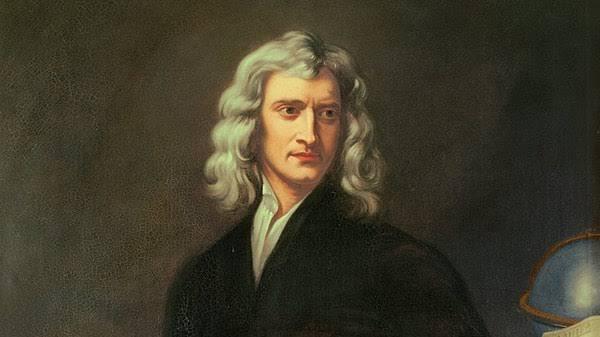
Isaac Newton (History)
A society’s strength and dynamism correspond to the power it wields. The spiritual dimension of this power is realized when the values that define it are lived by the individuals who constitute the society. The transmission of these values from generation to generation is made possible through language. Language not only serves as the vehicle for expressing values but also plays an active role in the formation, development, and materialization of thought. Within this framework, there is a strong relationship between a nation’s language and its consciousness and mindset. The ideas, analyses, inferences, and warnings advanced by intellectuals all draw attention to this truth: to sustain, develop, and transmit culture, one must preserve the fundamental and essential position of language. Human existence, through the process of making sense of reality, gives rise to thought, science, and reflection. The emergence, development, and acquisition of value by phenomena such as meeting needs, solving problems, and establishing dynamism become possible only through language. Therefore, viewing language as merely a collection of words is a grave error. As Tarık Buğra expressed it, “If we understand language as nothing but words, what do we lose? We lose language itself.” Language can only develop and enrich itself through the presence of deep thinking—that is, reflection. Consequently, any thought not expressed through language cannot attain meaningful value, and where deep thinking is absent, the development of language is impossible. In short, an individual’s self-discovery, the formation of a community through communication with others, the continuation of that community’s existence, and the emergence of a strong and healthy nation are all possible only through a developed, rich, and intellectually open and receptive language.
The European social scientist Ernest Gellner states, “Language is not a component of culture; language is culture.” Therefore, preserving language is preserving culture. Culture, in turn, is the totality of values encompassing every domain of a society—from art to science, from ideas to literature. The preservation of language safeguards a society’s identity, dignity, and honor. Necip Fazıl’s powerful analogy in his work *Dil ve Edebiyat* is critical in this regard: “When the old Persian king witnessed his minister begging while his wife and children were slaughtered before his eyes, he did not utter a word. When asked why he did not cry out, he replied, ‘No words could express the pain of those who were cut down; I remained silent. But I could express my grief at seeing the symbol of my glory and majesty—my minister—reduced to begging.’ In the same way, when we witness our language, the symbol of our former glory and majesty, reduced to begging, we can only sigh in sorrow.” Science, belief, and ethics come into being through language and are transmitted through it. Through these shared domains created by language, the individual escapes isolation within his own world and carries his thoughts and ideas forward. In other words, language enables the individual both to discover himself and to unite humanity by creating a common space, allowing the subjective realm to find its place in the objective realm. Corruption in language, however, leads to the disintegration, degradation, and collapse of this entire organic structure. The crises we face today, overwhelmed as we are by the superficial and ornate presentations of the modern world, stem from this very cause. We fail to properly preserve our language, our ideas, and our culture, and we struggle to establish a connection between the past and the present. As a result, our plans and dreams for the future become inadequate, disordered, and fragmented.
The history of humanity is the fruit of cultural accumulation, and language is its carrier and guardian. A nation that claims its language also claims its culture, establishes a connection with its past, and walks confidently into the future. Yet societies that neglect their language lose their values, become identity-less, and disintegrate. Therefore, preserving our language is not only about safeguarding our past—it is about securing our future.
Accessed November 26, 2025.
Accessed November 26, 2025.
Accessed November 26, 2025.
Accessed November 26, 2025.
Accessed November 26, 2025.
Gellner, Ernest. Nations and Nationalism. Cornell University Press, 1983.
Kısakürek, Necip Fazıl. Dil ve Edebiyat. Büyük Doğu Yayınları.
Newton, Isaac. Opticks (1704).
See also: Britannica - Newton's 'On the Shoulders of Giants' Quote
Topçu, Nurettin. Ahlak Nizamı. Dergâh Yayınları.
UNESCO. Towards Knowledge Societies. UNESCO Publishing, 2005.
Wittgenstein, Ludwig. Tractatus Logico-Philosophicus. Routledge & Kegan Paul, 1922.