


This article was automatically translated from the original Turkish version.
World War II was a struggle waged not only on battlefronts but also through mass media. During this period, radio served as a central instrument in both information dissemination and psychological warfare. Propaganda aimed not only to undermine the morale of enemy forces but also to shape its own public opinion. Within this framework, media battles between Japan and United States of America laid bare the ideological tensions of the era.
In the final stages of the war, Japan conducted radio broadcasts targeting American soldiers through female announcers fluent in English. These broadcasts, known as “Tokyo Rose,” became the most famous example of Japan’s propaganda efforts directed at the American public. The broadcasts emphasized the futility of war, asserted that the Japanese people desired peace, and presented the announcer as a sister to American soldiers. This narrative sought to question the legitimacy of the war and weaken perceptions of the enemy.【1】
The title “Tokyo Rose” was not associated with any single individual; it was a collective term used to refer to approximately twenty female announcers broadcasting on Japan’s behalf. Among these figures, Iva Toguri d’Aquino became the most well-known. Although an American citizen, Toguri remained in Japan during the war and hosted radio programs under the pseudonym “Orphan Ann.” She attracted attention through her command of English and her warm, emotionally resonant voice. After returning to the United States following the war, she was arrested on charges of treason; however, she was pardoned in 1977 by President Gerald Ford. Toguri’s story gave a personal face to the Tokyo Rose narrative and has since acquired historical significance as an example of wartime propaganda embodied in a woman’s voice.
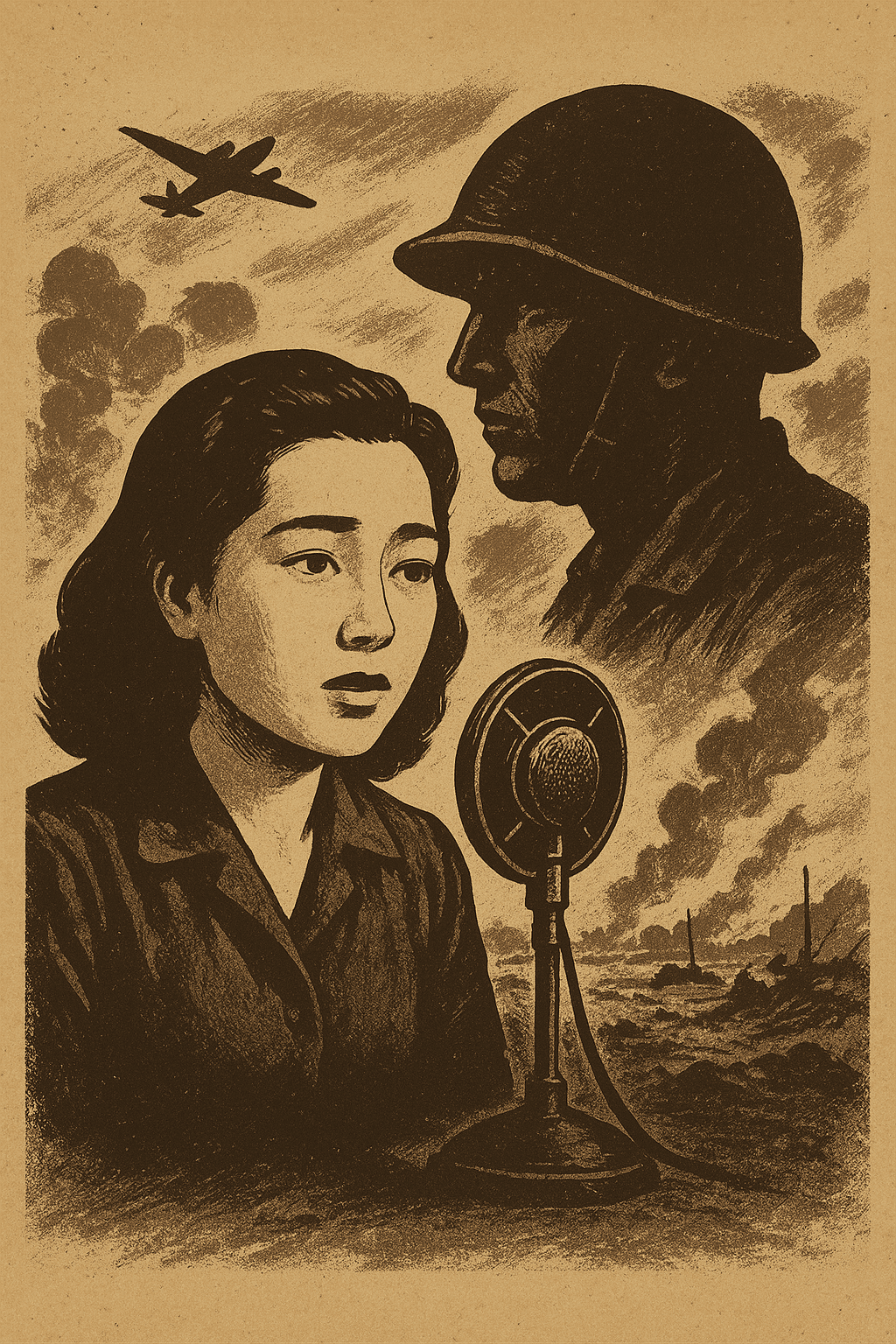
World War II: “Tokyo Rose” Between the United States and Japan (Generated by Artificial Intelligence)
In Tokyo Rose broadcasts, two emotions were particularly emphasized: sadness and fear. Sadness was constructed by drawing attention to the harm inflicted by American soldiers on the Japanese people, while fear was fueled by highlighting the strength of Japanese resistance and the potential losses faced by American troops. This emotional strategy was clearly designed to break the will of American soldiers to fight. The radio messages also criticized the U.S. government’s determination to continue the war, conveying the message that the conflict had become a senseless cycle of violence.
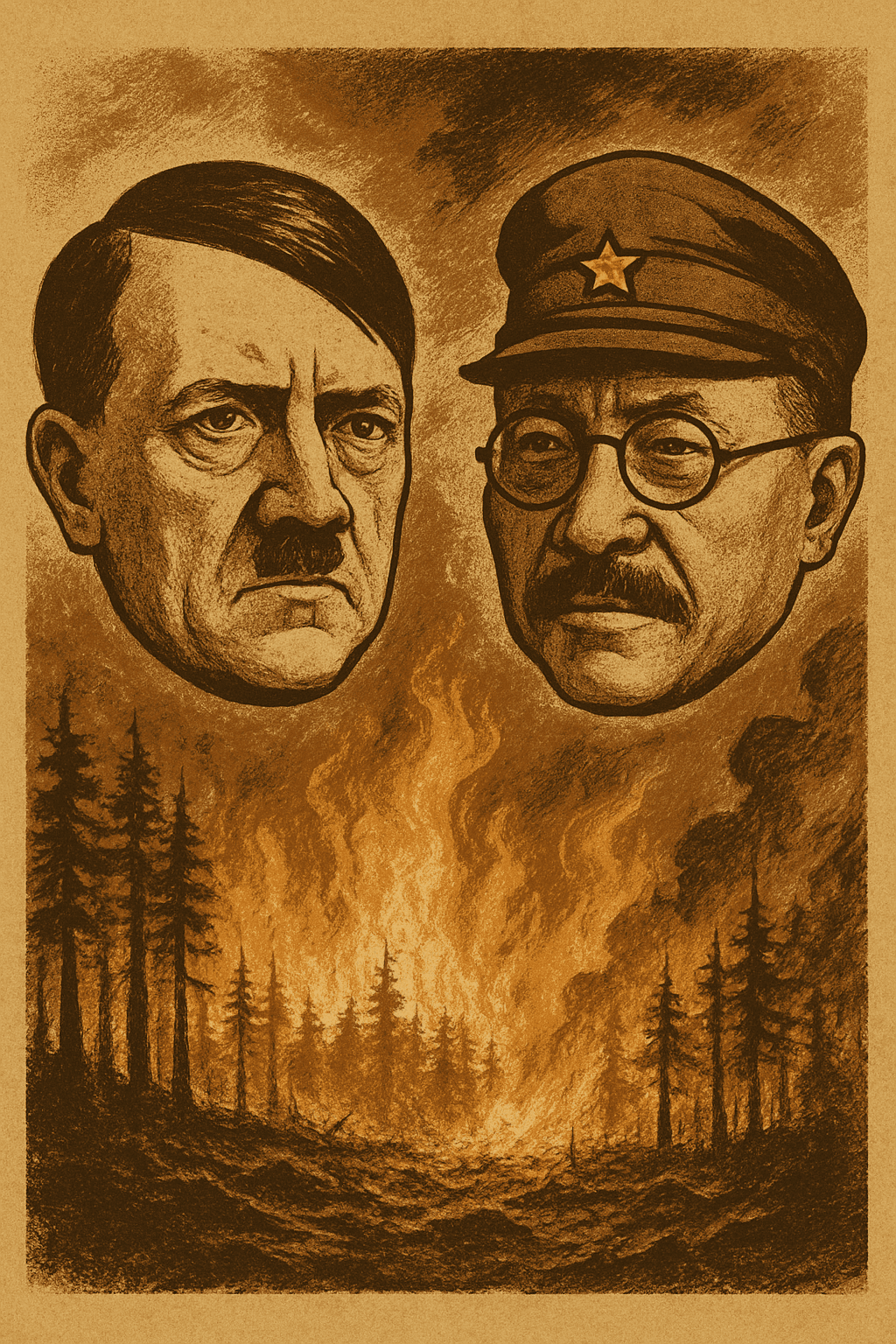
U.S. Propaganda Depicting Intimidation of Enemy Powers (Generated by Artificial Intelligence)
America frequently employed the fear factor throughout World War II, applying it against both Germany and Japan. The U.S. government sought to cultivate fear of the Japanese among the American public not only through posters but also through radio, the primary mass communication medium of the time. These broadcasts, which encouraged all forms of discrimination and hatred, enabled the United States to conduct perception operations.
Tokyo Rose, at this very moment, was Japan’s attempt to reconstruct its image in a positive light. It aimed to counter the anti-Japanese rhetoric in American media, “humanize” the Japanese people, and soften the perception of the enemy through a peace-oriented voice. Although the exact impact of these broadcasts cannot be fully measured, it is known that they generated notable awareness among the American public and among soldiers.
The United States did not delay in responding directly to Japan’s radio strategy. In 1945, the U.S. Navy funded a propaganda animated film titled Tokyo Woes to discredit Japanese broadcasts.【2】
Tokyo Woes (YouTube)
Tokyo Woes was not merely a response to Japanese propaganda; it also aimed to maintain American public morale and encourage support for the military. In the film, purchasing war bonds was presented as a national duty. In this respect, the animated film functioned as both a psychological and economic mobilization tool.
From a semiotic perspective, the film carries three key levels of messaging:
The examples of Tokyo Rose and Tokyo Woes illustrate how media became a strategic “weapon” during the war. For Japan, radio served as a tool to construct a peaceful identity; for the United States, animation became a means of asserting superiority through humor.
Both sides employed emotional appeals to manage perception: Japan appealed through empathy and kinship, while the United States motivated its public and troops through humor and morale.
This dynamic reveals that communication tools during the war were far from neutral; information had transformed into a propaganda object shaped through emotion. Ultimately, Tokyo Rose’s “melancholic voice” confronted Tokyo Woes’s “cheerful irony” on the invisible media front of World War II.
[1]
Yılmaz, Mehmet Barış . “İkinci Dünya Savaşı’nda Japon Medyasının ABD’ye Yönelik Faaliyetleri: Tokyo Rose Radyo Yayınları Üzerine İnceleme,” İnsan ve Toplum Bilimleri Araştırmaları Dergisi 9, no. 1 (2020): 553, Erişim 1 Kasım 2025 , https://doi.org/10.15869/itobiad.657946
[2]
Çalışkan, Sadık . “İkinci Dünya Savaşı’nda Japon Radyo Propagandasına Yönelik ABD Karşı Propagandası: ‘Tokyo Woes’ Çizgi Filmi Üzerine İnceleme,” Radyo: Dün, Bugün, Yarın 5, no. 9 (2020): 185. Erişim 1 Kasım 2025.
Tokyo Rose: An Emotional Strategy in the Voice of War
Tokyo Woes: Counter-Propaganda Through Humor
Radio, Animated Film, and Perception Management
