

This article was automatically translated from the original Turkish version.
+1 More
Location | Türkiye Yalova | ||||||||
|---|---|---|---|---|---|---|---|---|---|
Year of Construction | 1929 | ||||||||
Architect(s) | Prof. Seyfi Hakkı Eldem | ||||||||
Building Material | Wood | ||||||||
Number of Rooms | 11 rooms, 3 veranda salons | ||||||||
Usage | Atatürk's leisure and work pavilion | ||||||||
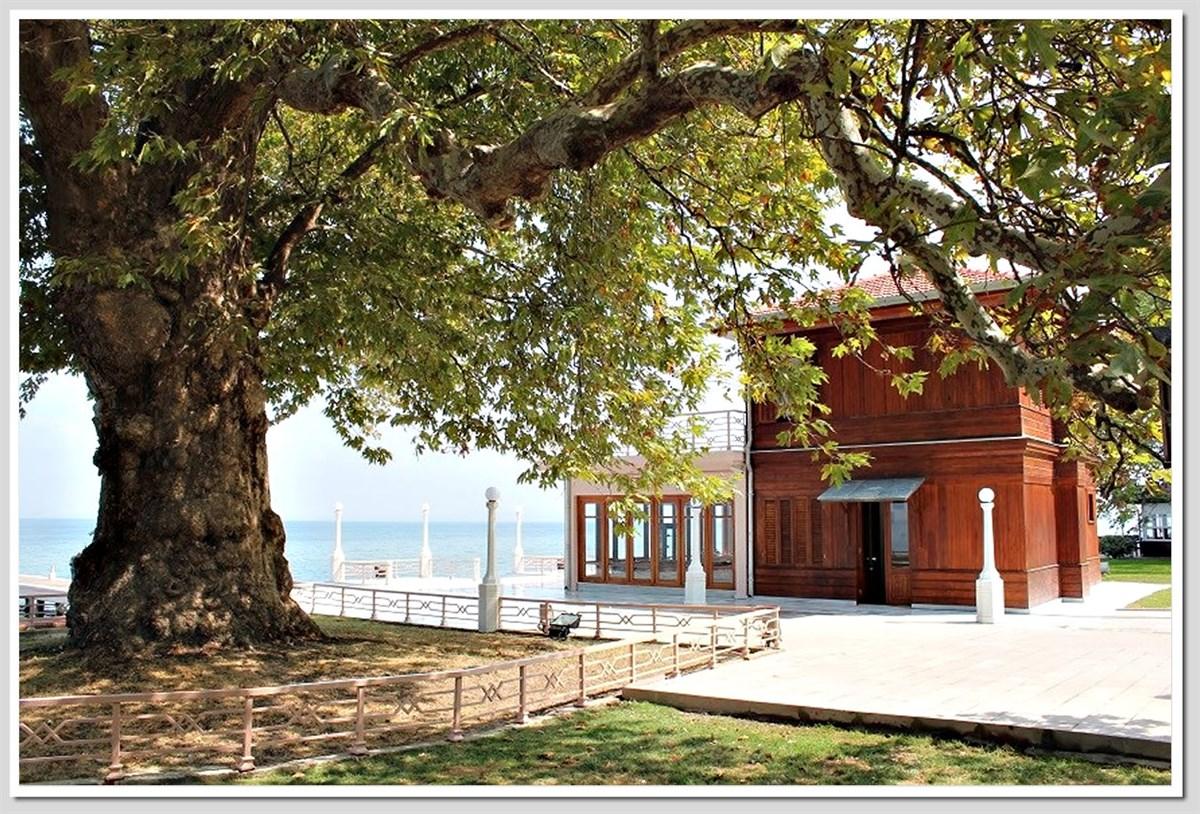
Termal Atatürk Köşkü is located within the boundaries of the Termal district in Yalova province, in Türkiye’s Marmara Region. Situated on a green hillside in Termal—a town renowned for its natural hot springs—this building is recognized as one of the most significant historical sites of the Republican Era. Built in 1929 at the request of Mustafa Kemal Atatürk, the pavilion was used for rest and work.

Termal Atatürk Köşkü (Governorship of Yalova, Republic of Türkiye)
The Termal Atatürk Köşkü is not merely a residence but also a center of thought where important decisions were made. Atatürk met with numerous state officials here and prepared several strategic decisions within this space. Among these decisions were the evaluation of the transition to a multi-party system, the proclamation of Local Products Week, and the establishment of the Turkish Historical Society and the Turkish Language Association. Furthermore, initiatives regarding the translation of the Qur’an into Turkish were also discussed in this pavilion.
Inside the pavilion, many original objects belonging to or gifted to Atatürk are preserved and displayed. Among the most notable items are:
These items are not merely personal belongings but also reflect the cultural and diplomatic relations of the period.
The pavilion is one of the rare places where Atatürk engaged in direct personal communication with citizens. During his stays in Termal, he met face-to-face with residents from surrounding villages, listened to their concerns, and held conversations with them. In this regard, the pavilion embodies a symbolic representation of Atatürk’s principle of populism.
The pavilion has been organized as a museum and opened to the public. Within the museum area, Atatürk’s personal belongings, cultural artifacts from the period, and various documents are exhibited. Visitors do not merely view a historical structure but also experience an enriched encounter with visual and informational materials related to Atatürk’s lifestyle and the founding era of the Republic. In addition, the museum contributes to the development of historical awareness through educational programs and special events.
Declared a Cultural Asset Requiring Protection by the High Council for Immovable Monuments and Historical Sites on 15 May 1983, the pavilion currently operates under the authority of the Grand National Assembly of Türkiye Directorate of National Palaces. As a museum open to visitors, it is regularly visited throughout the year by both domestic and international tourists.
Kültür Portalı. "Termal Atatürk Köşkü." Accessed June 30, 2025. https://www.kulturportali.gov.tr/turkiye/yalova/gezilecekyer/termal-ataturk-kosku
Ministry of Culture and Tourism. "Yalova - Atatürk Köşkleri." Accessed June 30, 2025. https://www.ktb.gov.tr/TR-96388/yalova---ataturk-koskleri.html
Turkish Museums. "Yalova Atatürk Köşkü." Accessed June 30, 2025. https://www.turkishmuseums.com/museum/detail/22315-yalova-ataturk-kosku/22315/1
Yalova Valiliği. "Yürüyen Köşk." Accessed June 30, 2025. http://www.yalova.gov.tr/yuruyen-kosk
Özaslan, Yasin. "Termal Atatürk Köşkü." Türkiye Turizm Ansiklopedisi. Accessed June 30, 2025. https://turkiyeturizmansiklopedisi.com/termal-ataturk-kosku
Location | Türkiye Yalova | ||||||||
|---|---|---|---|---|---|---|---|---|---|
Year of Construction | 1929 | ||||||||
Architect(s) | Prof. Seyfi Hakkı Eldem | ||||||||
Building Material | Wood | ||||||||
Number of Rooms | 11 rooms, 3 veranda salons | ||||||||
Usage | Atatürk's leisure and work pavilion | ||||||||
No Discussion Added Yet
Start discussion for "Thermal Atatürk Pavilion" article
Historical Role
Ethnographic and Artistic Elements
Atatürk’s Relationship with the People
Museum Function and Visitor Experience
Preservation and Current Status