

Classification(s) | Infrahyoid muscle / External laryngeal muscle. | ||||||||
|---|---|---|---|---|---|---|---|---|---|
Border | C1 + CN XII (course with the hypoglossal nerve). | ||||||||
Artery | Superior thyroid artery lingual artery. | ||||||||
Function(s) | Hyoid depressor larynx elevator. | ||||||||
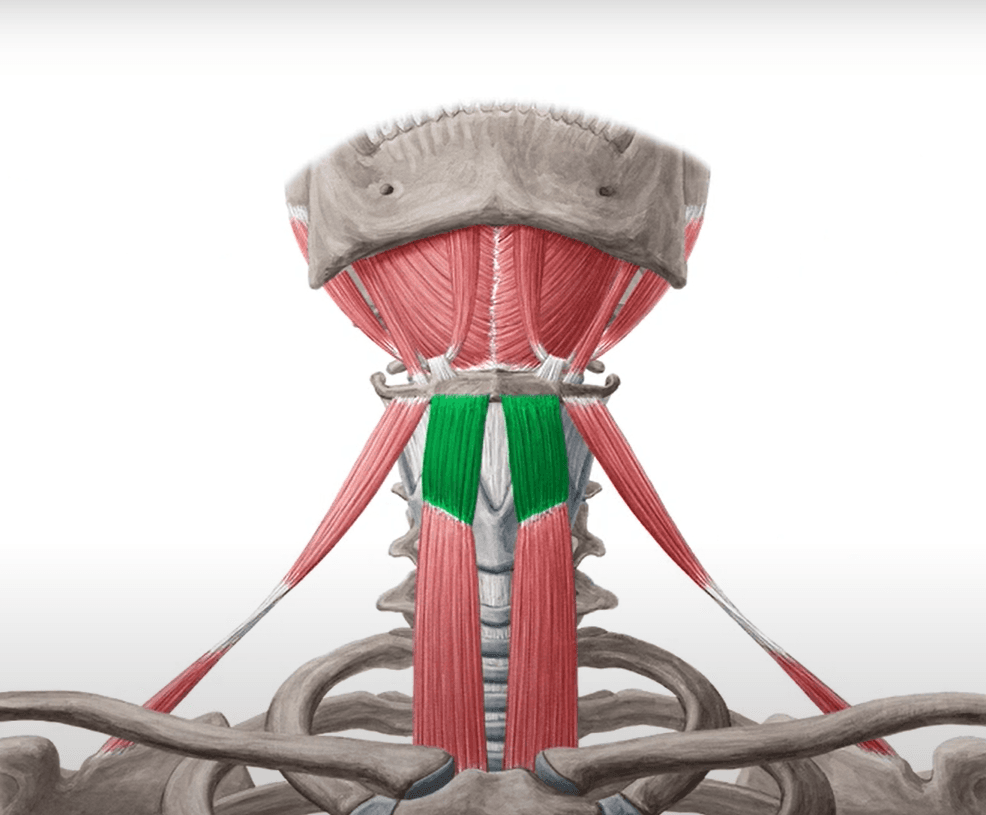
The Thyrohyoid Muscle is a small but functionally crucial skeletal muscle located in the anterior region of the neck. It has a short, broad, quadrangular shape. It is part of the infrahyoid muscle group and plays a critical role in laryngeal movements and swallowing. Lying between the hyoid bone and the thyroid cartilage, this muscle plays a crucial role in stabilizing the larynx, particularly during voice production and respiration, helping to maintain an open airway.
The Thyrohyoid Muscle is morphologically short and broad, with a quadrangular shape. Its superior aspect connects it to the greater horn and body of the hyoid bone, while its inferior aspect attaches to the oblique line of the thyroid cartilage. This position makes it appear as a continuation of the superior portion of the sternothyroid muscle. It also lies deep to the sternohyoid and omohyoid muscles, making it a muscle that requires careful observation during neck dissections.
The Thyrohyoid Muscle is classified among the infrahyoid muscles and, along with the sternohyoid, omohyoid, and sternothyroid muscles, forms this group. It is also classified among the extrinsic laryngeal muscles because, although it lies outside the larynx, it is an important muscle controlling its movements and position. The thyrohyoid muscle originates from the second branchial (pharyngeal) arch. Muscles developing from these arch structures play a role in the formation of the muscle groups involved in facial expression and swallowing in the head and neck region. Unlike muscles derived from somite origin, this muscle exhibits unique development in terms of innervation and function due to its branchial arch origin.
Nerve supply to the thyrohyoid muscle is provided by a branch of cervical spinal nerve C1. This nerve fiber reaches the muscle by traveling along with the hypoglossal nerve (CN XII). After leaving the superior root of the ansa cervicalis, it courses towards the thyrohyoid muscle. This makes the thyrohyoid the only infrahyoid muscle not innervated by the ansa cervicalis. This anatomical detail is of great clinical importance in neurological examinations and the evaluation of nerve injuries. The thyrohyoid muscle receives its blood supply primarily through branches of the superior thyroid artery and the lingual artery. These arteries branch out appropriately to the muscle's location, ensuring adequate oxygen and nutrient supply. Protecting these vessels is crucial for maintaining muscle viability, especially during neck surgery.
The Thyrohyoid Muscle stabilizes the hyoid bone by pulling it downward. This stabilization helps elevate the larynx and maintain a secure airway, particularly during swallowing. It also adjusts the position of the larynx, affecting the tension of the vocal cords, which plays a role in regulating voice production. It also helps maintain a patent airway by holding the larynx in place during breathing. The thyrohyoid muscle is an important anatomical landmark in thyroid and larynx surgeries. During surgery, this muscle helps identify the location of the thyroid cartilage and hyoid bone. Furthermore, due to its close relationship with the hypoglossal nerve, damage to this nerve can negatively impact muscle function. Therefore, the function of this muscle indirectly contributes to the assessment of the hypoglossal nerve during neurological examinations.
Kenhub. “Thyrohyoid Muscle.” Kenhub. Accessed July 3, 2025.
https://www.kenhub.com/en/library/anatomy/thyrohyoid-muscle .
TeachMeAnatomy. "Thyrohyoid." TeachMeAnatomy.info. Accessed January 11, 2025. https://teachmeanatomy.info/encyclopaedia/t/thyrohyoid/
Jaskiewicz, Katarzyna, Malgorzata Sokołowska, Carolina Barszcz, and Leszek Siemionow. "Surgical Anatomy of the Human Thyrohyoid Muscle." PLOS ONE 19, no. 1 (2024): e0285079. Accessed January 11, 2025. https://www.ncbi.nlm.nih.gov/pmc/articles/PMC11246248/
IMAIOS. "Thyrohyoid Muscle - Musculus Thyrohyoideus." IMAIOS Vet-Anatomy. Accessed January 11, 2025. https://www.imaios.com/en/vet-anatomy/anatomical-structures/thyrohyoid-muscle-11077963832

Classification(s) | Infrahyoid muscle / External laryngeal muscle. | ||||||||
|---|---|---|---|---|---|---|---|---|---|
Border | C1 + CN XII (course with the hypoglossal nerve). | ||||||||
Artery | Superior thyroid artery lingual artery. | ||||||||
Function(s) | Hyoid depressor larynx elevator. | ||||||||
Anatomy
Morphology and Connection Points
Embryological Origin and Classification
Nerve Innervation and Vascular Supply
Function and Clinical Relationships