


This article was automatically translated from the original Turkish version.
+1 More
Snuffing, the traditional craft practiced by artisans who tin copper vessels, is a skilled traditional handicraft. Arising from the widespread use of copper in daily life, this profession has become inseparable from copper cookware, which has become synonymous with Turkish cuisine over time.
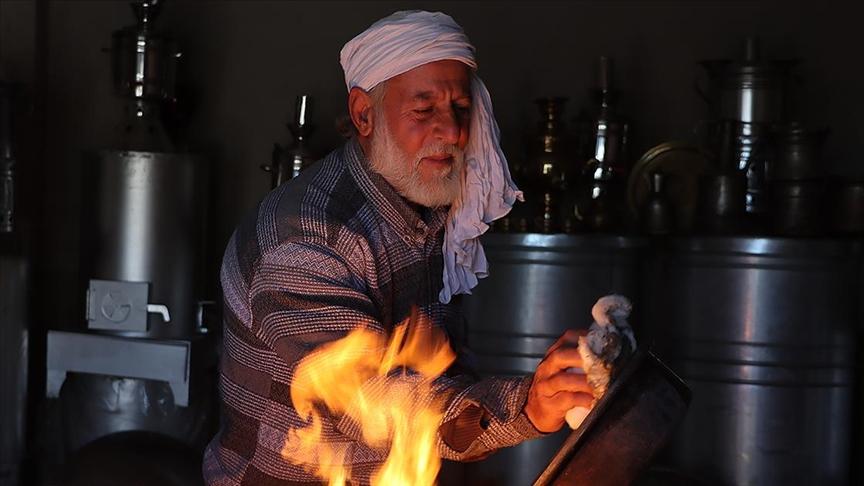
Snuffing (AA)
Tin, by preventing harmful substances formed when copper comes into contact with air, provides a safe alloy and is known for protecting the copper vessel, the food cooked in it, and the consumer. When copper vessels are used without tinning, they oxidize rapidly and can cause copper poisoning. For this reason, tin is essential for making copper cookware safe for kitchen use. In industry, tin is widely used in solders, coating steel sheets, and in chemical, aerospace, shipbuilding, and electronics applications.
Snuffing consists of three meticulous stages:
Other materials used in snuffing include clamps, pincers, edrenç, brushes, tıkmak, zinc, and pardek çekici.

Snuffing (AA)
In Anatolia, snuffing has long been an integral part of daily life and has been practiced both in fixed shops and as a mobile trade. Snuffing artisans traveled from street to street, dedicating their labor to tinning copper utensils used in households. This practice stemmed from the widespread use of copper in daily life and the necessity of tinning. Even today, mobile snuffing artisans can still be found in certain areas.
However, in contemporary times, snuffing is among the crafts facing extinction. The increasing use of steel, aluminum, enamel, and Teflon cookware, the decline in copper vessel production, and the reduced public preference for copper utensils have pushed snuffing to the brink of disappearance. This situation is a consequence of shifts in supply and demand. Master snuffing artisans are concerned about their inability to find apprentices and the potential loss of this traditional craft. The future of this profession, transmitted through the master-apprentice relationship, remains uncertain.
The health benefits of cooking in tinned copper vessels have also been scientifically verified. Food cooked in tinned copper is said to be healthier, cleaner, and more flavorful.
Although copper continues to be valued symbolically and culturally for items such as decorative objects, cezve, ayran tası, cups, and basins, this alone is insufficient to sustain the profession’s former vitality. While demand increases during grape molasses and tomato paste season for large cauldron tinning, overall demand has declined.
It has been suggested that to ensure the sustainability of snuffing, it must be transmitted to new generations and supported through vocational training courses. It is proposed that the Ministry of National Education and People’s Education Centers could organize vocational courses and establish trade schools with dedicated departments for copperwork and snuffing.
Snuffing Documentary (TRT Archive)
Ahi Evran Üniversitesi. "Kalaycılık." Accessed June 30, 2025. https://ahievran.erciyes.edu.tr/Sayfa-Icerigi/27/14/kalaycilik.html.
Anadolu Ajansı. "'Kalaycılık bir sevdadır'." Updated October 18, 2019. Accessed June 30, 2025. https://www.aa.com.tr/tr/yasam/kalaycilik-bir-sevdadir/1618183.
Anadolu Ajansı. "Yarım asırlık kalaycı, mesleği yaşatmak için komşusuna öğretiyor." Date Published June 5, 2022. Accessed June 30, 2025. https://www.aa.com.tr/tr/yasam/yarim-asirlik-kalayci-meslegi-yasatmak-icin-komsusuna-ogretiyor/2606054.
Culture Portal. "Kalaycılık." Accessed June 30, 2025. https://www.kulturportali.gov.tr/turkiye/elazig/kulturatlasi/kalaycilik.
Doğan, Hilal. "Günlük ihtiyaçtan hâsıl olan eski bir meslek: Kalaycılık." Türk Tarım Orman Dergisi. Date Published June 14, 2022. Accessed June 30, 2025. http://www.turktarim.gov.tr/Haber/793/gunluk-ihtiyactan-hasil-olan-eski-bir-meslek-kalaycilik.
Go Konya. "Kalaycılık." Accessed June 30, 2025. https://gokonya.com/tr/kalaycilik-1.
Solmaz, Erhan. "Kaybolmaya Yüz Tutmuş Bir Meslek Kalaycılık: Afyonkarahisar Örneği." *Folklor Akademi Dergisi* 3, no. 2 (2020): 381-394. Accessed June 30, 2025. https://dergipark.org.tr/tr/download/article-file/1106501.
TRT Arşiv. "Kalaycılık – Konya (2005)." YouTube, July 24, 2024. Accessed June 30, 2025. https://www.youtube.com/watch?v=jTUWrCqDhQA.
TRT Haber. "Yok olmaya yüz tutan bir meslek: Kalaycılık." TRT Haber. Date Published March 7, 2023. Accessed June 30, 2025. https://www.trthaber.com/haber/yasam/yok-olmaya-yuz-tutan-bir-meslek-kalaycilik-765614.html.

Chemical Significance
The Snuffing Process and Materials Used
The Snuffing Profession in Anatolia and Its Current Status