


This article was automatically translated from the original Turkish version.
+1 More
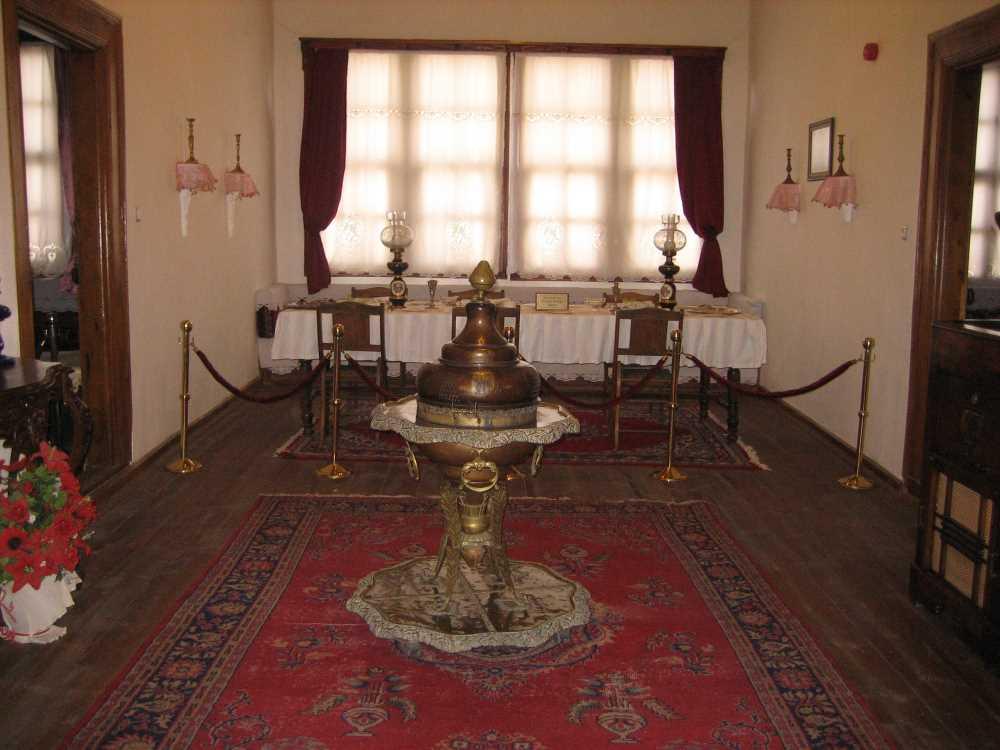
Location | Tokat Türkiye | ||||||||
|---|---|---|---|---|---|---|---|---|---|
Building Owner | Yzb. Mustafa Vasfi Süsoy (1876–1934) | ||||||||
Construction Date(s) | Second half of the 19th century | ||||||||
Architectural Feature(s) | Two-story two-faced plan Ottoman mansion inner courtyard | ||||||||
Atatürk’s Visits | Stayed in 1919, 1924 (with his wife Latife Hanım), and 1928 | ||||||||
Museum Opening | 26 June 2007 | ||||||||
Exhibits | Personal belongings of Atatürk, ethnographic objects, photographs | ||||||||
Tokat Atatürk House and Ethnography Museum is located in the Devegörmez neighbourhood, Devegörmez Street, in the centre of Tokat. The building is a civil mansion representative of late Ottoman residential architecture. Restored faithfully to its original state and converted into a museum, the house serves both as a spatial witness to Atatürk’s historic visits to Tokat and as an ethnography museum reflecting the traditional lifestyle of the period.

Tokat Atatürk House and Ethnography Museum (Türkiye Culture Portal)
Mustafa Kemal Atatürk visited Tokat a total of six times during the National Struggle years and the early Republic period, staying in this mansion owned by Mustafa Vasfi Süsoy on three of those occasions. His first visit occurred on 26 June 1919, during which he spent one night. During his visit on 25 September 1924, he stayed for two nights accompanied by his wife, Latife Hanım; and during his visit on 19 September 1928, he had lunch in the house after introducing the new Turkish alphabet. The building holds historical significance as the only house in which Atatürk stayed during his visits to Tokat.
Infantry Captain Mustafa Vasfi Süsoy (1876–1934) was a military officer and politician who accompanied Atatürk when he landed in Samsun aboard the Bandırma Vessel and served as a staff officer during the Gallipoli Campaign and the War of Independence. After the proclamation of the Republic, he was elected as a member of parliament for Tokat and served four terms. Süsoy is recognised as one of Atatürk’s close comrades-in-arms. The mansion became the very place where Atatürk stayed during his visits to Tokat.
The mansion was constructed in the second half of the 19th century and is an example of traditional Ottoman residential architecture. It follows a two-storey, inner-sala plan type. The salas on the ground and first floors are separated by double-leaf doors, giving the building a “bifacial” layout that could function as two separate dwellings—one opening to the street and the other to the garden. A traditional şadırvan, typical of Tokat mansions, is located in the garden. The rooms on the upper floors have been reorganised while preserving their original positions.
In order to preserve the building and assign it a public function, it was expropriated on 28 December 2001 and allocated to the Ministry of Culture and Tourism on 7 October 2003. After the completion of necessary restoration and exhibition works, the Tokat Atatürk House and Ethnography Museum was opened to the public on 26 June 2007. During restoration, interventions were carried out without damaging the building’s historical fabric, and interior arrangements were executed in accordance with the period’s characteristics.
The museum displays both personal belongings of Atatürk and ethnographic artifacts reflecting traditional Tokat household life. In the bedroom where Atatürk stayed, period-appropriate brass beds, sedir wood furniture and armchairs are exhibited; the dining area has been arranged with original tablecloths and service sets. The room where Atatürk’s chaise longue, on which he drank coffee, is located has been designated as the “Room Where He Drank Coffee”. Another room contains personal belongings, medals and photographs of the house’s owner, Mustafa Vasfi Süsoy. Additionally, ethnographic sections have been prepared with period items such as traditional table settings, cushions and copper vessels.
The Tokat Atatürk House and Ethnography Museum goes beyond being merely a mansion or a museum; it is a memorial space that concretises Atatürk’s connection with Tokat. The artifacts and visual documents on display keep alive the memory of a leader as well as the social and cultural structure of the era. The museum also houses numerous photographs taken during Atatürk’s visits to Tokat, reinforcing the building’s documentary character. The museum functions as an educational and historical landmark for both the local population and visitors.
T.C. Ministry of Culture and Tourism. "Tokat Atatürk House and Ethnography Museum." *Turkey Republic Ministry of Culture and Tourism Museum Portal*. Accessed June 30, 2025. https://muze.gov.tr/muze-detay?SectionId=TAT01&DistId=MRK.
T.C. Ministry of Culture and Tourism. “Atatürk Evi ve Etnografya Müzesi - Tokat.” *Kültür Portalı*. Accessed June 30, 2025. https://www.kulturportali.gov.tr/turkiye/tokat/gezilecekyer/ataturk-ev-etnografya-muzes.
Turkish Museums. "Tokat Atatürk Evi ve Etnografya Müzesi." TurkishMuseums.com. Accessed June 30, 2025. https://www.turkishmuseums.com/museum/detail/2239-tokat-ataturk-evi-ve-etnografya-muzesi/2239/1.
Türkiye Turizm Ansiklopedisi. "Tokat Atatürk Evi ve Etnografya Müzesi." *turkiyeturizmansiklopedisi.com*. Accessed June 30, 2025. https://turkiyeturizmansiklopedisi.com/tokat-ataturk-evi-ve-etnografya-muzesi.
Location | Tokat Türkiye | ||||||||
|---|---|---|---|---|---|---|---|---|---|
Building Owner | Yzb. Mustafa Vasfi Süsoy (1876–1934) | ||||||||
Construction Date(s) | Second half of the 19th century | ||||||||
Architectural Feature(s) | Two-story two-faced plan Ottoman mansion inner courtyard | ||||||||
Atatürk’s Visits | Stayed in 1919, 1924 (with his wife Latife Hanım), and 1928 | ||||||||
Museum Opening | 26 June 2007 | ||||||||
Exhibits | Personal belongings of Atatürk, ethnographic objects, photographs | ||||||||
No Discussion Added Yet
Start discussion for "Tokat Atatürk House and Ethnography Museum" article
Historical Significance and Atatürk’s Visits
Owner of the House: Mustafa Vasfi Süsoy
Architectural Features
Conversion into a Museum
Exhibited Artifacts and Thematic Rooms
Cultural and Monumental Value