


This article was automatically translated from the original Turkish version.
+1 More
Location | Tokat Türkiye | ||||||||
|---|---|---|---|---|---|---|---|---|---|
Definition(s) | A two-story commercial and lodging structure located in the center of Tokat province built during the Ottoman period. | ||||||||
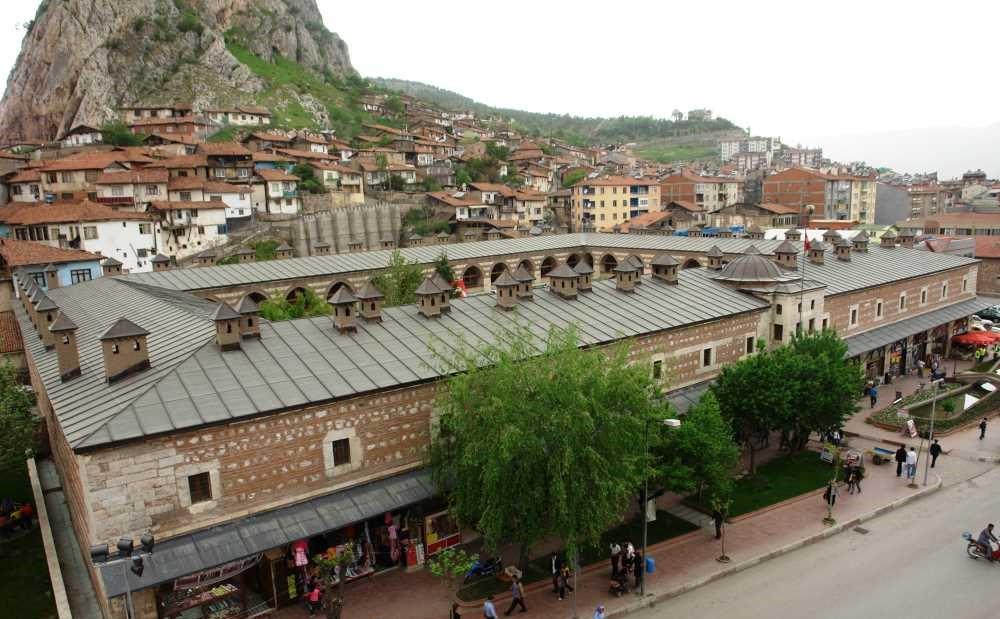
Tokat Voyvoda (Taşhan) Han, is one of the largest urban caravanserais in Anatolia. It is an Ottoman structure built between 1626 and 1632. It is a two-story rectangular building with an open courtyard. Inside, the northern and eastern sides feature shops without arcades, while the southern and western sides have shops with arcades in front. At the end of the entrance corridor, staircases lead to the second floor on both the right and left sides. All rooms on the second floor open onto the arcade. Above the entrance is a domed space that projects outward on consoles. Each room has a single window facing outward, a hearth, and a niche. There are 76 rooms inside and a total of 103 spaces outside.
Taşhan is a large urban caravanserai located in the center of Tokat and one of the most significant commercial structures of the Ottoman period. Although its exact construction date is uncertain, architectural and historical documents indicate that it was built between 1626 and 1632. It derives its name from the “voyvoda” (governor or administrator) who held office in Tokat.
Taşhan occupies a strategic position along major trade routes of the region. From the 17th century onward, Tokat became one of the cities where trade between Eastern Anatolia and the Black Sea intensified, and Taşhan was constructed as a central hub for caravans and commercial activity.
Taşhan is an original and large-scale example among Ottoman urban caravanserais. It has a rectangular plan, is two stories high, and features a central large courtyard. The mosque within the inner courtyard is covered by a dome and exhibits architectural elements that project outward on consoles.
In addition to the 76 rooms inside, there are 103 shops along the outer façade, creating a total usable area of approximately 179 units.
The ground floor of Taşhan is constructed of stone, while the upper floor combines stone and brick in alternating courses. The stone walls are robust and demonstrate high-quality craftsmanship. The roof system primarily consists of barrel vaults and domes. The quality of the building materials is crucial for the structure’s durability and longevity.
A domed mosque, covered by a dome projecting outward on consoles, is located in the southwest corner of the courtyard. The mosque was designed to meet the religious needs of the caravanserai and stands out as an aesthetic architectural feature.
Taşhan was not merely a place of lodging but also considered the heart of Tokat’s trade. It supported the development of social and economic life as a key stop for caravans, merchants, and artisans. The caravanserai, linked to the Voyvoda office, which was an important administrative center in Tokat since the 8th century, also functioned as a revenue-generating property within the waqf system.
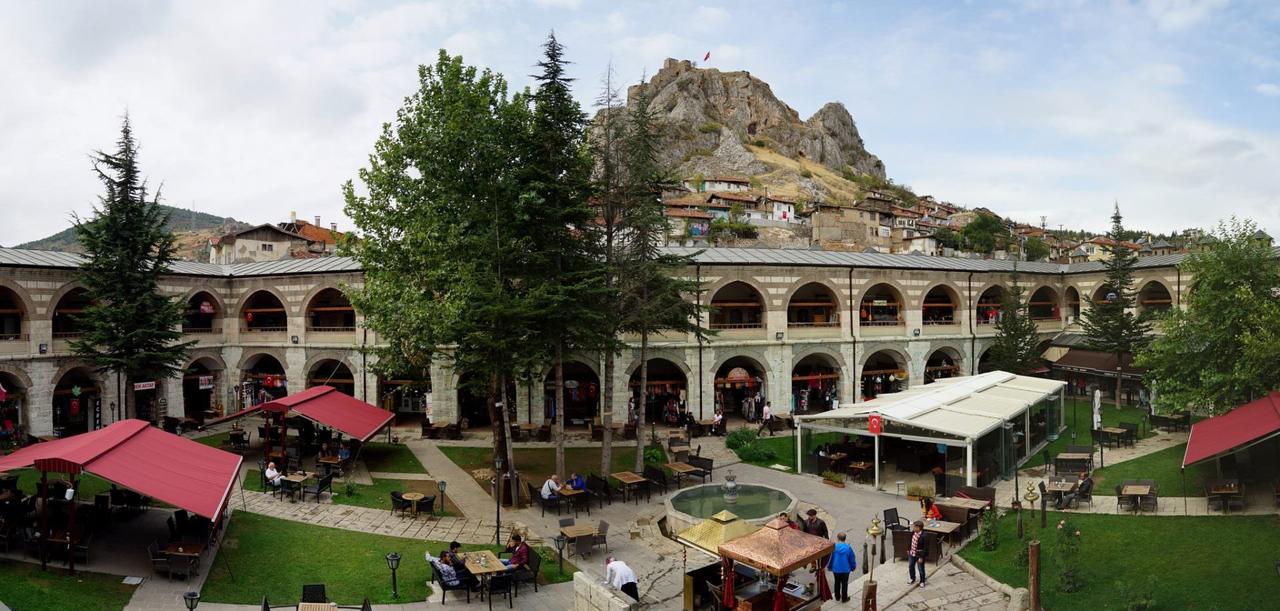
Taşhan (Cultural Inventory)
Taşhan is situated on Gaziosmanpaşa Boulevard in the center of Tokat and forms an integral part of the city’s commercial axis. It harmonizes with the urban fabric through its proximity to markets, mosques, and other caravanserais. Studies on urban transformation and social structure highlight the importance of preserving and enhancing the cultural identity of the Taşhan surroundings.
The structure suffered partial damage due to various natural disasters, notably the 1939 Erzincan earthquake, as well as gradual wear from prolonged use. In particular, the eastern section of the outer courtyard arcade was damaged, and some projecting elements collapsed.
Between 1962 and 1964, the General Directorate of Foundations carried out repair works, strengthening the foundations and restoring damaged sections. Later, between 1997 and 2007, comprehensive restoration projects were undertaken to ensure the building’s use and preservation in accordance with its original form.
Following restoration, Taşhan now serves as a modern cultural and commercial center housing traditional handicraft workshops, souvenir shops, cafes, and social spaces. This functional transformation represents an important model for preserving and revitalizing historic structures. However, social research also indicates that economically driven transformations have impacted the regional social fabric.
Tokat Taşhan stands out among Ottoman urban caravanserais for its unique architecture and comprehensive design. The structure continues to maintain its functionality as an essential component of the city’s identity and commercial heritage and serves as a model in academic studies on restoration and sustainability.
Akın, Emine Saka, and Begüm Demiroğlu İzgi. “Tarihi Hanlarda Yeni İşlev: Deveci Han ve Taşhan, Tokat.” *Vakıflar Dergisi* 56 (2021): 143–62. https://dergipark.org.tr/tr/pub/vakiflar/issue/67378/986689.
Beşirli, Mehmet. “Tokat Voyvodalığı (1774–1842).” *Belleten* 69, no. 254 (2005): 161–216. https://dergipark.org.tr/en/pub/ttkbelleten/article/778268.
Hardal, Seçkin. *Tarihi Kent Merkezinden Dönüşüme Bakmak: Tokat Kent Merkezinde Kentsel Dönüşüm Uygulamaları*. Kent Akademisi, 2022. https://dergipark.org.tr/en/download/article-file/2033770.
Ministry of Culture and Tourism of the Republic of Türkiye. *Cultural Inventory. Voyvoda Han (Taşhan) – Tokat*. 2023. https://kulturenvanteri.com/yer/tas-han-tokat/.
SALT Research. *Taşhan Restorasyon Projeleri ve Restitüsyon*. 2018. https://archives.saltresearch.org/handle/123456789/75556.

Location | Tokat Türkiye | ||||||||
|---|---|---|---|---|---|---|---|---|---|
Definition(s) | A two-story commercial and lodging structure located in the center of Tokat province built during the Ottoman period. | ||||||||
No Discussion Added Yet
Start discussion for "Tokat Voyvoda (Taşhan) Hanı" article
Historical Background and Foundation
Architectural Features and Plan Layout
Planning
Materials and Construction Techniques
Mosque and Other Architectural Details
Historical Function and Socio-Economic Role
Urban Location and Environmental Context
Historical Damage and Restoration Processes
Earthquakes and Damage
Repair and Restoration
Current Use and Functional Transformation