

This article was automatically translated from the original Turkish version.
+2 More
Location | Seydibaba Village Türkiye Gümüşhane Şiran | ||||||||
|---|---|---|---|---|---|---|---|---|---|
Elevation (Altitude) | 1250 m | ||||||||
Source | Underground spring waters (approximately 40 springs) | ||||||||
Related Area | 109 hectares | ||||||||
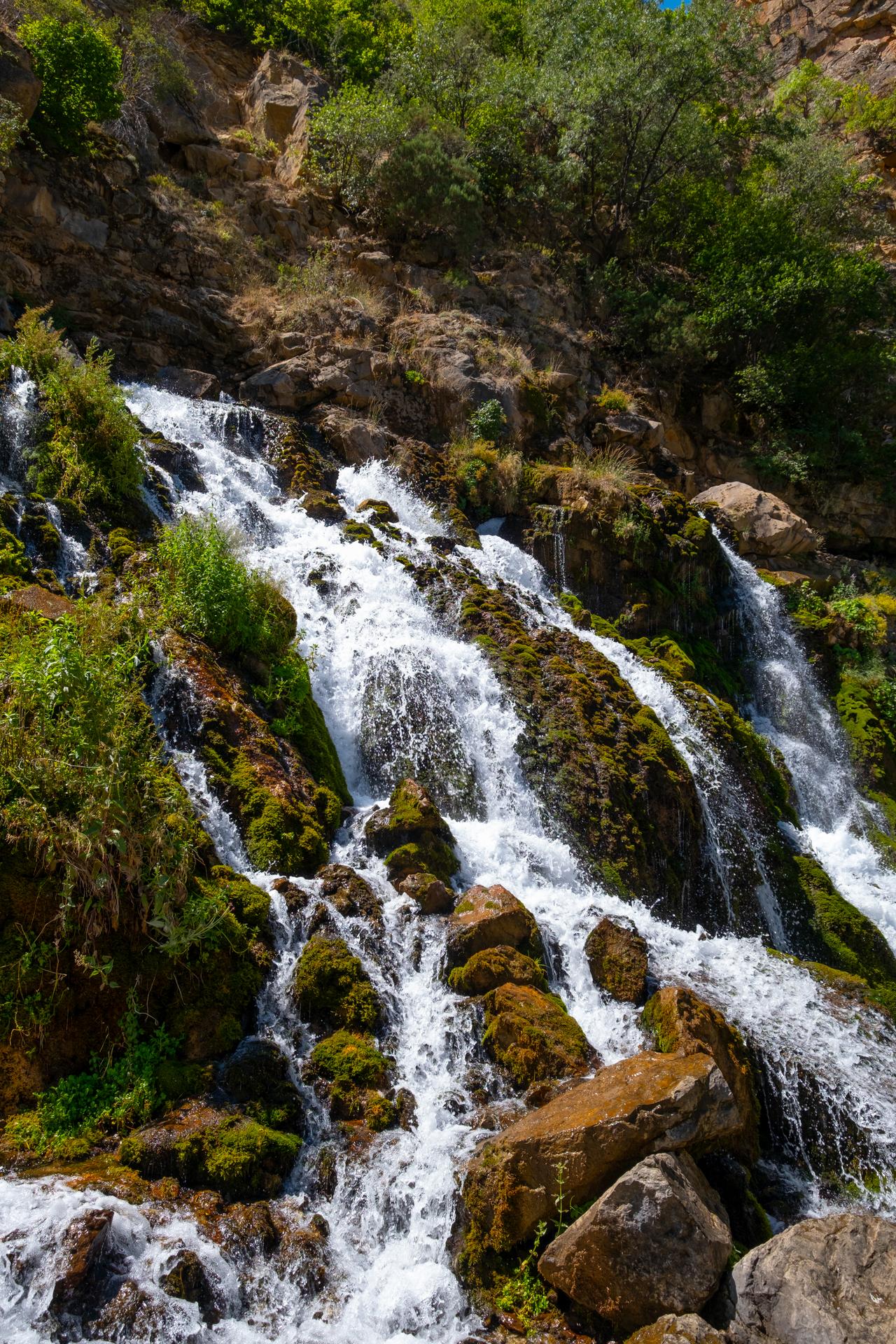
Tomara Waterfall is a natural water source located within the boundaries of Seydibaba Village, in the Şiran district of Gümüşhane Province. It stands out due to its continuous flow throughout the year, fed by numerous underground springs, and its surrounding natural forest ecosystem. Its high elevation creates a notable microclimate in terms of vegetation cover and ecological diversity. The waterfall is recognized as one of Türkiye’s protected natural assets due to its scenic landscape value and geomorphological structure.
Tomara Waterfall is situated approximately 130 kilometers southwest of the center of Gümüşhane Province and about 14 kilometers from the center of Şiran district. It lies at an elevation of 1,250 meters above sea level. Access to the waterfall is possible via paved road, with travel becoming particularly easier during the summer months, leading to increased visitor numbers. Geographically, it lies within the transition zone between the Eastern Black Sea and Central Anatolia regions, contributing to diversity in local climate and vegetation.
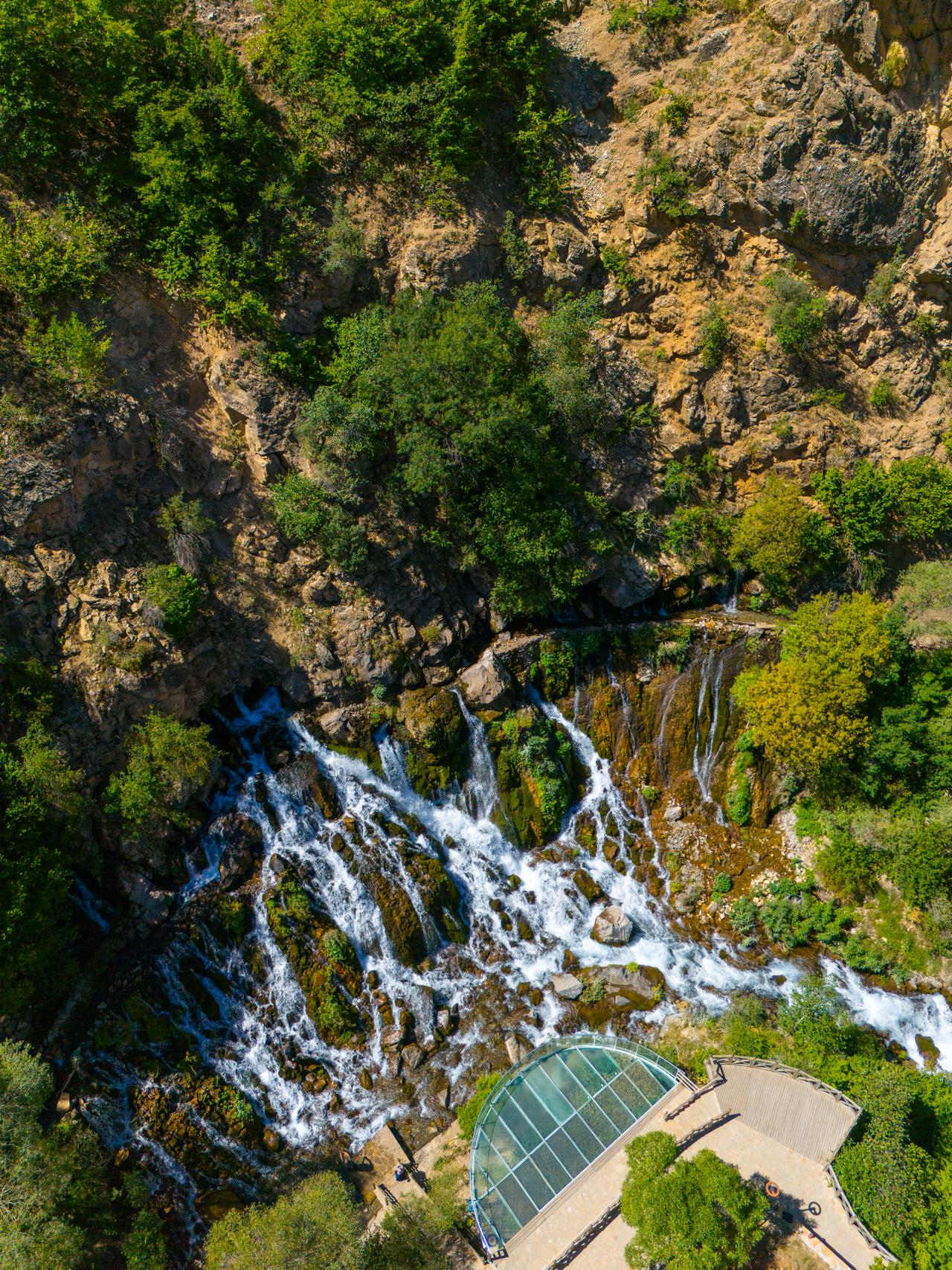
Aerial View of Tomara Waterfall. (Gümüşhane Provincial Directorate of Culture and Tourism)
The most distinctive feature of Tomara Waterfall is that it is fed by approximately 40 separate underground springs. These sources are interpreted as subterranean flows originating from within the mountain’s interior. The waterfall has a height of approximately 15 meters. The water cascades into a small stream that eventually joins the Harşit Çayı River. The water temperature remains constant throughout the year, and the waterfall maintains its flow seasonally without interruption.
Declared a nature park in 2011, Tomara Waterfall and its surrounding area encompass 109 hectares of natural habitats. The region is home to tree species such as Turkish pine, juniper, and oak, as well as wild pear, hawthorn, and blackberry. Herbaceous plant diversity is rich. Various bird species, reptiles, and small mammals also inhabit the area. The natural forest ecosystem and aquatic environment render the waterfall valuable both ecologically and for scientific research.
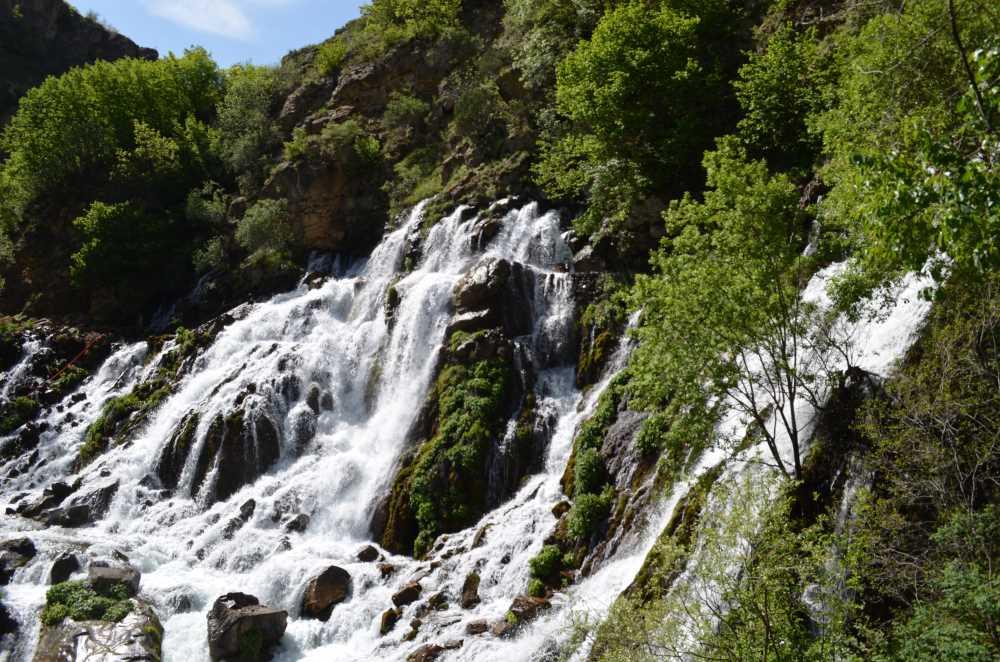
View of Tomara Waterfall. (Ministry of Culture and Tourism)
Tomara Waterfall is not merely a natural feature; it also carries cultural significance through regional folk narratives. According to a local legend, the waterfall originated when a young woman, resisting an oppressive local lord, chose to throw herself into the cascade. Such stories are important as they reflect the symbolic relationship between local culture and nature. These legends reinforce the waterfall’s place in regional memory and offer visitors a cultural connection to the site.
Tomara Waterfall Nature Park is especially favored by day-trippers during the summer months. The area features recreational facilities such as picnic tables, walking trails, and viewing terraces. Visits are subject to an entrance fee and regulated by specific rules. Seasonal maintenance and cleaning activities are carried out by local authorities and relevant ministry units. Activities such as ecotourism, nature hiking, and photography are widely practiced in the area.
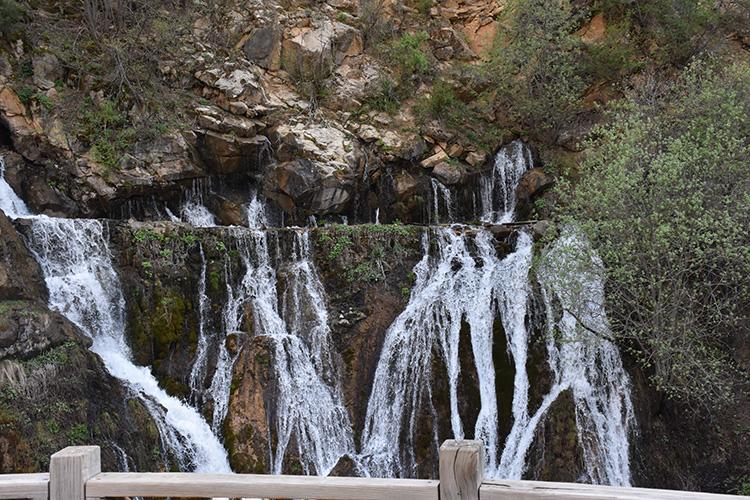
View of Tomara Waterfall. (Anadolu Agency)
Tomara Waterfall is a significant natural landscape element within the boundaries of Gümüşhane Province, possessing multifaceted value through its underground springs, biological diversity, and cultural elements. Designated as a nature park, the area provides opportunities for both scientific research and sustainable nature tourism.
Anadolu Ajansı. “Gümüşhane Tomara Şelalesi’nde Turizm Sezonu Açıldı.” Accessed July 6, 2025. https://www.aa.com.tr/tr/yasam/gumushane-tomara-selalesinde-turizm-sezonu-acildi/3198808
Gümüşhane İl Directorate of Culture and Tourism. "Tomara Şelalesi Tabiat Parkı - Şiran." Accessed July 6, 2025. https://gumushane.ktb.gov.tr/TR-396972/tomara-selalesi-tabiat-parki-siran.html
Gümüşhane İl Directorate of Culture and Tourism. "Tomara Şelalesi." Accessed July 6, 2025. https://gumushane.ktb.gov.tr/TR-57885/tomara-selalesi.html
Ministry of Culture and Tourism. "Tomara Şelalesi." Accessed July 6, 2025. https://www.kulturportali.gov.tr/turkiye/gumushane/turizmaktiviteleri/tomara-selalesi
Ministry of Culture and Tourism. "Tomara Şelalesi’nin Efsanesi." Accessed July 6, 2025. https://www.kulturportali.gov.tr/turkiye/gumushane/kulturatlasi/tomara-selalesinin-efsanesi
Şiran Kaymakamlığı. “Saklı Cennetin Gür Sesi: Tomara Şelalesi.” Accessed July 6, 2025. http://www.siran.gov.tr/sakli-cennetin-gur-sesi-tomara-selalesi-sehir

Location | Seydibaba Village Türkiye Gümüşhane Şiran | ||||||||
|---|---|---|---|---|---|---|---|---|---|
Elevation (Altitude) | 1250 m | ||||||||
Source | Underground spring waters (approximately 40 springs) | ||||||||
Related Area | 109 hectares | ||||||||
Geographical Location, Access and Transportation
Water Sources and Hydrological Structure
Ecosystem, Vegetation Cover and Wildlife
Socio-Cultural Elements and Local Narratives
Recreational Use, Tourism and Visitor Profile