

This article was automatically translated from the original Turkish version.
+2 More
Location | Göynük Türkiye Bolu | ||||||||
|---|---|---|---|---|---|---|---|---|---|
Type(s) | Derviş / Veli Türbesi | ||||||||
Material(s) | Taş Ahşap | ||||||||
Ömer Sikkînî (Bıçakçı Ömer Dede) Türbesi is a visitation site located in the Göynük district of Bolu, recognized as one of the earliest representatives of the dervish tradition in the region. The türbe holds historical significance due to its Sufi heritage and its role in shaping the spiritual structure of Göynük during the Ottoman period.
The türbe is situated in the town center of Göynük, within an area that forms a “spiritual identity zone” alongside other türbes and religious structures in the district. Local sources indicate that the türbe is part of a chain of sacred sites in Göynük shaped by the Akşemseddin tradition.
Ömer Sikkînî was a dervish who lived in Göynük and is regarded by the local populace as a saint. Although chronological details about his life are limited, his personality and place in local memory are highlighted as follows:
Thus, Ömer Sikkînî is recognized both as a “dervish” and as one of the representatives of popular Sufism in Ottoman Anatolia.

Ömer Sikkînî Türbesi (Culture Portal)
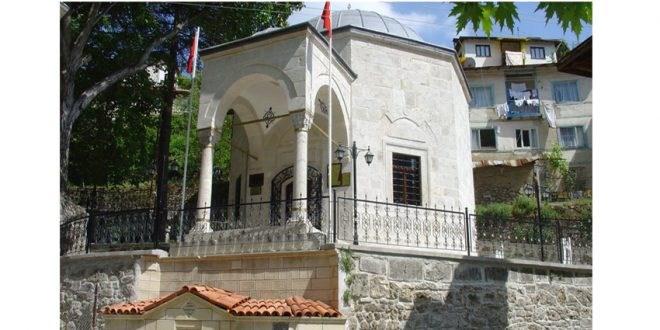
The Ömer Sikkînî (Bıçakçı Ömer Dede) Türbe is a characteristic example of Sufi architecture in Göynük, distinguished by its modest and small-scale design. Constructed using stone and wood as primary materials, the structure exhibits harmony with the local architectural fabric. It consists of a single chamber and reflects a more humble architectural sensibility typical of dervish türbes rather than monumental forms. The exterior features no decorative elements; its unadorned appearance is intended to visually reinforce the spiritual qualities of asceticism and humility associated with the individual interred within. The interior maintains the same simplicity, with a direct and unembellished layout that orients visitors toward the grave.
During the Ottoman period, Göynük was known as a religious center shaped by the legends and accounts of saints and dervishes. The türbe is one of the elements constituting this identity. The name Sikkînî is mentioned in connection with Göynük’s tradition of “gazi-dervish settlement,” embodying a continuity of Islamic presence in the region.
The türbe continues to be visited today. It is regarded by the local community as a place for prayer and remembrance. Its inclusion in a pilgrimage circuit alongside other türbes in Göynük reinforces its enduring presence in the collective memory of the society. The türbe remains open to visitors and is preserved to this day.
Göynük Belediyesi. "Ömer Sikkin Hazretleri Türbesi." *goynuk.bel*. Accessed October 18, 2025. https://www.goynuk.bel.tr/omer-sikkin-turbesi-goynuk/#prettyphoto[group]/1/.
T.C. Bolu Governorship. "Türbeler." bolu.gov. Accessed October 18, 2025. http://www.bolu.gov.tr/turbeler.
T.C. Göynük District Governorship. "Türbeler." goynukkaymakamligi.gov. Accessed October 18, 2025. http://www.goynukkaymakamligi.gov.tr/turbeler.
T.C. Göynük District Governorship. "Türbelerimiz." goynukkaymakamligi.gov. Accessed October 18, 2025. http://www.goynukkaymakamligi.gov.tr/turbelerimiz.
T.C. Ministry of National Education, Bolu Göynük District National Education Directorate. "Türbeler." goynuk.meb.gov. Accessed October 18, 2025. https://goynuk.meb.gov.tr/www/turbeler/icerik/240.
Türkiye Kültür Portalı. "Ömer Sekkin Hazreti Türbesi - Bolu." Accessed October 18, 2025. https://www.kulturportali.gov.tr/turkiye/bolu/gezilecekyer/omer-sekkin-hz-turbesi#:~:text=Bolu%2C%20G%C3%B6yn%C3%BCk%20%C4%B0l%C3%A7esi%2C%20%C3%87e%C5%9Fme%20Mahallesi,1475%20y%C4%B1l%C4%B1nda%20%C3%B6ld%C3%BC%C4%9F%C3%BC%20rivayet%20edilmektedir.
Türkiye Kültür Portalı. "Ömer Sekkin Hz. Türbesi (Göynük) - Bolu." Accessed October 18, 2025. https://www.kulturportali.gov.tr/turkiye/bolu/kulturenvanteri/omer-sekkin-hz-turbesi-goynuk.
Şahin, Haşim. "Ömer Dede Sikkînî." İslam Ansiklopedisi. Accessed October 18, 2025. https://kureansiklopedi.com/tr/detay/omer-dede-sikkini.

Location | Göynük Türkiye Bolu | ||||||||
|---|---|---|---|---|---|---|---|---|---|
Type(s) | Derviş / Veli Türbesi | ||||||||
Material(s) | Taş Ahşap | ||||||||
No Discussion Added Yet
Start discussion for "Tomb of Ömer Sikkînî (Bıçakçı Ömer Dede)" article
Architectural Features
Historical and Spiritual Context
Visitation Tradition