This article was automatically translated from the original Turkish version.
+1 More
Author(s) | Aziz Nesin | ||||||||
|---|---|---|---|---|---|---|---|---|---|
Number of Pages | 160 | ||||||||
Publisher(s) | Nesin Yayınevi | ||||||||
First Publication Date(s) | 1957 | ||||||||
Genre | Öykü | ||||||||
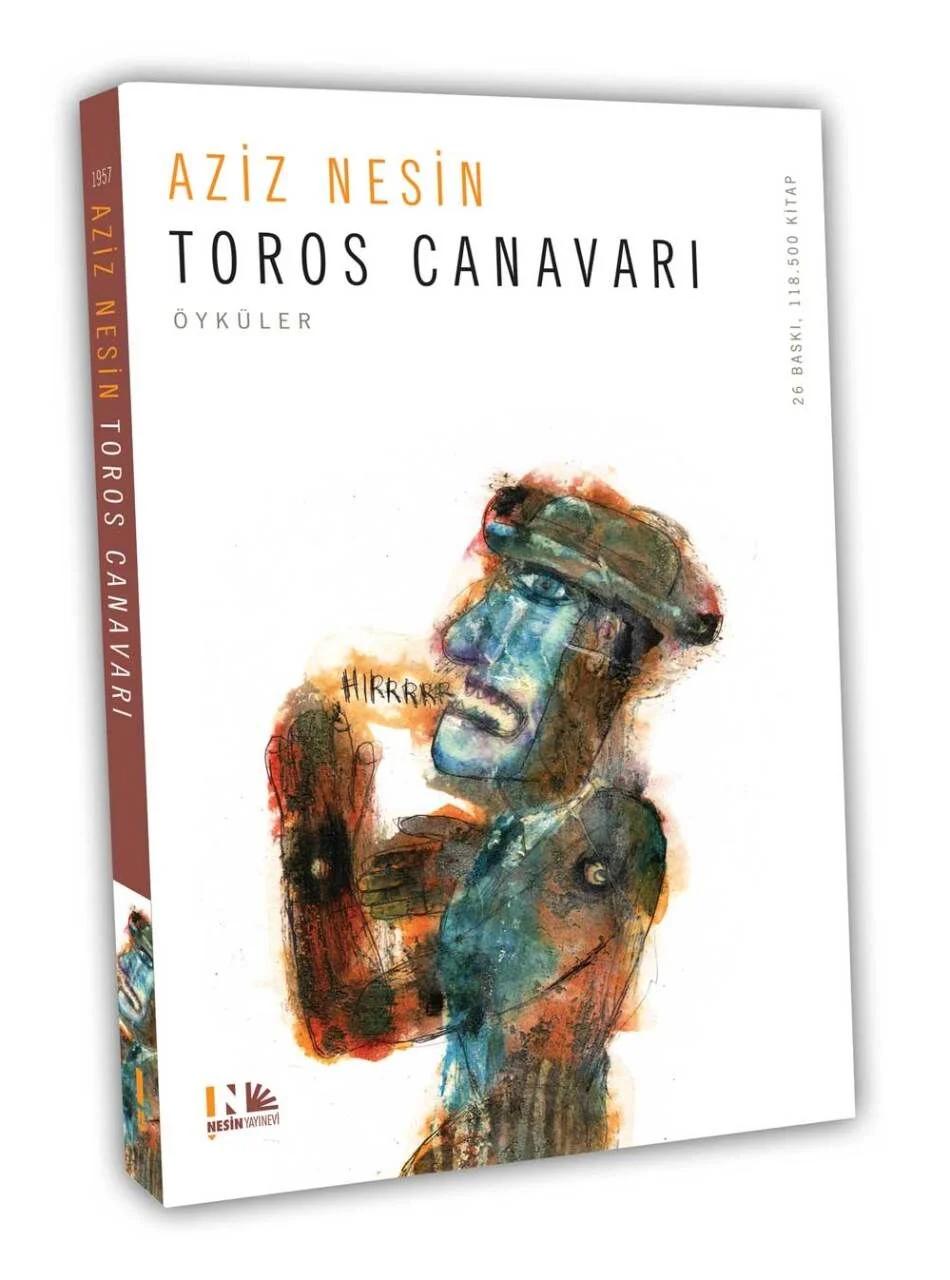
The Toros Monster, written by Aziz Nesin, is a collection of short stories that employs satire to explore social criticism. First published in the 1980s, the work contains 22 stories inspired by everyday life, ordinary people, and the distortions of the social system. The book reflects, with ironic and critical language, the individual’s position within the system, the pursuit of justice, conflicts with bureaucracy, and social injustices.
The central themes of the book are power relations, social injustice, the individual’s helplessness against the system, and bureaucratic obstacles. In his stories, Aziz Nesin portrays tragicomic situations faced by ordinary people while satirizing the arbitrariness of state mechanisms, class differences, and the hypocrisy within society. Humor emerges as both the style and the critical tool of the work.
Aziz Nesin’s distinctive plain, direct, and humorous narrative style is prominently displayed in this work. Local dialects, such as those from the Black Sea region, folk expressions, and everyday speech are incorporated to enhance the authenticity of the characters. Laughter functions as a vehicle for critique.
The Toros Monster: The story that gives the book its title follows Nuri Pakyürek, who is mistakenly identified as a murderer due to disputes with his landlord. Through societal prejudices, media influence, and bureaucratic mechanisms, he is transformed into a “monster.”
Everyone Is Fine: This story, centered on class differences and indifference, reveals society’s lack of empathy and arrogant structure through a dialogue that takes place on a public bus.
How Do They Do It?: The story depicts how a new boss, initially critical of the old system, becomes just another part of it. The character Ercan embodies greed and hypocrisy in concrete form.
Is There Anyone Looking at Me?: This story exposes how crude force, showmanship, and empty threats are ineffective and meaningless in society. It ironically critiques tough-guy figures like Driver Rahmi.
The Piggy Bank Thief: In this brief but thought-provoking tale, a man who commits theft justifies his actions with seemingly rational reasons, illustrating how societal distortions are normalized.
The Businessman: Salih Küpoğlu: This story centers on a merchant named Salih Küpoğlu who narrowly escapes financial ruin. While criticizing a system sustained by American capital, it satirizes the false narratives of success in the business world.
The Orchestra Man: The story of a man who creates music from bodily sounds highlights his struggle to find a place within the system, questioning both individual creativity and societal monotony.
What Is Written in the Notebook: The characters Durmuş Gümüş, who has turned crime into a habit, and Judge Yunus, who loses faith in him, expose the corruption of the justice system and the decay of public moral values.
Characters such as Hamamcı Mehmet Ağa, Ahmet Çavuş, Emine Hanım, and The Woman Employee at the Table also represent, throughout the book, individual isolation, communication breakdown, and humorous resistance against the system.
The story “The Toros Monster” centers on an absurd incident involving Nuri Pakyürek, an ordinary tenant. Nuri lives with his family in a modest apartment. The landlord wishes to evict them but fails to do so through legal means, resorting instead to psychological pressure. He places his own men in the apartments above and below to constantly harass Nuri and his family.
Nuri resists this pressure for a long time. However, when the situation becomes unbearable, he seeks help at the police station. There, a police officer compares Nuri to the notorious murderer known as the “Toros Monster” and arrests him. This false information spreads rapidly through the media and public opinion, instantly altering how Nuri is perceived in the building. Frightened neighbors and the landlord cease their harassment. But shortly afterward, the real Toros Monster is captured and Nuri is released. Yet the traumatic and absurd experience shatters his psyche and leads to a loss of mental stability.
Nesin, Aziz. Toros Canavarı. Nesin Yayınevi. 2024.

Author(s) | Aziz Nesin | ||||||||
|---|---|---|---|---|---|---|---|---|---|
Number of Pages | 160 | ||||||||
Publisher(s) | Nesin Yayınevi | ||||||||
First Publication Date(s) | 1957 | ||||||||
Genre | Öykü | ||||||||
No Discussion Added Yet
Start discussion for "Toros Monster (Book)" article
Subject and Theme
Style and Narrative
Notable Stories and Characters
Detailed Analysis of the Story “The Toros Monster”