


This article was automatically translated from the original Turkish version.
+2 More
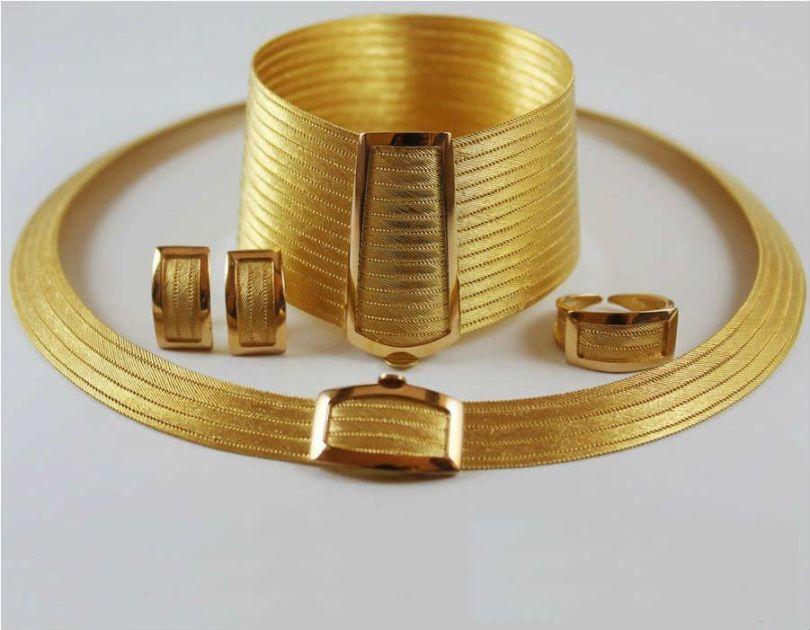
Trabzon Telkariye and Hasırı
Registration Number | 94 | ||||||||
|---|---|---|---|---|---|---|---|---|---|
Application Number | C2006/028 | ||||||||
Application Date | 22.09.2006 | ||||||||
Name of the Geographical Indication | Trabzon Telkariye ve Hasırı | ||||||||
Product Name | Sugar Bowl Candlestick Coffee and Tea Saucer Mat Tray Napkin Holder made of Silver Bracelet made of Silver Earring and Ring made of Gold Necklace (Gerdanlık) Bracelet | ||||||||
Type of Geographical Indication | Mahreç İşareti | ||||||||
Applicant/Registrant(s) | Trabzon Kuyumcu ve Saatçiler Odası | ||||||||
Address of the Registrant | Kunduracılar Cad. Alipaşa İşhanı No:113 Kat:4/51 61200 TRABZON | ||||||||
Geographical Boundary | Trabzon | ||||||||
Trabzon Telkariye ve Hasırı is a traditional craft unique to the province of Trabzon in Türkiye, involving the intricate weaving of fine gold and silver threads to produce decorative items, jewelry, and ornamental objects. This product group was registered on 20 September 2006 as a geographical indication by the Trabzon Goldsmiths and Watchmakers Chamber.

Trabzon Telkariye ve Hasırı (Generated by Artificial Intelligence)
The geographical indication under the name “Trabzon Telkariye ve Hasırı” covers the following handcrafted products made from 22 carat (916 thousandths) gold and 900 carat silver:
These products may also be produced as sets known as “Trabzon gold hasır ring” and “Trabzon silver hasır ring”.
The purity and chemical properties of the metals used in production are as follows:
Gold has high electrical and thermal conductivity and does not tarnish at high temperatures. It reacts only with “aqua regia” (HNO₃ + HCl).
The production of Trabzon gold and silver hasır is fundamentally a handcraft process based on the telkariye technique. The primary materials used are gold or silver wire 31–32 microns in thickness a double tool (for stretching and compressing) and a steel sewing needle. Products typically use 22 carat (916 thousandths) gold or 900 carat silver. The metal is drawn into wire and formed into loops weighing 80–100 grams depending on the product type. These wires are cut to lengths suitable for weaving usually between 100 and 125 cm.
Small triangular loops are created according to the number of rows (or columns) required for the weave. These loops are formed by winding them around a roll of paper or a matchstick to dimensions of 1–3 mm. The loops form the foundation of the weaving. There is a fixed relationship between the number of rows and the number of loops: for example 18 loops for 19 rows and 4 loops for 5 rows.
Six triangular peaks are formed alternately straight and inverted within each loop using the double tool to stretch and compress the wire. During weaving the filled peaks are filled from one direction and then the empty ones are completed from the opposite direction to create a uniform pattern across all loops. This process is repeated six times to ensure balanced inclination of the weave. The 32 micron wire is passed through and between the triangular peaks during weaving. The structure is strengthened by compressing and stretching with the double tool. In tightly woven structures the passage of the wire may become difficult over time. In such cases a standard steel sewing needle is used to pierce holes at the tips of the triangular peaks to facilitate wire passage.
Weaving continues in an alternating straight-inverted pattern until the desired length is achieved. This technique ensures a similar appearance on both sides of the weave. When weaving is complete the cut ends of the wire are gathered on one surface of the product. This surface is designated as the side that will contact the body during use and is also used as the area for attaching the clasp in final finishing.
Products are labeled with the name “Trabzon Telkariye ve Hasırı”. Marking is done via labels. The official stamp used for marking consists of the letters TTH (Trabzon Telkariye ve Hasırı). This stamp is oval shaped measuring 6 mm in width and 9 mm in length. Products without the TTH stamp must still include on their labels the manufacturer’s name the material type and purity and information confirming production using the Trabzon technique.
The product is geographically limited to the province of Trabzon. The development of telkariye and hasır craftsmanship in Trabzon is rooted in historical processes. After Trabzon was incorporated into Ottoman territory in 1461 silver mined in Gümüşhane was traded through the port of Trabzon which contributed to the growth of this craft in the region.
Gold and silver craftsmanship developed as a skill among women living in the central districts and villages of Trabzon and was passed down from generation to generation as traditional expertise. The continuity of this cultural transmission and the emergence of region-specific patterns have made Trabzon telkariye ve hasır a distinctive cultural identifier.
Trabzon Hasır is entirely handwoven from wire. Its structural characteristics include:
Products produced under the geographical indication are monitored by a control board coordinated by the Trabzon Goldsmiths and Watchmakers Chamber. The control board includes representatives from the following institutions:
Monitoring includes the following:
Monitoring is conducted at least once annually. Additional inspections may be carried out as needed or upon complaint. Services may be obtained from experts in public institutions or the private sector. The registering institution is responsible for legal procedures.

Trabzon Telkariye ve Hasırı (Generated by Artificial Intelligence)
Turk Patent and Trademark Office. "Trabzon Telkâriye ve Hasırı - Coğrafi İşaret Detayı." Accessed May 20, 2025. https://ci.turkpatent.gov.tr/cografi-isaretler/detay/37977.
Türk Patent ve Marka Kurumu. "Trabzon Telkâriye ve Hasırı Coğrafi İşaret Başvuru Belgesi." Accessed May 20, 2025. https://ci.turkpatent.gov.tr/Files/GeographicalSigns/ae18fe14-323c-463c-b264-b8a04c2562e5.pdf.

Trabzon Telkariye and Hasırı
Registration Number | 94 | ||||||||
|---|---|---|---|---|---|---|---|---|---|
Application Number | C2006/028 | ||||||||
Application Date | 22.09.2006 | ||||||||
Name of the Geographical Indication | Trabzon Telkariye ve Hasırı | ||||||||
Product Name | Sugar Bowl Candlestick Coffee and Tea Saucer Mat Tray Napkin Holder made of Silver Bracelet made of Silver Earring and Ring made of Gold Necklace (Gerdanlık) Bracelet | ||||||||
Type of Geographical Indication | Mahreç İşareti | ||||||||
Applicant/Registrant(s) | Trabzon Kuyumcu ve Saatçiler Odası | ||||||||
Address of the Registrant | Kunduracılar Cad. Alipaşa İşhanı No:113 Kat:4/51 61200 TRABZON | ||||||||
Geographical Boundary | Trabzon | ||||||||
No Discussion Added Yet
Start discussion for "Trabzon Telkariye and Hasırı" article
Scope
Material Properties
Production Method
Usage and Marking
Geographical Boundary and Origin
Distinguishing Features
Monitoring Mechanism