This article was automatically translated from the original Turkish version.
+1 More
Type of Geographical İndication | Mahreç Sign | ||||||||
|---|---|---|---|---|---|---|---|---|---|
Application Date | 31.08.2018 | ||||||||
Registration Number | 460 | ||||||||
Registration Date | 30.09.2019 | ||||||||
Product / Product Group(s) | Textiles | ||||||||
Province(s) | Giresun | ||||||||
Applicant/Registrant(s) | Şebinkarahisar Municipality | ||||||||
Tamzara fabric (weave) is a traditional textile produced in Tamzara Neighborhood of Şebinkarahisar district, Giresun province, Türkiye. The fabric derives its name from this neighborhood and has been an integral part of local folk culture since the 18th century. It reflects the lifestyle and craft expertise of Şebinkarahisar, a high-altitude region with harsh winter conditions where sheep and goat herding is widespread. Nearly lost due to modernization and industrial production, this traditional weave has recently been revived.

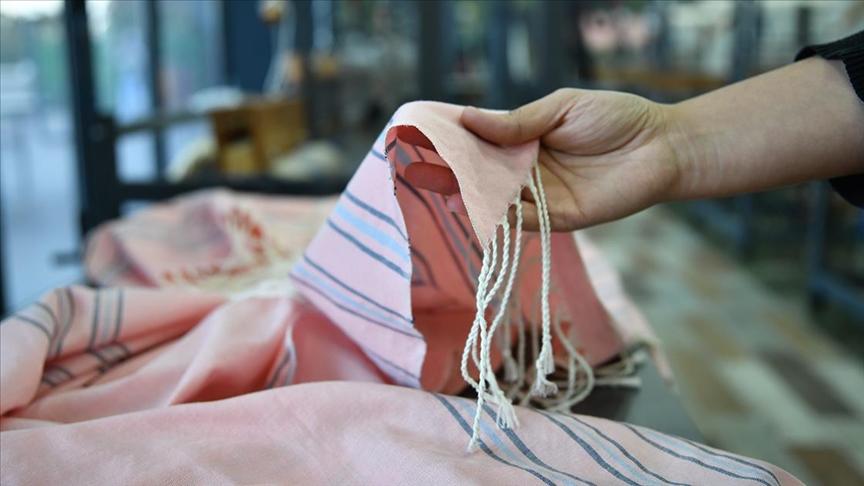
Tamzara Weave (AA)
As part of Şebinkarahisar’s cultural heritage, Tamzara fabric reveals the lifestyle, manual skills, and aesthetic sensibilities of the region’s people. Historically, this fabric was used in products such as tablecloths, peştamals, headscarves, bath wraps, aprons, handkerchiefs, sheets, dırıl, and gazelina, and held a prominent place in dowry trunks. From the late 20th century onward, hand weaving was largely replaced by industrial production, and the tradition was largely abandoned. Since 2010, with support from Şebinkarahisar Vocational School and the Public Education Center, efforts have been made to revive Tamzara fabric production.
The primary tool used in producing Tamzara fabric is the traditional four-frame loom. These looms are designed to ensure a regular flow of threads and feature a seating area approximately 15 to 20 meters long. The weaver positions themselves at the center of the loom to ensure even processing of the threads. After weaving, the fabric is coated with haşıl (a starch-based substance) and then the haşıl is removed. It is also common in the region to add fringes to fabrics known locally as “bürüncük,” enhancing both their aesthetic and functional qualities.
The threads are typically made from 100% cotton, though linen and hemp threads may also be used. Traditionally prepared by hand-spinning techniques, these threads have now been replaced by commercially produced yarns in modern production. Processes such as yarn preparation, dyeing, kasserleme (bleaching), and haşıllama are carefully applied to enhance the quality of the fabric. Natural dyes, plant-based dyes, or earth-derived pigments are used in dyeing; for black color, zırnık is added to fix the hue.

Tamzara Weave (AA)
The distinguishing feature of Tamzara fabric is the intensive use of plain weave and rib weave structures. Panama and crepe weaves are also employed but are not dominant. Patterns are typically square and striped; squares and lines of varying sizes and thicknesses form the core aesthetic of the fabric. Although ajur pattern techniques have appeared in recent years, square and striped designs remain predominant.
Patterns are created during weaving using colored threads. In original fabrics, black and white dominate; colors such as red, yellow, purple, green, navy, and pink are used less frequently. In contemporary weaves, red and navy have become more prominent.
The fine structure of Tamzara fabric, with open spaces between the threads, allows it to absorb moisture and dry quickly through air circulation, making it a breathable and fast-drying textile. This property has enhanced its functionality in products such as peştamals and headscarves.
Under Law No. 6769 on Industrial Property, Tamzara Weave was registered by the Turkish Patent and Trademark Office on 30 September 2019 for protection, effective from 31 August 2018. Following an application by Şebinkarahisar Municipality, Tamzara Weave has been officially recognized as a geographical indication specific to Şebinkarahisar district of Giresun province.
The monitoring process is coordinated by Şebinkarahisar Municipality. The monitoring body consists of five members: three from Şebinkarahisar Municipality, one from the Şebinkarahisar District Public Education Center, and one from the Design Department of Giresun University Şebinkarahisar Technical Sciences Vocational School. Inspections are conducted annually; additional inspections are carried out upon complaint or as needed. During inspections, standards such as the use of 100% cotton warp threads, the predominance of plain and rib weaves, and the use of square and striped patterns are verified.

Tamzara Weave (AA)
In studies documenting the characteristics of Tamzara fabric, nine original Tamzara fabrics, four second-generation weaves, and five contemporary weaves were analyzed. These studies were supported by face-to-face interviews with master weavers and their families. The original fabrics were produced between 1950 and 1990 and reflect historical production techniques and aesthetic principles. Second-generation weaves (1981–1990) were generally produced as peştamals; contemporary weaves, since 2010, have been used in products such as shirt fabric, shawls, and tablecloths under the Women’s Employment Support Program. The analyses aimed to identify changes in weaving techniques and patterns.
Tamzara fabric continues to exist with limited production compared to its former widespread use. Revival efforts began in 2010 under the “Women in Production” project, initiated under the Women’s Employment Support Grant Program, and through joint initiatives by Şebinkarahisar Municipality and Giresun University Şebinkarahisar Vocational School. The Public Education Center’s Regional Fabric Weaving Course strives to ensure the continuity of this tradition. Contemporary weaves partially preserve the original patterns and technical features of traditional fabrics while adapting to modern production methods. The geographical indication registration has increased product recognition and contributed to the local economy.
Anadolu Ajansı. “Coğrafi işaret tescilli Tamzara dokuması marka olma yolunda.” Accessed July 16, 2025. https://www.aa.com.tr/tr/kultur-sanat/cografi-isaret-tescilli-tamzara-dokumasi-marka-olma-yolunda/2369712.
Arslan, Arzu, and Fatma Nur Başaran. “Giresun-Şebinkarahisar İlçesinin Kültürel Mirası: Tamzara Bezi.” *TÜBA-KED Türkiye Bilimler Akademisi Kültür Envanteri Dergisi*, no. 17 (March 1, 2018): 177–196. Accessed July 16, 2025. https://dergipark.org.tr/tr/pub/tubaked/issue/57265/809992.
Turk Patent and Trademark Office. "Tamzara Dokuması." *Coğrafi İşaretler Portalı*. Accessed July 16, 2025. https://ci.turkpatent.gov.tr/cografi-isaretler/detay/38623.

Type of Geographical İndication | Mahreç Sign | ||||||||
|---|---|---|---|---|---|---|---|---|---|
Application Date | 31.08.2018 | ||||||||
Registration Number | 460 | ||||||||
Registration Date | 30.09.2019 | ||||||||
Product / Product Group(s) | Textiles | ||||||||
Province(s) | Giresun | ||||||||
Applicant/Registrant(s) | Şebinkarahisar Municipality | ||||||||
History and Cultural Significance
Production Techniques and Tools
Pattern and Composition Features
Geographical Indication and Monitoring Process
Studies and Analyses
Current Status