


+2 More

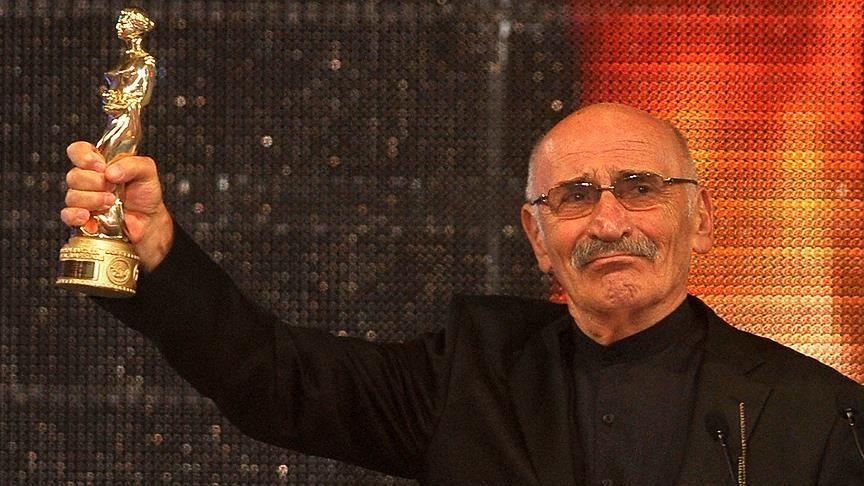
Tuncel Kurtiz
Doğum tarihi | 1930-02-01 | ||||||||
|---|---|---|---|---|---|---|---|---|---|
Eş | Menend Kurtiz | ||||||||
Place of Birth | İzmit, Kocaeli, Türkiye | ||||||||
Ölüm tarihi | 2013-09-27 | ||||||||
Place of Burial | Çamlıbel Mezarlığı, Balıkesir | ||||||||
Profession(s) | Actor Director Producer Screenwriter | ||||||||
Çocuk | 2 | ||||||||
Some Series | Twilight Hacı Asi Ezel – Ramiz Karaeski (2009–2011) Magnificent Century – Ebussuud Efendi (2012–2013) | ||||||||
Some Films | Umut Sürü Duvar Gül Hasan Bereketli Topraklar Üzerinde Otobüs Kanal Yaşamın Kıyısında İstanbul Kanatlarımın Altında Hoşçakal Yarın Bir Aşk Uğruna Işıklar Sönmesin Tabutta Rövaşata Siyah Beyaz Güz Sancısı Kayıp Armağan Şellale | ||||||||
Award(s) | 1981 Antalya Altın Portakal Film Festivali – Best Screenplay Award ("Gül Hasan") 1986 Berlin International Film Festival – Silver Bear 1994 Antalya Altın Portakal Film Festivali – Best Supporting Male Actor ("Bir Aşk Uğruna") 2002 Sadri Alışık Awards – Best Supporting Male Actor ("Şellale") 2007 Yeşilçam Awards – Best Supporting Male Actor ("Yaşamın Kıyısında") 2008 Altın Koza Film Festivali – Master Actor Award 2008 Italy Taormina Film Festival – Art Award 2011 Antalya Altın Portakal Film Festivali – Lifetime Achievement Award | ||||||||
Tuncel Tayanç Kurtiz, born on 1 February 1936 in Bahçecik, Kocaeli, was a Turkish actor, director, screenwriter, and producer in theatre, cinema, and television. Throughout his career, Kurtiz worked both in Türkiye and abroad. After receiving education in diverse fields such as literature and philosophy, he turned to acting and embarked on an artistic journey spanning theatre, cinema, and television. He passed away on 27 September 2013 at his home in Etiler, Istanbul, and was buried in Çamlıbel village, district of Edremit, Balıkesir.
Tuncel Kurtiz’s father, Hamdi Valâ Kurtiz, was a Turkish bureaucrat born in Thessaloniki, and his mother, Müfide Kurtiz, was of Bosnian origin. He completed his primary education in eight different cities across Türkiye due to his father’s postings and finished middle school in Edremit. After graduating from Istanbul Haydarpaşa High School, he studied law, English language and literature, philosophy, psychology, and art history at Istanbul University, but left university without completing any of these programs. During his youth, he worked as a light controller at İETT.
Tuncel Kurtiz began his theatre career in 1958 with Haldun Dormen Theatre and later continued his theatrical work in countries including Sweden, Germany, the United States, and the Netherlands. Among the productions he participated in are Peter Brook’s “Mahabharata”, Nazım Hikmet’s “Şeyh Bedrettin Destanı”, Haldun Taner’s “Keşanlı Ali Destanı”, and Aydın Engin’s “Devr-i Süleyman”. He was also one of the founders of Genar Theatre alongside Erol Keskin, Hadi Çaman, and Erol Günaydın.
Tuncel Kurtiz’s cinema career began in 1964 with the film “Şeytanın Uşakları” directed by Orhan Günşiray. In the 1970s and 1980s, he worked with Yılmaz Güney in films such as “Umut”, “Sürü”, and “Duvar”. In 1979, he wrote the screenplay and directed the film “Gül Hasan”, and in 1980 he authored the screenplay for “Bereketli Topraklar Üzerinde”. After the military coup of 12 September 1980, he continued his work in cinema and theatre in Sweden, Germany, and the United States. In the 1990s, he returned to Türkiye and participated in both independent cinema projects and television productions.
Tuncel Kurtiz’s television roles became more prominent in the 2000s. He appeared in the series “Alacakaranlık” in 2003, “Hacı” in 2006, and “Asi” in 2007. In the series “Ezel”, which began in 2009, he portrayed the character Ramiz Karaeski, and in the series “Muhteşem Yüzyıl”, broadcast between 2012 and 2013, he played Ebussuud Efendi. In 2010, he produced a television program titled “Tuncel Kurtiz ve Dostları” at his hotel in Edremit, Balıkesir, and that same year provided the Turkish voice-over for BBC’s documentary “Life”.
Tuncel Kurtiz wrote the screenplay and directed the 1979 film “Gül Hasan”. He also authored the screenplays for the 1980 film “Bereketli Topraklar Üzerinde” and the 1978 film “Kanal”.
Tuncel Kurtiz died on 27 September 2013 at his home in Etiler, Istanbul, following a heart attack. He was buried on 29 September 2013 in Çamlıbel village, district of Edremit, Balıkesir.
Tuncel Kurtiz was married to Menend Kurtiz and had two children, Aslı and Mirza.
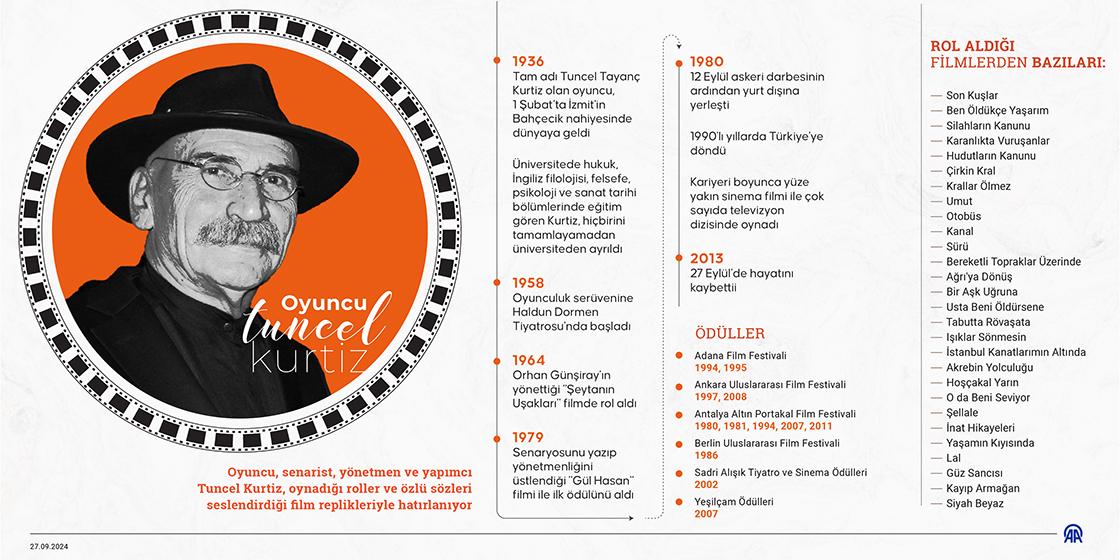
Tuncel Kurtiz's Life (AA)
"Biyografi Sayfası: Tuncel Kurtiz." *Beyazperde*. Accessed May 16, 2025. https://www.beyazperde.com/sanatcilar/sanatci-3403/.
"Filmography: Tuncel Kurtiz." *Beyazperde*. Accessed May 16, 2025. https://www.beyazperde.com/sanatcilar/sanatci-3403/filmografi/.
"IMDb Profile: Tuncel Kurtiz." *IMDb*. Accessed May 16, 2025. https://www.imdb.com/name/nm0193579/.
"Oyuncu Tuncel Kurtiz'in Vefatının Üzerinden 11 Yıl Geçti." Anadolu Ajansı. Accessed May 16, 2025. https://www.aa.com.tr/tr/kultur/oyuncu-tuncel-kurtizin-vefatinin-uzerinden-11-yil-gecti/3342231.
"Tiyatro ve Sanat Yaşamı: Tuncel Kurtiz." Tiyatrolar.com.tr. Accessed May 16, 2025. https://tiyatrolar.com.tr/tuncel-kurtiz#.
"Tuncel Kurtiz Kimdir?" Habertürk. Accessed May 16, 2025. https://www.haberturk.com/tuncel-kurtiz-kimdir-iste-tuncel-kurtiz-in-kisaca-hayati-ve-oyunculuk-kariyeri-3203625?page=6.
"Tuncel Kurtiz Kimdir?" Sabah. Accessed May 16, 2025. https://www.sabah.com.tr/tuncel-kurtiz-kimdir.
"Tuncel Kurtiz Vefatının 8. Yılında Anılıyor." TRT Haber. Accessed May 16, 2025. https://www.trthaber.com/haber/kultur-sanat/tuncel-kurtiz-vefatinin-8-yilinda-aniliyor-611782.html.
Milliyet. "Milliyet: Tuncel Kurtiz Nereli, Kimdir, Ölüm Tarihi Nedir?" Accessed May 16, 2025. https://www.milliyet.com.tr/cadde/tuncel-kurtiz-nereli-kimdir-tuncel-kurtiz-olum-tarihi-nedir-iste-hayati-6419965.
Show TV. "Show TV Oyuncu Profili: Tuncel Kurtiz." Accessed May 16, 2025. https://www.showtv.com.tr/oyuncu/tuncel-kurtiz/5116.
Tuncel Kurtiz: Hayatı ve Kariyeri (İnfografik). Anadolu Ajansı. Accessed May 16, 2025. https://www.aa.com.tr/tr/info/infografik/41397.

Tuncel Kurtiz
Doğum tarihi | 1930-02-01 | ||||||||
|---|---|---|---|---|---|---|---|---|---|
Eş | Menend Kurtiz | ||||||||
Place of Birth | İzmit, Kocaeli, Türkiye | ||||||||
Ölüm tarihi | 2013-09-27 | ||||||||
Place of Burial | Çamlıbel Mezarlığı, Balıkesir | ||||||||
Profession(s) | Actor Director Producer Screenwriter | ||||||||
Çocuk | 2 | ||||||||
Some Series | Twilight Hacı Asi Ezel – Ramiz Karaeski (2009–2011) Magnificent Century – Ebussuud Efendi (2012–2013) | ||||||||
Some Films | Umut Sürü Duvar Gül Hasan Bereketli Topraklar Üzerinde Otobüs Kanal Yaşamın Kıyısında İstanbul Kanatlarımın Altında Hoşçakal Yarın Bir Aşk Uğruna Işıklar Sönmesin Tabutta Rövaşata Siyah Beyaz Güz Sancısı Kayıp Armağan Şellale | ||||||||
Award(s) | 1981 Antalya Altın Portakal Film Festivali – Best Screenplay Award ("Gül Hasan") 1986 Berlin International Film Festival – Silver Bear 1994 Antalya Altın Portakal Film Festivali – Best Supporting Male Actor ("Bir Aşk Uğruna") 2002 Sadri Alışık Awards – Best Supporting Male Actor ("Şellale") 2007 Yeşilçam Awards – Best Supporting Male Actor ("Yaşamın Kıyısında") 2008 Altın Koza Film Festivali – Master Actor Award 2008 Italy Taormina Film Festival – Art Award 2011 Antalya Altın Portakal Film Festivali – Lifetime Achievement Award | ||||||||
Life and Education
Theatre Career
Cinema Work
Television and Later Career
Screenwriting and Directing
Death and Burial
Personal Life
Theatre Plays
Television Series
Films
Awards