


This article was automatically translated from the original Turkish version.
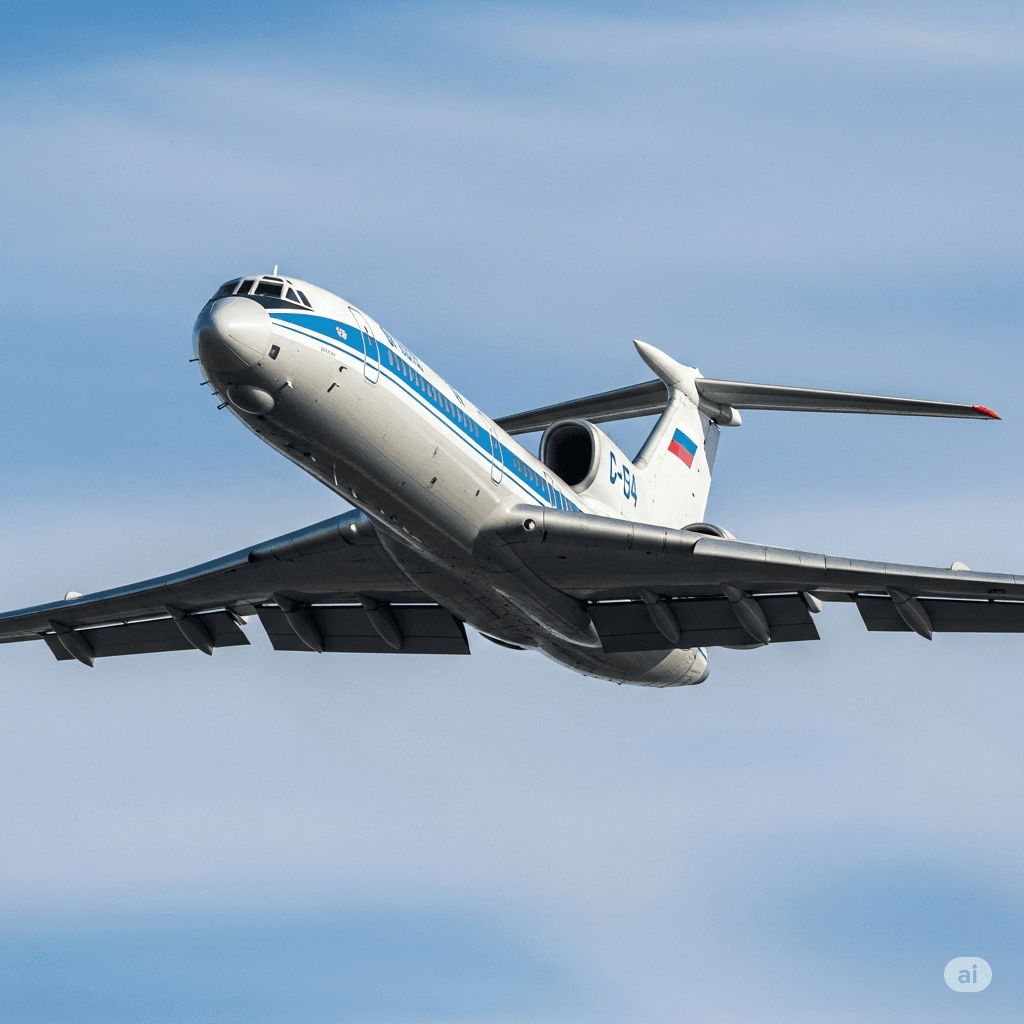
Tupolev Tu-154
Producer(s) | Tupolev Design Bureau (USSR) | ||||||||
|---|---|---|---|---|---|---|---|---|---|
First Flight(s) | 4 October 1968 | ||||||||
Entry into Service | 1972 | ||||||||
Production Year Range | 1968 – 2013 | ||||||||
Total Production Quantity | 1,026 (also listed as 1,082 in some sources) | ||||||||
Aircraft Type(s) | Three-engine narrow-body medium-to-long-range jet passenger aircraft | ||||||||
Engine Type | 3 × Kuznetsov NK-8-2U or Soloviev D-30KU turbofan | ||||||||
Capacity | Passengers: 152 – 180 Crew: 3 (pilot, co-pilot, flight engineer) | ||||||||
Usage Areas | Commercial passenger transport, cargo flights, military personnel and equipment transport, government and special-purpose transport | ||||||||
Tupolev Tu-154 is a medium-range, three-engine, narrow-body passenger aircraft designed and manufactured during the Soviet Union era. Notable for its aerodynamic structure and distinctive tail-mounted engine configuration, the Tu-154 formed the backbone of Soviet civil aviation for decades and is regarded as a "Soviet aviation icon". It was used not only in civilian transport but also in military and special missions, distinguished by its durability and ability to operate under harsh conditions.

Tupolev Tu-154 (Rawpixel)
The Tu-154 was developed in the mid-1960s to meet the needs of the Soviet Union’s extensive air network. Its purpose was to replace aging aircraft such as the Ilyushin Il-18 and Tupolev Tu-104 in the fleets of Aeroflot and other airlines within the Soviet bloc. The first prototype flew in 1968 and entered service with Aeroflot in 1972. Designed to meet the requirements of the Cold War era, it featured a robust structure capable of taking off and landing on rough or icy runways. This capability was vital for operations across the Soviet Union’s vast and infrastructure-limited regions.
Tupolev Tu-154 taking off (YouTube)
The Tu-154’s design includes several distinctive features that set it apart from other passenger aircraft:
The Tu-154 was one of the most widely used aircraft models during its service life and was involved in numerous accidents. Its safety performance must be evaluated within the context of the technological conditions of its era, its operational lifespan, and the geographic and operational environments in which it operated. Some accidents were caused by technical failures, while others were linked to human error or adverse weather conditions. After the dissolution of the Soviet Union, many Tu-154 aircraft underwent various modernization programs to meet Western safety regulations.
The Tu-154 was operated not only by Aeroflot but also by airlines in Eastern Europe, Central Asia, and some African countries. In addition to civilian passenger transport, it was used for cargo, military transport, and government missions. A total of 1,082 Tu-154 aircraft were produced, making it one of the few passenger aircraft capable of reaching Mach 1 speeds. However, beginning in the 2000s, the Tu-154 was gradually phased out due to the development of more modern and fuel-efficient aircraft, rising maintenance costs, and evolving safety standards. Today, only a limited number of Tu-154s remain in operational service, primarily used for military or special flight missions.
Airliners.net. "Tupolev Tu-154." Accessed May 26, 2025. https://www.airliners.net/aircraft-data/tupolev-tu-154/376.
Airways Magazine. "TU-154: The Soviet Aviation Icon." Accessed May 26, 2025. https://www.airwaysmag.com/new-post/tu-154-the-soviet-aviation-icon.
Anka Enstitüsü. "Tupolev Tu-154." Accessed May 26, 2025. https://ankaenstitusu.com/wp-content/uploads/2016/12/Tupolev-Tu-154.pdf.
Epic Flight Academy. "Tupolev Tu-154." Accessed May 26, 2025. https://epicflightacademy.com/tupolev-tu-154/.
Euronews Türkçe. "Bu uçaklar ne kadar güvenli?" Accessed May 26, 2025. https://tr.euronews.com/2016/12/27/bu-ucaklar-ne-kadar-guvenli.
Military Factory. "Tupolev Tu-154." Accessed May 26, 2025. https://www.militaryfactory.com/aircraft/detail.php?aircraft_id=791.
Rawpixel. "Photo Image - Public Domain Sky." Accessed May 26, 2025. https://www.rawpixel.com/image/6016778/photo-image-public-domain-sky-free.
Skybrary. "Aircraft: T154." Accessed May 26, 2025. https://skybrary.aero/aircraft/t154.
YouTube. "Tupolev Tu-154 taking off, late turning on the lights. Legendary aircraft in action." Accessed May 26, 2025. https://www.youtube.com/watch?v=WgL6A9ZN3mk.

Tupolev Tu-154
Producer(s) | Tupolev Design Bureau (USSR) | ||||||||
|---|---|---|---|---|---|---|---|---|---|
First Flight(s) | 4 October 1968 | ||||||||
Entry into Service | 1972 | ||||||||
Production Year Range | 1968 – 2013 | ||||||||
Total Production Quantity | 1,026 (also listed as 1,082 in some sources) | ||||||||
Aircraft Type(s) | Three-engine narrow-body medium-to-long-range jet passenger aircraft | ||||||||
Engine Type | 3 × Kuznetsov NK-8-2U or Soloviev D-30KU turbofan | ||||||||
Capacity | Passengers: 152 – 180 Crew: 3 (pilot, co-pilot, flight engineer) | ||||||||
Usage Areas | Commercial passenger transport, cargo flights, military personnel and equipment transport, government and special-purpose transport | ||||||||
Development Purpose and History
Design Features
Technical Specifications
Significant Events and Safety Record
Usage and End of Service Life