


This article was automatically translated from the original Turkish version.
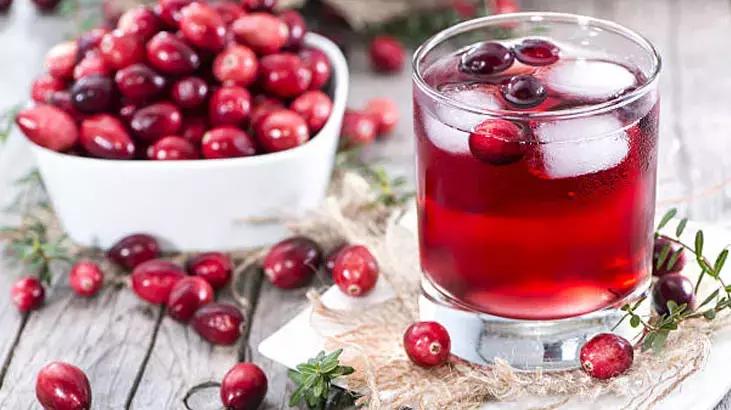
Cranberry, known in Turkish as turna yemişi or yaban mersini, is a red-berried plant belonging to the genus Vaccinium small. It is particularly native to North America and thrives in wetland areas. In our country, the cranberry also grows abundantly in moist, swampy, and acidic soils. It is commonly consumed as juice, dried fabric, or as a dietary supplement.

Cranberry
【1】
Scientific Name: Vaccinium macrocarpon (American cranberry)
Family: Ericaceae (Heath family)
Growing Regions: Cultivated as a crop in USA, Canada, and some Europe countries culture.
Uses: Juice, jam, dried fruit, health supplements
Calories: 46 kcal
Water: 87.1 g
Carbohydrate: 12.2 g
Sugar: 4.3 g
Fiber: 4.6 g (16% of daily requirement)
Protein: 0.4 g
Fat: 0.1 g
Vitamin C: 14 mg (24% of daily requirement)
Vitamin E: 1.2 mg (8% of daily requirement)
Vitamin K: 5.1 <span class="katex"><span class="katex-html" aria-hidden="true"><span class="base"><span class="strut" style="height:0.625em;vertical-align:-0.1944em;"></span><span class="mord mathnormal">μ</span></span></span></span>
Antioxidants: Proanthocyanidins (especially type A)
Cranberry is a versatile fruit that can be consumed in fresh or processed forms as food, beverage, and supplement. Below are the most common consumption methods:
[1]
Sebboy. “What Are the Benefits of Crane Berry? Which Diseases Does It Help? How Is It Consumed? - Health News.” Mynet, October 30, 2024. https://haber.mynet.com/turna-yemisi-faydalari-nelerdir-110106539654.

No Discussion Added Yet
Start discussion for "Turna Yemişi (Cranberry)" article
Key Characteristics
Cranberry – Nutritional Value (per 100 g, raw)
Health Benefits
How to Consume Cranberry
Fresh or Frozen Cranberry
Dried Cranberries
Cranberry Juice
Cranberry Supplements (Capsules / Tablets)
What to Consider When Consuming